Last Updated: May 2026 Reviewed by: Brands.Ng Editorial Team
Thirty Million Users Can’t All Be Wrong – But They Can All Be Surprised
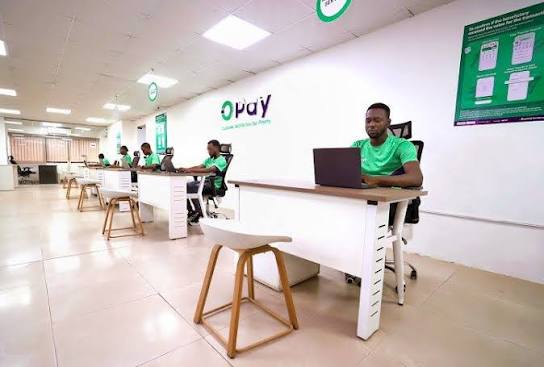
At some point in the last two years, OPay quietly became infrastructure. Not just an app – infrastructure. The kind that Nigerians notice only when it stops working. The green terminals are everywhere: outside pharmacies, in market stalls, beside the woman selling groundnut at the bus stop. The app sits on the phones of Lagos traders, Abuja civil servants, Kano merchants, and Portharcourt market women who have never set foot in a bank branch.
This scale is not accidental. OPay entered the Nigerian market with a specific strategy – deep, cheap, ubiquitous – and executed it with a discipline that most Nigerian fintech competitors have not matched. The result is a platform that is genuinely embedded in how Nigerians move money, pay bills, and access cash at the most granular level of daily economic activity.
But 2026 has brought changes that every OPay user – and every person considering becoming one – needs to understand. The CBN upgraded OPay’s operating licence to national status in January 2026. The ₦50 stamp duty on transfers of ₦10,000 and above kicked in from January 1, 2026. New CBN agent banking rules took effect in April 2026, directly reshaping how OPay’s POS network operates. And the ₦1 billion KYC compliance penalty OPay received in 2024 revealed something about the regulatory pressure the platform is navigating.
This review covers all of it – the features, the fees, the risks, the regulatory reality, and the honest answer to whether OPay is still the right choice for your specific use case in 2026.
Legitimacy: Fully legitimate – OPay holds a CBN-issued national operating licence (upgraded January 2026), operates across all 36 states and the FCT, and is insured by the NDIC.
Safety: Safe for everyday transactions when users protect their OTP and PIN; the platform has introduced NightGuard, Large Transaction Shield, biometric login, and USSD account/card blocking – but most fraud incidents trace to user error, not platform failure.
Best for: Everyday Nigerians who need fast, cheap transfers; small business owners managing daily cash flow; market traders using OPay agent banking; POS operators building a fintech business on OPay’s agent network.
Biggest risk: Account freezes during routine KYC verification reviews, customer support delays during disputes, and the ₦50 stamp duty now applying to all transfers of ₦10,000 and above – a cost many users were not anticipating.
Brands.Ng Assessment: Nigeria’s most accessible, most distributed fintech platform; excellent for everyday transactions, genuinely limited for complex or high-value financial needs.
- Founded: 2018 (launched operations in Nigeria)
- Parent company: OPay Digital Services Limited; backed by Opera Limited (Norwegian tech company)
- Headquarters: Nurudeen Olowopopo Avenue, Alausa, Lagos
- Regulated by: Central Bank of Nigeria (CBN) – national operating licence upgraded January 2026; NDIC-insured
- Estimated users: Over 30 million registered users in Nigeria
- Agent/POS network: Over 2 million POS and merchant service points nationwide
- App store: Google Play (updated May 25, 2026); iOS App Store
- Core services: Money transfers, bill payments, airtime purchase, savings (SafeBox), OPay card, agent banking, POS services, QR payments
- CBN penalty (2024): ₦1 billion fine for KYC non-compliance
- Current fee structure: ₦50 stamp duty on transfers of ₦10,000 and above (Nigeria Tax Act 2025, effective January 1, 2026); standard transfer fees may apply depending on transaction type
- USSD code: 955#
- Customer support: 0700 8888328 | 020 18888 328 | WhatsApp: +234 9165998936
- New April 2026 rule: POS agents now limited to one principal financial institution under new CBN agent banking guidelines
Understanding OPay requires separating what it says about itself from what it functionally is. The company describes itself as a mobile money platform. That description is accurate but undersells the specific architecture that made it dominant.
OPay is a two-sided financial infrastructure: a consumer-facing mobile wallet app on one side, and one of Nigeria’s largest agent banking networks on the other. These two sides reinforce each other in ways that most competitors have not replicated at equivalent scale. The app creates digital financial access. The agent network creates physical cash access. Together, they solve the full problem for the majority of Nigerians who need both – digital payment capability for apps and transfers, and physical cash access for a predominantly cash-using economy.
How OPay makes money: OPay’s revenue comes from multiple streams operating simultaneously. Transfer fees – even when described as “free,” inter-bank transfers generate NIP charges that OPay manages – contribute revenue at volume. Bill payment commissions from electricity distributors, cable TV companies, and telecoms operators generate significant recurring income. The POS agent network generates transaction fees on every cash-out, cash-in, and payment processed. The OPay savings product (SafeBox) generates float income from deposits. And increasingly, data from the platform’s enormous transaction volume is commercially valuable for credit scoring, product development, and institutional partnerships.
The CBN national licence upgrade – what it actually means for users: In January 2026, the CBN formally upgraded OPay’s operating licence to national status. Under the revised framework, OPay now holds a national licence granting formal approval to operate across all states of the federation rather than within restricted regions. Previously, OPay – like many fintechs – had expanded nationally on a licence designed for more limited regional operations. The upgrade formalises what was already operationally true. The practical consequence for users is that OPay’s nationwide operations are now fully regulatorily sanctioned – and the compliance requirements that come with national status create stricter governance obligations that will shape how OPay handles KYC, dispute resolution, and physical presence requirements going forward.
The ₦1 billion KYC penalty – what it reveals: In 2024, the CBN fined OPay ₦1 billion for non-compliance with KYC standards under the CBN’s Customer Due Diligence and KYC Regulations 2023. This penalty is not a minor footnote. It reveals that OPay’s rapid growth – onboarding tens of millions of users quickly – created a compliance gap that the CBN identified and penalised. For users, the consequence has been more rigorous KYC verification processes, more frequent identity document requests, and – importantly – the account freezes that occur when the platform’s compliance systems flag users for verification. The frustration many users experience with unexplained account restrictions is directly connected to OPay working through the compliance remediation required after that penalty.
The surface reason is cheap transfers. The deeper reasons are more specific.
Market traders processing daily cash flow without a bank account. Traders in Onitsha Main Market, Balogun Market in Lagos, and Sabon Gari in Kano use OPay because it requires no formal bank account to operate, no minimum balance to maintain, and no queue at a banking hall to process daily transactions. A fabric seller who receives payment from forty customers daily through OPay transfers accumulates that income in a wallet she can access instantly – without fees that erode thin margins.
Salary earners who use OPay as their operational spending account. A pattern common among Lagos-based employees is maintaining a commercial bank account for salary receipt and savings, while running all daily spending – transportation, food, airtime, bill payments – through an OPay wallet. The logic: OPay’s bill payment cashback and promotional rewards reduce the effective cost of daily spending, while the bank account provides NDIC coverage and institutional banking features for savings.
POS operators who built their livelihood on OPay’s agent network. Over 2 million active POS and merchant service points operate on OPay’s network. For operators – typically individuals running kiosks, small shops, or standalone POS stands – OPay’s agent banking commission structure, combined with the brand recognition that drives customers to their terminals, constitutes a primary or supplementary income stream. The April 2026 CBN rule requiring agents to work with only one principal institution has created new operational decisions for multi-terminal operators, but OPay’s scale and market recognition give it a significant advantage in retaining agent loyalty under the new framework.
Students and young adults managing money without banking overhead. University students, polytechnic graduates, and young urban workers who find traditional bank account management – minimum balance requirements, card maintenance fees, ATM withdrawal charges – disproportionately costly relative to their transaction volumes use OPay as their primary financial tool. The app’s zero-minimum-balance wallet and low-cost transfer structure are functionally more appropriate for their financial profiles than a commercial bank savings account.
Businesses that pay suppliers and staff across the country daily. Small e-commerce operators, logistics companies, and informal businesses that distribute income to multiple parties – delivery riders, field agents, market correspondents – use OPay’s transfer infrastructure for its combination of speed and low cost at volume.
Money Transfers
What it does: OPay allows transfers between OPay accounts (wallet-to-wallet) and to bank accounts across all Nigerian commercial banks, via the NIP (NIBSS Instant Payment) infrastructure.
What it means in practice: OPay-to-OPay transfers have historically been free or at very low cost, making it the preferred transfer channel for users who both have OPay accounts. Inter-bank transfers carry the standard NIP charges plus the new stamp duty structure.
What to watch out for: From January 1, 2026, all transfers of ₦10,000 and above now attract a ₦50 stamp duty, deducted from the sender’s account. This is not an OPay fee – it is a Federal Government tax under the Nigeria Tax Act 2025, applied uniformly across all Nigerian banks and fintechs. OPay, in a user-facing response to this charge, introduced a ₦9,999 quick-select transfer button – allowing users to send just below the ₦10,000 threshold for transactions where the exact amount is flexible, thereby avoiding the stamp duty on smaller amounts. The stamp duty applies cumulatively: a single ₦50,000 transfer attracts one ₦50 charge; splitting it into five ₦10,000 transfers would attract five ₦50 charges (₦250 total), making single larger transfers more cost-efficient than multiple smaller ones at or above the threshold.
Bill Payments
What it does: Covers electricity (across all Nigerian DISCOs), cable TV (DSTV, GOtv, Startimes), internet subscriptions, water bills, and airtime purchase for all Nigerian networks.
What it means in practice: OPay’s bill payment infrastructure is among the most reliable in the Nigerian fintech market. Electricity token delivery is typically instant. Cable TV subscriptions process in real-time. The cashback and discount promotions on airtime purchase – which OPay has run consistently – make it a cost-efficient channel for users who purchase airtime regularly.
What to watch out for: Promotional cashback rates change without consistent advance notice. Users who plan their spending around specific cashback offers should verify current promotions within the app before completing transactions rather than relying on promotions they saw in previous weeks. Failed bill payments – where the account is debited but the service is not activated – do occur, particularly during high-traffic periods. These should be reported through the in-app transaction dispute function rather than simply attempting the transaction again, which risks double billing.
OPay Card (Debit Card)
What it does: A Verve-network debit card linked to the OPay wallet, usable at ATMs, POS terminals, and for online transactions on platforms that accept Verve.
What it means in practice: The OPay card extends wallet functionality into the physical payment world – usable at ATMs for cash withdrawal and at merchants for POS payments. For users who prefer card-based payment for specific transactions, the OPay card provides this without requiring a separate bank account.
What to watch out for: The OPay card runs on the Verve network rather than Mastercard or Visa. This means international online transactions – purchasing from international merchants, subscribing to global services priced in foreign currency – are not supported. Users who need international card functionality should maintain a Mastercard or Visa-linked bank account for those transactions.
SafeBox (Savings)
What it does: A savings product within the OPay app that locks funds for a defined period with limited withdrawal access and earns monthly interest.
What it means in practice: SafeBox is a behavioral savings tool rather than an investment product. The locked withdrawal feature – which restricts access to saved funds – addresses the specific psychological challenge many Nigerian users have with maintaining savings in accessible accounts. The monthly interest earned provides a modest return that at minimum reduces the real cost of storing money.
What to watch out for: OPay’s NDIC insurance covers deposits including SafeBox balances within the applicable microfinance bank coverage limits. Before parking significant emergency fund amounts in SafeBox, users should understand the withdrawal restriction parameters and the coverage ceiling – and compare the interest rate against dedicated savings platforms like Piggyvest or Cowrywise for larger amounts.
Security Features (2026 Update)
What it does: OPay’s current security architecture includes biometric login (fingerprint and facial recognition), PIN verification, real-time transaction alerts, a NightGuard feature (extra facial verification for transactions during user-defined nighttime hours), a Large Transaction Shield (facial verification for transactions above a user-set limit), USSD-based account and card blocking (955131# to block account; 955132# to block card), and Private Mode to hide balance from screen.
What it means in practice: The NightGuard and Large Transaction Shield features are the most significant additions to OPay’s security infrastructure in recent updates. NightGuard specifically addresses one of the most common fraud vectors in Nigerian mobile banking – the scenario where a user’s phone is stolen or accessed by a family member at night, and funds are transferred before the account holder wakes up. By requiring facial verification during designated nighttime hours, the feature creates a meaningful barrier to unauthorized access during high-risk periods.
What to watch out for: Every one of OPay’s security features can be bypassed if the user shares their OTP (One Time Password) with a third party. The most common OPay fraud scenario in Nigeria is social engineering – a caller poses as OPay customer service, a bank official, or a prize notification representative, and convinces the user to share their OTP. Once the OTP is shared, the caller can complete an unauthorized transfer before any security feature engages. OPay has no mechanism to reverse transactions initiated with a correctly entered OTP – the platform treats OTP confirmation as the user’s authorization. The only protection against this specific fraud is the user’s refusal to share OTP under any circumstances, including calls from people claiming to be OPay representatives.
Agent Banking / POS Network
What it does: OPay’s network of over 2 million POS and merchant service points allows cash withdrawals, deposits, transfers, and bill payments through physical agents – extending OPay’s financial access into areas where banking infrastructure is limited.
What it means in practice: For OPay users who need cash from their wallet, the OPay agent network typically provides faster access than a bank ATM in most Nigerian neighborhoods – both because OPay agents are more numerous in many areas and because agents maintain float for immediate cash-out, whereas ATMs are frequently out of cash.
What to watch out for: From April 1, 2026, new CBN guidelines require each POS agent to work with only one financial institution. This rule eliminates the previous practice of agents maintaining multiple terminals from competing providers. For OPay users, this means that agents who previously served as multi-brand POS points may now exclusively carry OPay terminals – or have switched to a competing provider. The OPay terminal density in any given neighborhood may shift as agents make their principal institution choices under the new framework. In markets where competing providers have been more aggressive in agent acquisition, OPay terminal availability may vary from what it was in 2025.
Account freezes are a compliance mechanism, not arbitrary punishment.
The most common and most emotionally frustrating OPay user experience – the account freeze – is frequently described in user complaint forums as unexplained and arbitrary. The actual explanation is more specific and more useful. OPay’s automated compliance system flags accounts for review based on transaction patterns that deviate from established behavioral norms: sudden large inflows from multiple new sources, rapid outflow after large inflow, high-frequency transfers to multiple new recipients, or transaction amounts inconsistent with the account’s historical profile.
These patterns are also the patterns of fraud. OPay’s system cannot distinguish in real time between a legitimate user who has suddenly received a business windfall and a money mule account being used for fraud layering. It flags both for human review. The human review takes time – typically three to ten working days depending on case complexity. During this time, the account is frozen.
The remediation path requires submitting identity documents and, in some cases, an explanation of the transaction pattern that triggered the flag. Users who document their large transactions proactively – keeping records of business income, legitimate large transfers, and the sources of significant inflows – are better positioned to provide the documentation that resolves compliance reviews quickly.
The true fee picture in 2026 is more complex than “free transfers.”
OPay’s marketing has historically emphasized free or low-cost transfers, and for OPay-to-OPay transactions this has been largely accurate. But the full fee picture in 2026 requires understanding three layers.
Layer 1: OPay’s own transfer fees, which vary by transaction type and amount. Layer 2: The NIP infrastructure charge for inter-bank transfers, which OPay manages and may pass through at varying rates. Layer 3: The ₦50 stamp duty on all transfers of ₦10,000 and above under the Nigeria Tax Act 2025 – which is not an OPay fee but which users experience as an additional cost on OPay transactions.
The net result is that the effective cost of an OPay transfer in 2026 is higher than it was in 2023 – not because OPay has raised its fees, but because government tax policy has added a layer that applies across all financial institutions. Users who compare “OPay fees 2026” to their historical experience without accounting for the stamp duty will be confused by the discrepancy.
Customer support is adequate for simple issues and genuinely slow for complex ones.
OPay’s customer support infrastructure handles high volumes effectively for routine queries – airtime purchase confirmations, bill payment status checks, and basic account information. The friction concentrates around complex issues: account freeze resolution, failed transaction disputes where money has left the account without reaching the recipient, and card-related complaints.
The in-app dispute mechanism is the correct first-line approach for failed transactions – submitting a dispute through the app generates a reference number and initiates OPay’s resolution process. For account freeze cases, the WhatsApp support channel (+234 9165998936) has historically produced faster resolution than email. For disputes that remain unresolved beyond ten working days, the CBN Consumer Protection Department provides a regulatory escalation path that OPay is required to respond to under its national licence obligations.
The KYC penalty has consequences for your account management.
OPay’s ₦1 billion KYC penalty in 2024 was not resolved by paying the fine and moving on. The CBN’s penalty came with requirements to remediate compliance gaps – meaning OPay was required to improve its KYC processes, verify existing account holders more rigorously, and implement stronger Customer Due Diligence controls going forward. For existing OPay users, this translates into periodic identity re-verification requests – requests to resubmit documents, update NIN linkage, or confirm identity through the app – that may appear without prior warning. Ignoring these requests typically results in account restriction until verification is completed. Users who respond promptly to OPay verification requests avoid the account access disruptions that follow non-response.
What users consistently praise: Transfer speed and convenience dominate positive OPay feedback across Google Play, Nairaland, and Twitter/X. The ability to send money to any Nigerian bank account within seconds – particularly during periods when commercial bank apps are experiencing downtime – is the most consistently cited reason users maintain OPay as their primary or secondary financial tool. The agent network’s physical ubiquity receives strong praise from users in areas with poor commercial banking infrastructure, who describe OPay agents as their practical banking branches. Cashback on airtime and bill payment promotions are mentioned consistently as reasons for continued use even among users who have experienced other service problems.
What users consistently criticize: Account freezes without clear explanation – followed by slow resolution through customer support – are the dominant complaint category across all public review platforms. The experience of needing urgent access to funds and finding an account frozen, with a support queue that takes days to resolve, generates the strongest emotional negative responses. Failed transactions where funds are debited but not received – with recovery requiring formal dispute submission and multi-day resolution timelines – form the second major complaint cluster. The stamp duty introduction in January 2026 generated a spike in user complaints from users who noticed unexpected deductions without initially understanding the policy change behind them.
When problems most often occur: Account freezes are most likely to occur after: large business deposits received from multiple new senders, JAMB/school fee season when many accounts receive unusual inflows simultaneously, and periods immediately after significant system updates when OPay’s compliance algorithms recalibrate their behavioral baselines. Failed transactions cluster during high-volume periods – end of month salary seasons, festive periods (December, Eid, Easter), and Monday mornings when weekend accumulation creates peak traffic. The stamp duty deductions that confused users most heavily occurred in the first two weeks of January 2026, before the policy was widely understood.
Sentiment trend: OPay sentiment, based on publicly observable patterns, has remained generally positive on net despite the account freeze complaints – largely because the platform’s core utility (fast, cheap transfers and ubiquitous cash access) is so embedded in daily Nigerian financial behavior that users tolerate service friction they would not accept from a platform they found less essential. The introduction of NightGuard and Large Transaction Shield security features in 2025–2026 has generated notably positive sentiment from users who experienced or feared unauthorized account access. The stamp duty confusion has been largely resolved as user education about the Nigeria Tax Act 2025 has spread.
Is OPay legitimate? Yes, unambiguously. OPay now holds a CBN national operating licence, granting formal approval to operate across all states of the federation. It is NDIC-insured. It has been continuously operational in Nigeria since 2018 and serves over 30 million registered users. The ₦1 billion KYC penalty it received in 2024 was the result of a compliance finding – not fraud, not misappropriation of funds – and the company paid the penalty and undertook remediation. OPay’s legitimacy is not in question.
Is OPay safe to use? Yes – with the specific qualification that OPay’s security architecture is designed to protect against external threats. It does not protect against user-initiated errors, particularly OTP sharing. The platform’s biometric authentication, NightGuard, Large Transaction Shield, and USSD blocking infrastructure represent a genuinely comprehensive security framework for a Nigerian fintech. The CBN’s NDIC insurance coverage provides deposit protection within applicable limits. Users who maintain basic security hygiene – never sharing OTP or PIN, enabling biometric login, setting up NightGuard for nighttime protection, enabling a Large Transaction Shield threshold – are well-protected.
What is the real risk? Operational risk. Not the risk of OPay being fraudulent or misappropriating funds – that risk is not supported by evidence. The real risk is platform-level operational disruption: account freezes at inconvenient moments, customer support delays when disputes need resolution, and the concentration risk of using OPay as a primary or sole financial platform for significant balances. The mitigation is straightforward: use OPay as one of two or three financial tools, maintain a commercial bank account for significant savings and high-value transactions, and keep emergency fund balances in NDIC-covered commercial bank accounts rather than exclusively in OPay.
What users misunderstand about OPay’s safety: Many OPay users assume that because the platform is large and CBN-licensed, any transaction problem will be automatically reversed or compensated quickly. This assumption is incorrect. OPay’s dispute resolution for failed transactions typically takes three to seven working days and requires a formal dispute submission with transaction evidence. Reversal of fraudulent transactions where the user shared their OTP is even more uncertain – because OPay’s terms treat OTP confirmation as the user’s authorization of the transaction. The size and legitimacy of the platform does not create automatic compensation rights for every transaction problem.
| Feature | OPay | PalmPay | Moniepoint | Kuda Bank |
|---|---|---|---|---|
| CBN licence status (2026) | National (upgraded Jan 2026) | National (upgraded Jan 2026) | National (upgraded Jan 2026) | MFB – National |
| Registered users (est.) | 30M+ | 30M+ | Not disclosed | 8M+ |
| Transfer fees | ₦50 stamp duty on ₦10k+ (Jan 2026) | ₦50 stamp duty on ₦10k+ | ₦50 stamp duty on ₦10k+ | Free (limited monthly) |
| POS/Agent network | 2M+ service points | Large and growing | Strong (B2B focus) | None |
| Cashback/Rewards | Frequent on bills/airtime | Very frequent | Occasional | Rare |
| Debit card | Yes (Verve) | Yes (Verve/Mastercard) | Yes | Yes (Mastercard) |
| International card | No (Verve only) | Limited | No | Yes (Mastercard) |
| Business banking features | Basic | Basic | Strong (SME focus) | Good |
| Security innovations | NightGuard, Large Transaction Shield | Standard biometric | Standard | Good |
| Customer support quality | Average | Slightly above average | Good | Good |
| NDIC insurance | Yes | Yes | Yes | Yes |
| Savings product | SafeBox | Available | Available | Strong (budgeting tools) |
Who should choose OPay over PalmPay: Users who rely heavily on POS cash withdrawal and agent banking infrastructure – OPay’s 2 million+ agent network still has stronger penetration in secondary and tertiary cities than PalmPay. Users who have existing OPay agent relationships for business transactions should note that the April 2026 single-principal CBN rule means their agents may be locked to OPay going forward, making the relationship more durable than it was under the multi-terminal environment.
Who would be better served by Moniepoint: Small business owners who need structured business banking — invoicing, payroll management, business accounts with more sophisticated reporting – will find Moniepoint’s SME-oriented product design more appropriate than OPay’s consumer-first architecture. Moniepoint’s POS business model also focuses more heavily on merchant business building rather than consumer cash access, which suits operators whose primary need is payment acceptance rather than cash disbursement.
Who would be better served by Kuda: Users who want budgeting tools, spending analytics, international Mastercard functionality, and a more formal digital banking relationship. Kuda’s product is designed for financially conscious users who want to manage money actively, not just move it cheaply. The Mastercard card is the single most significant functional advantage Kuda has over OPay for urban professionals who make online purchases from international merchants or subscribe to global services.
The one area where OPay has no meaningful competitor: The combination of consumer app utility and physical agent network scale – at OPay’s specific volume – has no precise equivalent in the Nigerian fintech market. Moniepoint has a competitive agent network but its product is primarily business-oriented. PalmPay has a large network but not OPay’s tenure and brand recognition. The structural advantages of being first to this specific two-sided model at national scale, combined with the national licence that formalises it, positions OPay’s agent network as a durable competitive moat for the foreseeable future.
Use OPay if you are: – A Nigerian individual who wants the cheapest, fastest route to send money to another Nigerian – particularly OPay-to-OPay transfers where both parties are on the platform – A small business owner or market trader who processes multiple daily transactions and needs low-cost financial infrastructure without commercial bank overhead – A POS operator building an agent banking business on Nigeria’s most recognized fintech brand – particularly post the April 2026 single-principal rule which rewards commitment to one provider – A user in a secondary or tertiary city or rural area where OPay’s agent network provides financial access that commercial bank branches and ATMs do not – A salary earner who wants to reduce the daily transaction costs of commute, feeding, and bill payments by routing spending through a cashback-rewarding fintech platform – A student or young professional whose transaction volumes and financial complexity make commercial bank fees disproportionate to their actual banking needs
Avoid OPay if you: – Need an international debit card for transactions on global platforms – OPay’s Verve card is not accepted by most international merchants; use Kuda, Carbon’s Pink Passport, or a bank Mastercard for this need – Run a business that requires sophisticated financial reporting, invoicing, payroll processing, or institutional-grade banking features – Moniepoint or a commercial bank is more appropriate – Maintain significant savings that you want fully protected at commercial bank NDIC coverage levels – understand the microfinance coverage parameters before relying on OPay for large balance storage – Cannot manage the operational uncertainty of periodic account freeze events – users whose livelihood depends on uninterrupted access to a specific account should maintain at least one commercial bank account as a backup – Have experienced OPay account problems previously without resolution – users with unresolved historical disputes should escalate to the CBN before entrusting additional funds to the platform
What usually goes right: For the overwhelming majority of OPay’s 30 million users on any given day, the platform does exactly what it promises. Transfers complete within seconds. Bills pay instantly. Airtime arrives immediately. The agent near their house or office dispenses cash without drama. This is the baseline OPay experience for users who maintain account hygiene, respond to KYC requests promptly, and do not engage in transaction patterns that trigger compliance flags. It is a genuinely useful, operationally reliable platform for everyday financial needs.
What usually goes wrong – and when: Account freezes triggered by compliance reviews occur most often after unusual transaction patterns – large unexpected inflows, rapid transfers to multiple new recipients, or transactions flagged by OPay’s fraud monitoring algorithm. Failed transactions cluster during peak periods: end-of-month, festive seasons, and Monday morning high-volume windows. Stamp duty deductions on transfers of ₦10,000 and above surprise users who have not updated their understanding of the January 2026 fee changes.
What most users underestimate: The vulnerability of single-platform dependency. OPay’s ubiquity creates a natural temptation to use it as the only financial platform. The account freeze problem reveals the risk in that concentration. A user whose only financial platform is frozen during a compliance review – even for entirely legitimate reasons – has no access to any funds for the duration of the review. Maintaining at least two active financial platforms – OPay for everyday transactions, a commercial bank account for savings and emergency access – is the operational standard that sophisticated OPay users practice.
How OPay handles disputes: Routine failed transaction disputes submitted through the in-app dispute function are typically resolved within three to seven working days with a reference number provided at submission. Account freeze cases vary from three days to three weeks depending on the complexity of the compliance review and the completeness of the documentation submitted. Users who escalate to WhatsApp support generally experience faster human engagement than those who rely solely on in-app chat for complex cases. Unresolved disputes beyond 15 working days should be escalated to the CBN Consumer Protection Department – OPay’s national licence creates a regulatory obligation to respond to CBN-escalated consumer complaints within defined timeframes.
OPay Nigeria: The Brands.Ng Verdict
OPay is the most operationally embedded fintech platform in Nigeria – and the most misunderstood one, because its scale creates the impression that it is simpler than it is.
What OPay genuinely does well is the core of what most Nigerians need from a financial tool: fast transfers, cheap bill payments, physical cash access through an agent network that reaches where commercial banks do not, and a security architecture that – when users engage with it fully – is genuinely protective. The January 2026 CBN national licence upgrade formalises what was already operationally true and adds regulatory weight to the platform’s legitimacy.
Its most significant weakness is the gap between its operational promise and its dispute resolution infrastructure. When OPay works, it works invisibly. When it doesn’t – when accounts freeze, transfers fail, or stamp duty deductions appear without warning – the support experience does not match the platform’s scale or the emotional urgency that financial access problems create for users.
Who benefits most from OPay are users who approach it as essential infrastructure for everyday transactions and pair it with a commercial bank account for savings and high-value needs. That combination – OPay for daily operational spending, a bank for financial foundation – is the architecture that extracts maximum value from the platform while managing its limitations honestly.
Use OPay for what it is: Nigeria’s most accessible daily financial tool. Do not use it as your only financial tool. That single discipline turns OPay from a source of frustration into one of the most useful fintech relationships a Nigerian can have in 2026.
OPay is not perfect – but in a country where moving money quickly and cheaply has historically required either a bank branch or informal trust networks, it has done something genuinely significant: it made financial access ordinary.
People Also Ask – Direct Answers
Is OPay legit in Nigeria? Yes. OPay holds a CBN national operating licence and is NDIC-insured. It has operated in Nigeria since 2018 and serves over 30 million users. It is a regulated, legitimate financial institution.
Is OPay safe to use? Yes, for everyday transactions, provided users never share their OTP or PIN. OPay’s NightGuard, Large Transaction Shield, biometric login, and USSD blocking features provide strong security when activated.
Does OPay charge for transfers in 2026? OPay-to-OPay transfers may still be free or low-cost. However, from January 1, 2026, all electronic transfers of ₦10,000 and above – including those via OPay – attract a ₦50 government stamp duty under the Nigeria Tax Act 2025. This is not an OPay fee; it applies across all Nigerian banks and fintechs.
Why is my OPay account frozen? OPay account freezes typically result from compliance review triggers – unusual transaction patterns that the platform’s KYC monitoring flags for human review. Submit your identity documents through the app or WhatsApp support, and the review typically resolves within three to ten working days.
How do I unblock my OPay account? Contact OPay through WhatsApp (+234 9165998936) or call 0700 8888328. Prepare your BVN, NIN, a valid government-issued ID, and an explanation of any transactions that may have triggered the review. Alternatively, dial 955*131# to block your card if the issue is card-specific.
What is NightGuard on OPay? NightGuard is a security feature that requires extra facial verification to authorize transactions during user-defined nighttime hours. It is designed to prevent unauthorized fund transfers if your phone is accessed while you are asleep.
Can I use OPay card internationally? No. OPay’s debit card runs on the Verve network, which is not accepted by most international merchants. For international online payments, use a Mastercard or Visa-linked bank account.
OPay vs PalmPay – which is better? OPay has a larger, more established agent network and stronger secondary city penetration. PalmPay tends to offer slightly more aggressive cashback promotions and a marginally smoother app experience in some user reports. For agent banking dependency, OPay. For cashback maximization, PalmPay is competitive. For overall daily transactions, both are reliable choices.
Editorial Note: This review reflects publicly available information, CBN regulatory records, and user-reported experiences as of May 2026. Brands.ng does not receive payment for editorial coverage. OPay was given the opportunity to respond to findings prior to publication. No response was received at time of publishing.
If you’re searching for an honest Opay review Nigeria, the bottom line is simple:
It’s legit, it’s useful, and for most Nigerians-it’s already part of daily life.
Stay ahead of the businesses shaping Nigeria.
Get important company developments, analysis, research and business intelligence from Brands.Ng directly on WhatsApp.