
Last Updated: July 2026
Isara-Ode Remo Isn’t Where Most Ogun Parents Look First – Here’s Why That’s Changing
A parent in Sagamu comparing polytechnics this admission season is usually choosing between two familiar names – Federal Polytechnic Ilaro and Moshood Abiola Polytechnic in Abeokuta. Gateway Polytechnic Saapade rarely makes that shortlist on reputation alone, and that’s the first thing worth correcting.
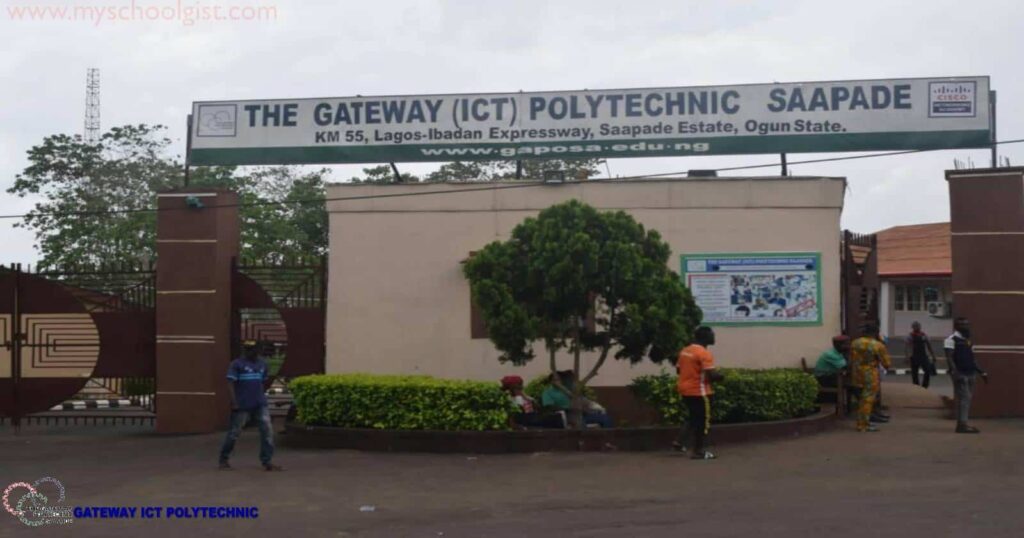
GAPOSA – Gateway ICT Polytechnic, Saapade – is a state-owned institution in Remo North Local Government Area of Ogun State, established under Ogun State law HB.30/OG/2005 and commissioned on June 22, 2006. For the 2026/2027 admission cycle, its general JAMB cut-off mark sits at 120, its application portal is live, and its management approved a new Rector, Dr. Sanni Kehinde Oseni, following endorsement by Governor Prince Dapo Abiodun. None of that makes headlines outside Ogun State. All of it matters if you’re deciding whether to put Gateway Polytechnic Saapade as your first or second JAMB choice this cycle. The question that actually matters isn’t whether GAPOSA is a “big name” – it’s whether a low cut-off, low-fee, state-owned polytechnic can deliver a credential that means something once you’re job-hunting. That’s what this review answers.
Quick Verdict: Gateway Polytechnic Saapade Review 2026
Legitimacy: Gateway Polytechnic Saapade is a legitimate, Ogun State Government-owned institution whose ND, HND, and part-time programmes carry full accreditation from the National Board for Technical Education (NBTE), alongside recognition from JAMB, WAEC, ITF, and TETFUND.
Safety: Campus operations are conventional and low-risk – the more relevant safety question for applicants is credential and portal safety, and GAPOSA’s admission process runs through an official, verifiable school portal rather than unregulated third-party agents.
Best for: JAMB candidates with modest UTME scores seeking a low-cost route into ND/HND study, Ogun State indigenes prioritizing proximity and lower living costs, and students targeting NBTE-accredited engineering, agriculture, or business-adjacent diploma programmes without university-level competition.
Biggest risk: GAPOSA’s course offering is narrower and less diversified than Federal Polytechnic Ilaro or MAPOLY, so applicants whose desired course isn’t on its accredited list will find no workaround.
Brands.Ng Assessment: A credible, affordable, properly accredited state polytechnic that under-delivers on course breadth, digital transparency, and brand visibility relative to its Ogun State peers.
What You Need to Know First
- Founded: Established by Ogun State House of Assembly Law HB.30/OG/2005; commissioned June 22, 2006.
- Parent company and ownership: Wholly owned and funded by the Ogun State Government – not a federal or private institution.
- Headquarters: Saapade Estate, Prof. Wole Soyinka Way, Isara-Ode Remo axis, Remo North Local Government Area, Ogun State.
- Operational in: Single campus, Ogun State, Nigeria.
- Regulated by: National Board for Technical Education (NBTE) – full accreditation across ND, HND, and Part-Time programmes. Also recognized by JAMB, WAEC, the Industrial Training Fund (ITF), and TETFUND.
- Core services: National Diploma (ND) and Higher National Diploma (HND) programmes, full-time and part-time, across engineering, agriculture, environmental science, cooperative economics, and management-related disciplines.
- Estimated user base: No official enrollment figure is published by the institution; Brands.Ng was unable to independently verify a current student population and does not estimate one.
- App store rating and last updated: No dedicated GAPOSA mobile application was found at the time of this review. Admissions and academic records run through a browser-based student portal.
- Notable investors / backing: None – the polytechnic is state-funded, not privately capitalized.
- Current fee structure: Full-time ND/HND tuition of approximately ₦60,000 per session; part-time programmes at approximately ₦90,000 per session; acceptance fee of ₦30,000 (non-refundable) for new admissions; ID card fee of ₦2,000. GAPOSA does not offer fee installment plans.
- Customer support contacts: Official inquiries route through the institution’s website contact page and the online application portal; specific phone/email support channels should be confirmed there rather than through third-party admission blogs.
- Recent regulatory action: No penalty or compliance sanction against GAPOSA was found in the public record for the past 24 months. Its programmes retain NBTE accreditation status as of this review.
- Notable 2025/2026 development: The appointment of Dr. Sanni Kehinde Oseni as Rector, approved by Governor Dapo Abiodun, alongside the commercial launch of the polytechnic’s Gaposa Bakery – a skills-acquisition initiative tied to its entrepreneurship push – and the commencement of a General Studies (GNS) Agriculture programme.
A note on what this section deliberately excludes: departmental-level cut-off marks, current total enrollment, and a verified customer service phone line are not publicly disclosed by GAPOSA, and Brands.Ng will not present estimates from unverified aggregator sites as institutional fact.
What Gateway Polytechnic Saapade Actually Is
Gateway Polytechnic Saapade is not, despite the “ICT” in its formal name, primarily an information-technology institution. Its founding mission frames ICT as an instrument of education delivery – the goal is ICT-driven quality education broadly, not a computing-specialist polytechnic competing with institutions built around software or hardware engineering. That distinction matters for anyone choosing GAPOSA specifically because they want a computer science-heavy curriculum; the accredited course list leans toward engineering technology, agriculture, environmental science, and cooperative/business economics rather than a deep ICT bench.
The business architecture is straightforward for a state polytechnic: Ogun State funds capital and recurrent expenditure, tuition is deliberately kept low as a matter of public policy rather than commercial pricing, and the institution’s revenue model depends on volume – enrolling as many NBTE-eligible students as facilities allow, at a fee point far below what a federal polytechnic like Ilaro or a private institution charges. That’s why GAPOSA can post ₦60,000 full-time tuition against Federal Polytechnic Ilaro’s ₦40,000–₦70,000 range and remain in a comparable band despite one being state-funded and the other federally funded – both are subsidized, neither is commercially priced.
Operationally, GAPOSA depends on the same infrastructure every semi-rural Ogun institution depends on: state-maintained access roads along the Isara-Ode Remo corridor, grid electricity supplemented by institutional backup power, and a digitized application and student-record system running through a dedicated portal (onlineappsaapade.gaposa.edu.ng) rather than manual paper processing. That digitization is a genuine operational strength – many Nigerian state polytechnics still run partially manual admission processes, and GAPOSA’s online application, student portal, and transcript-payment system put it ahead of some better-known peers on process infrastructure alone.
The institution filled a specific gap in Ogun State’s tertiary education landscape: a second state-owned polytechnic option alongside Moshood Abiola Polytechnic in Abeokuta, positioned to absorb Remo-zone and lower-scoring JAMB candidates who would otherwise have no local, low-cost diploma pathway. Its regulatory position is unambiguous – it is not, and does not claim to be, a federal institution, and its “state polytechnic” status shapes everything from its NYSC mobilization eligibility (HND graduates qualify, same as any NBTE-accredited institution) to its funding ceiling relative to federally-backed peers.
What GAPOSA is not: a university-equivalent institution offering bachelor’s degrees (it issues ND and HND diplomas only), a private polytechnic dependent on tuition-driven survival, or an ICT-specialist school in the way its name might suggest to a first-time applicant scanning JAMB brochure listings.
Why Nigerians Use Gateway Polytechnic Saapade
The JAMB candidate with a modest UTME score. A candidate scoring in the 120–150 range on UTME finds a shrinking set of credible, accredited options as federal polytechnic cut-offs climb toward 150–180. GAPOSA’s general cut-off of 120 keeps the door open without pushing the candidate toward an unaccredited private institution. This serves that reality well, though it doesn’t guarantee admission – internal screening and O’level verification still apply.
The Remo-zone family prioritizing proximity. For families in Isara, Ode-Remo, Ikenne, and the wider Remo axis, a local polytechnic means a day-student option with none of the accommodation costs that a federal institution in Ilaro or a state institution in Abeokuta would impose. This use case is served almost perfectly – it’s the structural reason GAPOSA exists in the first place.
The technical-trade-focused ND applicant. Students targeting Electrical/Electronic Engineering Technology, Mechanical Engineering Technology, or Welding and Fabrication Technology get NBTE-accredited pathways into technician-level careers without competing for university engineering slots. This is served well for engineering technology specifically, though only partially for students wanting broader engineering discipline choice than GAPOSA’s list offers.
The returning HND candidate with ND already in hand. Someone holding an ND with at least Lower Credit and a year of post-ND cognate experience can pursue HND admission directly. GAPOSA serves this reasonably, though its HND slate is narrower than MAPOLY’s, so the specific HND discipline needed determines whether this works.
The agriculture-and-agribusiness-minded student. GAPOSA’s course list is unusually agriculture-heavy for a polytechnic branded around ICT – Agricultural Technology, Horticulture Technology, Crop Production Technology, Agribusiness Management, and Agricultural Extension and Management all sit on its accredited roster, backed visibly by initiatives like the Gaposa Bakery and a new GNS Agriculture programme. This is a genuine, underappreciated strength that most admission blogs never mention because they’re focused on cut-off marks, not curriculum fit.
The part-time student balancing work and study. At roughly ₦90,000 per session against ₦60,000 full-time, GAPOSA’s part-time track is priced as a real option rather than an afterthought, though “part-time” pricing above full-time pricing surprises some applicants comparing it to other institutions’ structures.
The Honest Breakdown
Admission Process (Post-UTME + Screening)
What it does: Candidates who meet the 120 general cut-off proceed to GAPOSA’s internal screening exercise, which verifies O’level results, JAMB registration details, and course eligibility before provisional admission is offered.
What it means in practice: Meeting 120 does not guarantee a seat – screening functions as a second filter, and departmental capacity, not just score, determines outcomes.
What to watch out for: GAPOSA does not publish departmental cut-off marks publicly, so a candidate cannot know in advance whether 120 is genuinely sufficient for a specific competitive course versus a low-demand one; budget for the possibility of course reassignment during screening.
Tuition and Fee Payment
What it does: Fees are paid per session through the institution’s online payment portal, structured as tuition plus acceptance fee (freshers only) plus incidental charges like ID card fees.
What it means in practice: A fresher should budget roughly ₦90,000–₦120,000 in year one (tuition plus acceptance fee and minor charges), dropping to roughly ₦60,000–₦65,000 in subsequent full-time years. What to watch out for: GAPOSA does not offer installment payment – full-session payment is required before exam eligibility is confirmed, which creates real pressure for families paying from irregular income sources like farming or trading cycles.
Online Application and Student Portal
What it does: A dedicated portal (onlineappsaapade.gaposa.edu.ng) handles fresh applications, while a separate student portal manages ongoing academic records, and further portals handle transcript payment and lost-receipt processing.
What it means in practice: Applicants interact with the institution almost entirely online from application through registration, reducing the need for physical campus visits during the admission phase.
What to watch out for: The proliferation of separate sub-portals (application, student records, transcripts, penalty fees, other payments) for different functions is more fragmented than a single unified system, and typos in payment references across systems that don’t cross-reference each other are a plausible failure point.
Engineering Technology Programmes
What it does: Offers NBTE-accredited ND/HND pathways in Computer Engineering, Electrical/Electronic Engineering Technology, Mechanical Engineering Technology, and Welding and Fabrication Technology. What it means in practice: Graduates receive technician-level engineering credentials recognized for NYSC mobilization and further HND study, positioned for industrial, construction, and telecommunications entry-level roles.
What to watch out for: The engineering slate is narrower than what Federal Polytechnic Ilaro or MAPOLY offer – students wanting Civil Engineering, Chemical Engineering, or other specializations outside GAPOSA’s four listed engineering technology tracks will not find them here.
Agriculture and Agribusiness Programmes
What it does: Covers Agricultural Technology, Horticulture Technology, Crop Production Technology, Agribusiness Management, and Agricultural Extension and Management at ND and HND level.
What it means in practice: This is genuinely one of the more complete agriculture-technology diploma tracks among Ogun State polytechnics, reinforced by practical, revenue-generating initiatives like the Gaposa Bakery.
What to watch out for: Agricultural diploma holders in Nigeria still face a narrower private-sector job market than engineering or business graduates; the credential’s value depends heavily on the graduate’s own initiative toward agribusiness or further study.
What Gateway Polytechnic Saapade Does Not Tell You
The 120 cut-off is a floor, not a forecast. What most users don’t realize until it affects them is that a JAMB score of 120 makes you eligible to apply for screening – it does not predict which course you’ll be screened into. A pattern that emerges from public admission forums is that competitive courses within GAPOSA’s own list (engineering technology tracks especially) draw far more 120-plus applicants than available slots, pushing effective admission thresholds above the published minimum even though GAPOSA does not publish that departmental reality. The structural reason this happens is standard across Nigerian polytechnics: the general cut-off is a JAMB-facing eligibility gate, while actual seat allocation happens inside an opaque internal screening process the institution controls. What to do about it: apply with a JAMB score meaningfully above 120 if your first-choice course is engineering-related, and have a second-choice department in mind before screening day.
“No installment payment” is stricter than it sounds for a low-fee school. Because GAPOSA’s tuition is genuinely low by Nigerian standards, families sometimes assume the payment burden is proportionally light – but the full-session-upfront requirement means a family must still find ₦90,000–₦120,000 in one lump sum during the admission window, which is a real barrier for households with seasonal income. Users processing tuition payments around harvest season or salary-delay periods consistently report needing to source funds from outside their regular income cycle. What to do about it: plan the first-session lump sum months ahead of the admission window rather than assuming the low headline fee means low cash-flow pressure.
Departmental cut-off opacity extends to course reassignment risk. The structural reason GAPOSA doesn’t publish departmental cut-offs is common across Nigerian state polytechnics – it preserves institutional flexibility to redistribute applicants across departments based on real-time capacity rather than a fixed published threshold. What most applicants don’t realize is that this means a screening outcome can place you into an adjacent department rather than your first choice, with limited formal appeal process visible on the public-facing portal. What to do about it: during screening, explicitly ask what happens if your first-choice department is full, and get that answer before, not after, you pay the acceptance fee.
Fragmented digital payment systems create a specific failure mode. GAPOSA’s split across an application portal, a separate student portal, a transcript-payment page, a “lost receipt” page, and a “penalty fee” page signals that payment-reconciliation issues are common enough to warrant dedicated infrastructure for lost receipts and penalty resolution. The mechanism behind this is technical: multiple semi-independent payment gateways feeding into one records system create more reconciliation points than a single unified portal would. What to do about it: retain every payment receipt and reference number independently rather than assuming the portal’s own records will always match your bank’s transaction history.
User Sentiment Analysis
What users consistently praise: The affordability of tuition relative to private alternatives and even some federal polytechnics; the calm, relatively serene campus environment along the Remo axis, which student reviewers repeatedly describe as conducive to focus; the accessibility and approachability of lecturing staff in smaller departments; and the practical, hands-on orientation of technical programmes over pure theory.
What users consistently criticize: Limited brand recognition outside Ogun State, which some graduates report affects initial employer familiarity with the institution’s name; a narrower course catalogue than better-known Ogun State peers; and periodic uncertainty among prospective applicants about exact admission timelines, with several forum threads noting confusion over whether forms or Post-UTME screening are currently open.
When problems most often occur: Admission-cycle confusion clusters around the JAMB-to-Post-UTME transition window (typically mid-year), when official school announcements lag behind JAMB’s own cut-off release, leaving a gap that unofficial aggregator sites fill – sometimes inconsistently – before GAPOSA’s own portal catches up. Payment-related friction clusters around the start of each session, when acceptance-fee and tuition deadlines converge for freshers simultaneously.
Sentiment trend: Stable to modestly improving. The visible investment in digital infrastructure (dedicated sub-portals, an active application system) and entrepreneurship-linked initiatives like the Gaposa Bakery suggest an institution actively building credibility, even though public brand awareness still lags the effort.
Legitimacy and Safety
Is Gateway Polytechnic Saapade legitimate? Yes. GAPOSA is a duly established Ogun State Government institution under Law HB.30/OG/2005, commissioned in 2006, with all its ND, HND, and Part-Time programmes carrying full accreditation from the National Board for Technical Education. It holds additional recognition from JAMB, WAEC, ITF, and TETFUND, and Brands.ng found no record of a regulatory penalty or accreditation withdrawal against the institution in the past 24 months.
Is Gateway Polytechnic Saapade safe to use in Nigeria? Yes, in the sense that matters most to applicants: its admission and payment processes run through official institutional portals rather than unregulated third-party agents, and its credentials are recognized for NYSC mobilization and further academic progression. It is not protected against the ordinary risks of any Nigerian tertiary admission process – course reassignment during screening, payment-reconciliation errors, and communication delays during high-volume periods. Applicants must independently verify payment receipts and confirm admission status directly through the official portal rather than relying on third-party admission blogs, several of which recycle outdated or unverified fee figures.
What is the real risk? The most relevant operational risk is course-placement uncertainty at the screening stage combined with the absence of a formal installment option – together, these mean an applicant can face a full lump-sum payment for a department they didn’t originally choose, with limited visible recourse if the outcome doesn’t match expectations.
What users misunderstand about safety: Many applicants assume that meeting the general JAMB cut-off of 120 is functionally equivalent to admission. The correct understanding is that 120 is an eligibility threshold for screening, not an admission guarantee – actual placement depends on departmental capacity that GAPOSA does not publish in advance.
Competitor Comparison
| Metric | Gateway Poly Saapade (GAPOSA) | Federal Poly Ilaro | MAPOLY (Abeokuta) | OGITECH (Igbesa) |
|---|---|---|---|---|
| Ownership / accreditation | Ogun State Govt; NBTE-accredited | Federal Govt; NBTE-accredited | Ogun State Govt; NBTE-accredited | Ogun State Govt; NBTE-accredited |
| 2026/2027 general cut-off | 120 | 150 | ~120–140 (varies by year) | 120 |
| Estimated full-time ND/HND tuition | ~₦60,000/session | ~₦40,000–₦70,000/session | Not officially released; historically in a comparable low-fee band | ~₦50,000–₦85,000/session |
| Acceptance fee (freshers) | ₦30,000 | Not consistently published | Not consistently published | ₦30,000 |
| Installment payment option | No | No | No | No |
| Hostel accommodation | Available, capacity-limited (fee estimates vary by source) | Available | Widely reported as constrained/unavailable in recent years | Not confirmed in public sources |
| Course breadth | Narrower – engineering technology, agriculture, environmental science, cooperative economics | Broad – wide engineering, science, business, arts spread; ICAN-recognized accounting programme | Broad – wide faculty spread across engineering, science, business, arts | Narrower – ICT and technology-leaning, similar scale to GAPOSA |
| Brand recognition (Ogun State) | Lower | Highest – long-established, federal status | High — long-established, large enrollment | Lower, newer institution |
| Ideal user profile | Remo-zone applicant wanting low-cost engineering or agriculture ND/HND | Applicant wanting the broadest course choice and strongest name recognition | Abeokuta-zone applicant wanting large-institution scale and faculty breadth | Applicant prioritizing a low cut-off with an ICT-adjacent focus |
Figures for hostel and departmental cut-offs vary by source and year; applicants should confirm current numbers directly with each institution’s official portal before applying.
A candidate should choose GAPOSA over Federal Polytechnic Ilaro specifically when their JAMB score sits below Ilaro’s 150 general cut-off but above GAPOSA’s 120, and when their target course – particularly engineering technology or agriculture-related diplomas – sits within GAPOSA’s accredited list; trying to force a course not on GAPOSA’s roster simply because the cut-off is lower defeats the purpose.
A candidate would be better served by MAPOLY or Federal Polytechnic Ilaro when course breadth matters more than proximity or cost – both offer a meaningfully wider spread of engineering disciplines, business programmes, and (for Ilaro specifically) an ICAN-recognized accounting track that GAPOSA does not match.
The one area where GAPOSA has no meaningful competition among these three is hyper-local access for Remo-zone families: no other polytechnic on this list sits inside the Isara-Ode Remo corridor, and that advantage is structural rather than temporary – it’s a function of geography, not a strategy competitors could easily replicate by improving their own offering.
Who Should Use It / Who Should Avoid It
Use Gateway Polytechnic Saapade if you are:
- A JAMB candidate scoring between 120 and roughly 150 who wants an accredited pathway that a 150+ cut-off school would exclude you from.
- A family based in the Remo, Ikenne, or Ode-Remo axis prioritizing a day-student option over hostel-dependent institutions further from home.
- A student specifically targeting Electrical/Electronic Engineering Technology, Mechanical Engineering Technology, or Welding and Fabrication Technology at diploma level.
- An aspiring agribusiness or agricultural technology student wanting one of the more complete agriculture-focused diploma tracks among Ogun State polytechnics.
- An HND applicant holding an ND with Lower Credit or better and at least one year of post-ND cognate experience in a discipline GAPOSA offers.
- A part-time student who can accommodate a single lump-sum payment per session rather than needing installment flexibility.
Avoid Gateway Polytechnic Saapade if you:
- Need a specific engineering or science discipline outside GAPOSA’s four accredited engineering technology tracks – MAPOLY or Federal Polytechnic Ilaro will serve you better.
- Depend on installment fee payment due to irregular household income, since GAPOSA requires full-session payment upfront.
- Prioritize brand recognition for job-market signaling in industries where employers default to familiarity with Ilaro or MAPOLY graduates.
- Require guaranteed on-campus hostel accommodation, given that current hostel capacity figures are not consistently confirmed in public sources.
- Are targeting ICAN-track accounting credentials specifically, which Federal Polytechnic Ilaro is more established in.
Realistic Expectations
What usually goes right: For the majority of applicants who meet the general cut-off, complete O’level verification correctly, and apply within the official window, the process runs as designed – online application, screening, provisional admission, and fee payment through the institutional portal, resulting in a properly accredited ND or HND placement.
What usually goes wrong and when: Confusion around form and Post-UTME timing tends to spike in the months immediately after JAMB releases its own general cut-off, before GAPOSA’s specific screening dates are widely confirmed – applicants relying on third-party blogs during this window are the most likely to encounter outdated information. Payment friction concentrates at the start of each session, when the full-session lump sum falls due simultaneously with the non-refundable acceptance fee for freshers.
What most users underestimate: That meeting the 120 cut-off is the beginning of the admission process, not the end of it – the internal screening stage, not the JAMB score alone, ultimately determines both admission and department placement, and GAPOSA’s marketing (like most Nigerian polytechnics) foregrounds the cut-off number far more than the screening reality that follows it.
How Gateway Polytechnic Saapade handles disputes: Publicly observable patterns suggest routine issues – lost payment receipts, penalty fees, payment confirmation mismatches – are handled through dedicated self-service portal pages built specifically for those scenarios, rather than requiring in-person resolution. For disputes the portal doesn’t resolve, the realistic escalation path is direct contact through the institution’s official contact channels; unresolved matters involving fee disputes or admission fairness concerns can, as with any Nigerian tertiary institution, be escalated to the relevant state Ministry of Education or, for accreditation-specific concerns, the National Board for Technical Education directly.
Frequently Asked Questions
How much is the Gateway polytechnic school fee?
Full-time ND and HND tuition at Gateway Polytechnic Saapade runs approximately ₦60,000 per session, while part-time programmes cost approximately ₦90,000 per session. Freshers should additionally budget a non-refundable ₦30,000 acceptance fee and a ₦2,000 ID card charge, bringing first-year costs to roughly ₦90,000–₦120,000 depending on programme type. GAPOSA does not offer installment payment, so the full amount is due before exam eligibility is confirmed each session.
What is the cut off mark for Gateway Poly?
Gateway Polytechnic Saapade’s general JAMB cut-off mark for the 2026/2027 academic session is 120 for all courses, applying uniformly across the institution’s accredited programme list. Meeting this threshold makes a candidate eligible for GAPOSA’s internal Post-UTME screening exercise, but it does not guarantee admission – departmental capacity and screening performance determine final placement, and GAPOSA does not publicly release course-specific departmental cut-offs.
Is the Gateway polytechnic form still available?
Based on the institution’s official website, GAPOSA’s online application portal is actively live, with both fresh ND applications and part-time admission forms accessible through onlineappsaapade.gaposa.edu.ng as of this review. Availability windows shift by academic session, so candidates should confirm current form status directly on the official portal rather than relying on third-party aggregator sites, which have historically carried inconsistent or outdated information about GAPOSA’s admission timeline.
Is Gateway Poly federal or state?
Gateway Polytechnic Saapade is a state institution, wholly owned and funded by the Ogun State Government under Law HB.30/OG/2005. It is not a federal polytechnic, which distinguishes it from Federal Polytechnic Ilaro – also located in Ogun State – despite both sharing NBTE accreditation and JAMB recognition.
What courses can I study at Gateway Polytechnic Saapade?
GAPOSA offers NBTE-accredited ND and HND programmes across engineering technology (Computer Engineering, Electrical/Electronic Engineering Technology, Mechanical Engineering Technology, Welding and Fabrication Technology), agriculture (Agricultural Technology, Horticulture Technology, Crop Production Technology, Agribusiness Management, Agricultural Extension and Management), and additional tracks in Environmental Science and Management Technology, Cooperative Economics and Management, and Social Development. The course list is narrower than Federal Polytechnic Ilaro’s or MAPOLY’s, so applicants should confirm their specific discipline is on GAPOSA’s current accredited list before applying.
How does Gateway Polytechnic Saapade compare to Federal Polytechnic Ilaro?
GAPOSA’s general cut-off of 120 is meaningfully lower than Federal Polytechnic Ilaro’s 150, making it more accessible to candidates with modest UTME scores, but Ilaro offers a broader course catalogue and stronger brand recognition, including an ICAN-recognized accounting programme GAPOSA does not match. Applicants should weigh accessibility against course breadth and name recognition based on their own JAMB score and target discipline.
What is the most common problem applicants report with Gateway Polytechnic Saapade admissions?
The most frequently reported issue is confusion around admission timelines – specifically, uncertainty about whether Post-UTME forms are currently open – which stems from a gap between JAMB’s own cut-off announcements and GAPOSA’s specific screening date confirmations. Applicants are advised to check the official onlineappsaapade.gaposa.edu.ng portal directly rather than relying on third-party admission blogs during this window.
Is Gateway Polytechnic Saapade good for agriculture-focused students?
Yes – GAPOSA offers one of the more complete agriculture and agribusiness diploma tracks among Ogun State polytechnics, spanning Agricultural Technology, Horticulture Technology, Crop Production Technology, Agribusiness Management, and Agricultural Extension and Management, reinforced by practical initiatives like its commercially operating Gaposa Bakery and a newly commenced GNS Agriculture programme.
Gateway Polytechnic Saapade: The Brands.Ng Submission
Gateway Polytechnic Saapade is what happens when a state government builds a genuinely accredited, genuinely affordable polytechnic and then does almost nothing to make anyone outside its immediate catchment area aware it exists. It does one thing well without qualification: giving JAMB candidates with modest scores a legitimate, NBTE-accredited route into engineering technology and agriculture diplomas at a price point few Nigerian institutions can match.
Its most significant weakness is course breadth – a narrower accredited list than its Ogun State peers, rooted structurally in a smaller institutional scale that hasn’t expanded programme offerings at the pace MAPOLY or Federal Polytechnic Ilaro have. Remo-zone families and lower-scoring engineering or agriculture applicants benefit most, precisely because proximity and cost outweigh brand prestige for that specific group.
We would recommend GAPOSA without hesitation to a candidate whose target discipline sits squarely within its accredited list and whose JAMB score falls short of Ilaro’s 150 threshold. We would point that same candidate toward MAPOLY or Ilaro instead the moment their desired course – accounting with ICAN recognition, civil engineering, or any discipline outside GAPOSA’s roster – simply isn’t on offer here. Gateway Polytechnic Saapade doesn’t need a better cut-off mark to compete; it needs a wider course catalogue and a website that tells its own story as clearly as its accreditation record already does.
Editorial Note: This review reflects publicly available information and user-reported experiences as of July 2026. Brands.Ng does not receive payment for editorial coverage. Gateway Polytechnic Saapade was not contacted for comment prior to publication, as this review draws exclusively from the institution’s official public channels and verifiable third-party sources. No response received at time of publishing.
Stay ahead of the businesses shaping Nigeria.
Get important company developments, analysis, research and business intelligence from Brands.Ng directly on WhatsApp.