Last Updated: July 2026
A candidate scores 178 in the 2026 UTME, chooses Osun State University as a first choice, and starts checking cutoff-mark forums the same night. What they find is a mess of contradictory numbers – some sites say 160, others say 180, one insists Medicine is still open. What almost none of them mention is the detail that actually matters most this cycle: UNIOSUN’s own admissions office has explicitly put Medicine admission on hold for the 2026/2027 session, a fact buried in the university’s own portal notice rather than announced with any fanfare. That gap between what the institution quietly states and what circulates on secondary admission-guide sites is the same gap this review is built to close.
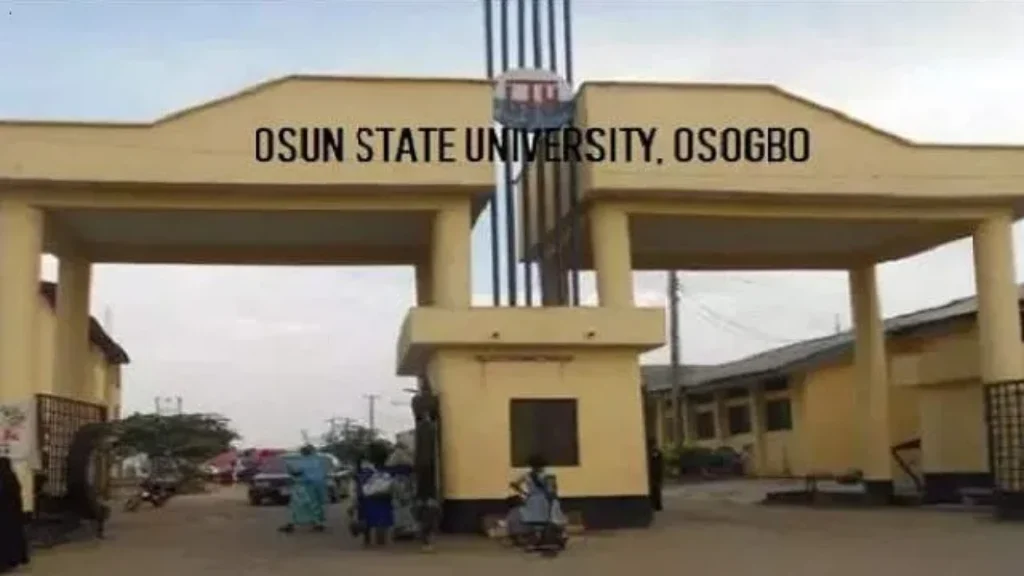
Osun State University, commonly known as UNIOSUN, is a state-owned, NUC-accredited university that has spent the past year absorbing two very different kinds of headline: a full NUC accreditation sweep in 2025/2026 covering all 29 programmes it presented, and a tuition increase so steep in some faculties that a civil society group in the state formally asked the governor to intervene. Both things are true at once, and a serious review has to hold them together rather than pick the flattering half.
Quick Verdict: Osun State University Review 2026
Legitimacy: Fully legitimate – established in 2006 by the Osun State Government and holding full National Universities Commission (NUC) accreditation across all 29 programmes presented in the October/November 2025 accreditation exercise.
Safety: Standard for a Nigerian public university; the more relevant risk for prospective students is financial rather than physical – tuition has moved sharply and without much public notice in recent sessions.
Best for: Osun State indigenes seeking government-subsidised tuition, candidates scoring in the 160–200 UTME range who want a serious state university option below OAU’s competitive threshold, and students targeting Arts, Social Sciences, Management Sciences, or Education programmes across UNIOSUN’s multi-campus system.
Biggest risk: Sudden, large tuition increases between sessions – some faculties saw fee jumps above 100% year-on-year – combined with the fact that Medicine admission is currently on hold for the 2026/2027 session.
Brands.Ng Assessment: A genuinely improving, fully accredited state university whose financial unpredictability is now a bigger concern for applicants than its academic standing.
What You Need to Know First
- Founded: 2006, by the Osun State Government under the administration of then-Governor Prince Olagunsoye Oyinlola
- Ownership: State-owned public university, currently under Governor Ademola Adeleke’s administration
- Headquarters: Main Campus, Osogbo, Osun State
- Other campuses: Ejigbo, Ifetedo, Ikire, Ipetu-Ijesa, and Okuku – one campus per geopolitical zone within the state, by design
- Regulated/accredited by: National Universities Commission (NUC) – full accreditation granted to all 29 programmes presented during the October/November 2025 accreditation exercise
- Current Vice-Chancellor: Professor Odunayo Clement Adebooye
- Core offering: Undergraduate and postgraduate degrees across Health Sciences, Law, Engineering, Management Sciences, Natural Sciences, Arts, Education, Social Sciences, and Agriculture
- Admission route: JAMB UTME plus Post-UTME screening, processed through JAMB’s Central Admission Processing System (CAPS) for the 2026/2027 cycle
- 2026/2027 general cutoff: 160 marks minimum to apply for screening; 200 marks minimum for Law, Nursing, and Islamic Law
- Medicine status for 2026/2027: On hold – the university’s own admissions notice explicitly excludes Medicine from this cycle’s intake
- Current fee structure: Tuition varies sharply by faculty and indigene status; documented session-on-session increases have reached over 100% in some professional programmes (detailed below)
- Admission office contact: Room 228, Admission Office, Administrative Building, Main Campus, Osogbo
- Recent regulatory development: Full NUC accreditation across all 29 submitted programmes, confirmed in official communication from the NUC Director of Accreditation in 2025/2026
- Notable 2025/2026 development: A harmonised tuition schedule introduced sharp fee increases for Medicine, Law, and Nursing, drawing public pushback from a state civil society group
What Osun State University Actually Is
UNIOSUN markets itself as a centre of academic excellence with a multi-campus model designed to bring university education closer to communities across the state. That’s accurate, but it undersells what the multi-campus structure actually does operationally: rather than concentrating every faculty on one site, UNIOSUN distributes its colleges across six towns, each hosting a different cluster of disciplines. Health-related programmes sit at Ifetedo, Engineering and physical sciences cluster around Ipetu-Ijesa and Ejigbo, and Law and Social Sciences remain concentrated at the Osogbo main campus. For an applicant, this means your course choice determines your town of residence for the next four to six years – a detail that matters enormously for cost of living and is rarely spelled out clearly during the application process.
The business model, insofar as a state university has one, runs on a blend of state government subvention and student-paid tuition, with the balance between the two shifting visibly in recent years. The 2025/2026 harmonised fee schedule – which pushed Medicine tuition to at least ₦1,335,000 and Law (100-level or Direct Entry) to at least ₦930,000 – reflects a state government leaning more heavily on student fees to fund operations, a pattern now common across Osun-owned institutions including Osun State Polytechnic and the University of Ilesa. This is the operational reality UNIOSUN’s own marketing does not foreground: the “affordable state university” positioning is increasingly true only for non-professional faculties, not across the board.
UNIOSUN filled a specific gap when it was created in 2006: Osun State needed a state university option that wasn’t Obafemi Awolowo University (a federal institution with a far more competitive cutoff and no state-indigene fee advantage) and wasn’t a private university tuition bracket. That gap still exists, and UNIOSUN’s 160-mark general cutoff for 2026/2027 keeps it accessible to a wider band of candidates than OAU’s typically much higher effective aggregate. What UNIOSUN is not, despite occasional positioning, is a low-cost alternative across every faculty – professional programmes have moved decisively out of that bracket.
Why Nigerians Use Osun State University
Osun State indigenes from lower-income households get a real, structural fee advantage – non-indigenes report paying 30–40% more across comparable programmes – making UNIOSUN one of the few realistic university pathways for state residents who can’t afford private-university tuition and didn’t score high enough for OAU’s Ife campus.
Candidates who scored between 160 and 210 in the 2026 UTME find UNIOSUN one of the more realistic serious-university options in the South-West, since its general cutoff sits below OAU’s typical departmental thresholds while still offering NUC-accredited, government-run credentials rather than a private degree.
Civil servants and working adults in Osun State’s smaller towns benefit directly from the multi-campus model – a resident of Okuku or Ejigbo doesn’t need to relocate to Osogbo or Ile-Ife to access a state university, which matters for anyone balancing study with an existing job or family obligation nearby.
Direct Entry candidates from NCE, OND, or IJMB/JUPEB backgrounds get a defined, if narrow, path in – UNIOSUN accepts a minimum of Lower Credit for Direct Entry in many programmes, a threshold some federal universities set higher.
Prospective Medicine applicants are the clearest case of a use case UNIOSUN currently only partially serves: the programme carries some of the highest tuition in the schedule and, more importantly, is not accepting new admissions for the 2026/2027 session at all a fact this review treats as essential rather than a footnote.
Nursing and allied health students get access to a professional programme at a fraction of private-university cost, though the September 2025 fee harmonisation more than doubled Nursing tuition in a single session, meaning the “affordable health sciences” positioning now requires a significant asterisk.
The Honest Breakdown
JAMB and Post-UTME Screening What it does: UNIOSUN screens candidates who chose it as first choice (or who switch to it via JAMB CAPS) against a minimum UTME threshold, then ranks them by a combined aggregate. What it means in practice: For 2026/2027, the general minimum is 160, rising to 200 for Law, Nursing, and Islamic Law. The aggregate formula is (JAMB score ÷ 8) + (Post-UTME or screening score ÷ 2), producing a final score out of 100 with JAMB and screening each contributing up to 50 points. Screening costs a combined ₦5,000 – ₦3,000 portal access plus ₦2,000 for the screening exercise itself – paid via Remita. What to watch out for: Meeting the general 160 minimum does not guarantee admission into competitive departments, where the effective ranking cutoff runs considerably higher in practice. Candidates below the 200-mark threshold for Law, Nursing, or Islamic Law are redirected to other programmes rather than screened for their original choice.
Central Admission Processing System (CAPS) Integration What it does: For 2026/2027, UNIOSUN’s entire admission process runs through JAMB’s CAPS platform rather than a fully independent university system. What it means in practice: Candidates must upload O’Level results directly to the JAMB CAPS portal as a precondition for admission – a step some applicants skip, assuming the university portal alone is sufficient, which then stalls their admission processing. What to watch out for: A completed UNIOSUN screening does not finalise admission on its own; the JAMB CAPS confirmation step is a separate, mandatory action that applicants routinely overlook until admission lists are released and their name is missing.
Tuition and Fee Structure What it does: UNIOSUN charges tuition on a per-session basis, differentiated by faculty, level, and indigene status. What it means in practice: The 2025/2026 harmonised schedule set Medicine at a minimum of ₦1,335,000, Law (100-level/Direct Entry) at a minimum of ₦930,000, and Nursing at ₦940,500 – up from ₦412,500 the prior session, according to a harmonised fee schedule reviewed by education-sector outlet Edubase Nigeria. Non-professional faculties remain considerably cheaper, though published figures for these vary across secondary sources and should be confirmed directly on the university portal after admission. What to watch out for: The scale of the Medicine, Law, and Nursing increases – reportedly 70% and 125% respectively for Medicine and Law according to an insider account cited by Edubase Nigeria – happened within a single academic session, with limited public notice ahead of the change. Budgeting on a prior session’s published figure is a real risk this cycle.
Direct Entry and Transfer Pathways What it does: Allows candidates with NCE, OND, HND, IJMB, or JUPEB qualifications to enter at 200-level rather than starting from 100-level. What it means in practice: Direct Entry candidates must obtain their DE form directly from JAMB, complete UNIOSUN’s own screening, and forward academic transcripts to the Registrar by a fixed deadline – for 2026/2027, September 4. What to watch out for: Missing the transcript deadline is one of the most common, entirely avoidable reasons Direct Entry applications stall – the university does not appear to send individual reminders once the form is submitted.
Accommodation What it does: UNIOSUN operates on-campus hostels across its various campuses, with compulsory hostel allocation for 100-level and 200-level Direct Entry students in some sources’ reporting. What it means in practice: On-campus hostel costs are reported in the ₦30,000–₦80,000 per session range depending on the source and campus, considerably cheaper than off-campus housing in Osogbo, which runs ₦60,000–₦120,000 annually. What to watch out for: Sources disagree on whether hostel accommodation is genuinely compulsory for all fresh students or only for specific categories – confirm directly with your specific campus’s student affairs office rather than relying on a blanket assumption, since campus-by-campus practice appears to vary.
What Osun State University Does Not Tell You
The Medicine admission hold is not being actively publicised beyond the portal notice. Multiple secondary admission-guide sites covering UNIOSUN’s 2026/2027 cycle still list Medicine as an open programme with a competitive cutoff estimate, when the university’s own official notice states plainly that Medicine is on hold for this session. The structural reason this matters: a candidate who selects UNIOSUN as first choice specifically for Medicine, based on a secondary site’s outdated guidance, wastes a JAMB choice slot on a programme not currently admitting. What to do: verify programme availability directly against the current admissions notice on uniosun.edu.ng before finalising your JAMB choice, not against a guide site’s cutoff table.
The tuition harmonisation happened faster than the public messaging around it. The scale of the Medicine, Law, and Nursing fee increases – more than doubling in some cases within one session – came to public attention primarily through a schedule “as seen by” an education-sector outlet rather than a proactive university announcement, according to reporting from Edubase Nigeria. The structural reason this happens is straightforward: state governments facing budget pressure increasingly shift cost onto tuition rather than subvention, and state universities have limited incentive to advertise that shift loudly. What to do: if you’re admitted into a professional programme, get the current session’s fee figure in writing from the bursary before making financial commitments based on any published table, including this one.
NUC accreditation covers the programme, not the campus experience. The 2025/2026 full accreditation of all 29 submitted programmes is a genuine, verifiable quality signal – it means the Commission’s academic-standards review found no deficiencies across UNIOSUN’s presented curriculum. What it does not certify is facility quality, staffing consistency, or day-to-day campus experience at each of the six individual campuses, which understandably vary given the multi-campus structure. What to do: treat accreditation as confirmation that your certificate will hold recognised value, and treat campus-specific questions (hostel condition, lecturer availability, lab access) as a separate line of inquiry – current students at your specific target campus are a better source for that than any accreditation notice.
The CAPS-based admission process has a step most secondary guides gloss over. A completed UNIOSUN Post-UTME screening does not, by itself, constitute a finalized admission – candidates must separately confirm and accept admission through JAMB’s CAPS portal, and O’Level results must be uploaded there as a precondition. A pattern that emerges from admission-cycle reporting is that candidates who treat the university portal as the only relevant system find their admission delayed or in limbo when CAPS confirmation is missing. What to do: complete both the university-side screening and the CAPS-side confirmation, and don’t consider your admission secure until both show as finalised.
User Sentiment Analysis
What is consistently praised: The multi-campus structure genuinely appeals to prospective students from Osun State’s smaller towns, who value not having to relocate to Osogbo or another major city. The relatively accessible general cutoff – 160 for 2026/2027 – is repeatedly cited as a realistic path for candidates who narrowly missed OAU’s threshold. The recent full NUC accreditation sweep is treated as a credible, meaningful reassurance about degree recognition rather than a marketing claim.
What is consistently criticised: The scale and pace of tuition increases in professional faculties draws the sharpest public reaction, including a formal appeal from a civil society organisation to the state governor. Communication around programme availability – particularly the Medicine admission hold – lags behind what candidates need to make an informed JAMB choice. Confusion around the CAPS confirmation step recurs across admission cycles, suggesting the process itself, not just individual candidate error, contributes to it.
When problems most often occur: Fee-related concerns peak at the start of each new academic session when harmonised schedules are released, often with limited advance notice. Admission-process confusion clusters around the Post-UTME screening and CAPS confirmation window, roughly July through September each cycle, when multiple deadlines overlap.
Sentiment trend: Improving on the academic-credibility dimension, given the 2025/2026 full accreditation result, but under real strain on the financial-predictability dimension, given the documented scale of recent fee increases.
Legitimacy and Safety
Is Osun State University legitimate? Yes. It is a state-government-owned university established in 2006, and it holds full NUC accreditation across all 29 academic programmes presented in the October/November 2025 accreditation exercise – the strongest form of institutional and programme-level validation a Nigerian university can currently hold.
Is it safe to use for a degree investment? Largely yes, in the sense that your eventual certificate carries recognised, accredited value. The qualification here is financial rather than academic: “safe” does not currently mean “predictable,” given how sharply tuition has moved in specific faculties within a single session.
What is the real risk? The real risk is financial planning risk, not academic-legitimacy risk – specifically, budgeting for a professional programme based on a prior session’s published fee figure, only to find the harmonised schedule has moved substantially by the time you’re admitted.
What applicants misunderstand about safety here: Many assume that because UNIOSUN is a long-established, accredited state university, its cost structure is as stable as its academic standing. The 2025/2026 fee harmonisation demonstrates that the two are not linked – accreditation stability says nothing about tuition stability, and applicants should budget with a margin for increase rather than assuming continuity.
Competitor Comparison
| UNIOSUN | Obafemi Awolowo University (OAU) | Bowen University | Adeleke University | |
|---|---|---|---|---|
| Ownership | State (Osun State Government) | Federal | Private (Baptist-affiliated) | Private |
| 2026/2027 general cutoff | 160 (200 for Law/Nursing/Islamic Law) | Typically well above 200 for most departments | No JAMB cutoff in the traditional sense; internal screening | No JAMB cutoff in the traditional sense; internal screening |
| Indigene fee advantage | Yes – significant | No (federal, uniform structure) | No | No |
| Medicine currently admitting | No – on hold for 2026/2027 | Yes | No (not a medical school) | No (not a medical school) |
| NUC accreditation status | Full accreditation, all 29 programmes (2025/2026) | Fully accredited, long-established | Accredited | Accredited |
| Campus structure | Multi-campus (six towns) | Single large campus, Ile-Ife | Single campus, Iwo | Single campus, Ede |
| Approximate tuition range | Wide – from moderate arts/social science fees to over ₦1.3m for Medicine (now on hold) | Federal subsidised rates, considerably lower than UNIOSUN’s professional-faculty tuition | Private-tier tuition, typically several times UNIOSUN’s non-professional rates | Private-tier tuition, similarly above UNIOSUN’s state rates |
Fee figures shift session to session across all four institutions; confirm current amounts directly with each institution’s admissions or bursary office before making a decision based on this table.
Choose UNIOSUN over OAU if your UTME score sits in a range where OAU’s departmental cutoff is out of reach, or if you qualify for Osun State’s indigene fee advantage and want to keep costs down while still earning a fully accredited degree.
Choose OAU over UNIOSUN if you scored competitively enough for OAU’s threshold and specifically want Medicine, which UNIOSUN is not currently admitting into at all for 2026/2027.
Choose Bowen or Adeleke over UNIOSUN if tuition predictability matters more to you than upfront cost – private-university fees are higher but tend to move in more clearly communicated, incremental steps than UNIOSUN’s recent harmonised jumps, and neither carries UNIOSUN’s current admission-processing dependency on JAMB’s CAPS system.
The one area where UNIOSUN has no real competition among these four: its multi-campus distribution across six towns in Osun State, which none of OAU, Bowen, or Adeleke replicate. For a candidate specifically rooted in one of UNIOSUN’s smaller host towns rather than a major city, that structural feature is not something a single-campus institution – federal or private – can offer.
Who Should Use It / Who Should Avoid It
Use Osun State University if you are:
- An Osun State indigene who wants a fully accredited degree at a state-subsidised fee rather than private-university tuition
- A candidate who scored between 160 and roughly 210 in the 2026 UTME and is realistic about OAU’s higher effective cutoff
- A resident of Ejigbo, Ifetedo, Ikire, Ipetu-Ijesa, or Okuku who wants to study without relocating to a major city
- A Direct Entry candidate from NCE, OND, IJMB, or JUPEB seeking a state university that accepts a Lower Credit minimum in several programmes
- Someone targeting Arts, Social Sciences, Management Sciences, or Education, where the fee schedule remains considerably more moderate than the professional faculties
Avoid Osun State University if you:
- Are specifically seeking Medicine for the 2026/2027 session – the programme is not currently admitting
- Cannot absorb a tuition increase mid-programme without financial strain, given the documented pace of recent fee harmonisations
- Need a single-campus experience and want certainty about which town you’ll be based in before applying, since campus placement follows your course allocation
- Scored well above OAU’s typical departmental threshold and have not seriously weighed the federal-university alternative
- Are relying entirely on a secondary admission-guide site’s cutoff or fee figures rather than confirming directly against UNIOSUN’s own portal
Realistic Expectations for 2026/2027 Applicants
What usually goes right: Candidates who meet the general 160 cutoff, complete both the UNIOSUN Post-UTME screening and the separate JAMB CAPS confirmation, and apply to non-professional faculties generally move through the admission cycle without major incident, at fee levels that remain meaningfully below private-university tuition.
What usually goes wrong and when: Confusion around the CAPS confirmation step and O’Level upload recurs each cycle, typically between July and September when multiple deadlines overlap. Fee-related surprises cluster at the start of each new session, when a harmonised schedule is released with limited lead time.
What most applicants underestimate: That accreditation stability and fee stability are unrelated at UNIOSUN right now – a fully accredited, credible degree can still sit behind a tuition figure that moved sharply since the last time you checked.
How UNIOSUN handles disputes and inquiries: The primary channel is the Admission Office at Room 228, Administrative Building, Main Campus, Osogbo, alongside the university’s official portal and news channel for cycle-specific updates. Based on the pattern of past admission cycles, resolution of process-level issues (CAPS confirmation, transcript submission) tends to move faster when raised directly with the Admission Office rather than through secondary guide sites’ comment sections, which cannot action anything on a candidate’s actual record.
Is Osun State University Tuition Fees High?
Tuition at UNIOSUN is not uniformly high, but it has become sharply high in specific faculties within the past academic session. Non-professional programmes remain in a moderate range relative to Nigerian state universities generally, while Medicine, Law, and Nursing saw documented increases exceeding 100% between the 2024/2025 and 2025/2026 sessions – Nursing tuition alone rose from ₦412,500 to ₦940,500, according to a harmonised schedule reviewed by Edubase Nigeria. Indigene status also materially affects your fee, with non-indigenes reportedly paying 30–40% more across comparable programmes. Confirm your specific faculty’s current figure directly through the university bursary rather than budgeting from any previously published number.
What Is the Cut Off Mark for Uniosun Courses?
For the 2026/2027 admission cycle, UNIOSUN’s general minimum UTME score to apply for Post-UTME screening is 160 marks, according to the university’s own admissions notice. Competitive programmes – specifically Law, Nursing, and Islamic Law – require a minimum of 200 marks, and candidates scoring below that threshold for those programmes are redirected toward other courses rather than screened for their original choice. Medicine is excluded from this cycle entirely, since the university has placed Medicine admission on hold for 2026/2027. Meeting the general minimum does not guarantee admission into any specific department, since final placement follows a weighted aggregate ranking rather than the raw UTME score alone.
What Are the Courses in Osun State University?
UNIOSUN offers undergraduate and postgraduate programmes across Health Sciences, Engineering, Law, Management Sciences, Natural Sciences, Arts, Education, Social Sciences, and Agriculture, distributed across its six campuses in Osogbo, Ejigbo, Ifetedo, Ikire, Ipetu-Ijesa, and Okuku. As of the university’s most recent NUC accreditation exercise, 29 academic programmes were presented and received full accreditation, spanning Administration and Management, Allied Health Sciences, Environmental Sciences, Arts and Humanities, Computing, Education, Sciences, and Social Sciences. Specific programme availability and campus assignment for any given course should be confirmed directly on the university’s official admissions portal, since the multi-campus structure means your course determines which town you’ll study in.
Is Uniosun Doing Post-UTME or Screening?
Yes. UNIOSUN conducts a Post-UTME screening exercise for the 2026/2027 session, open to candidates who selected the university as their first choice or who switch their first choice to UNIOSUN through JAMB. The screening carries a combined cost of ₦5,000 – a ₦3,000 portal access fee and a ₦2,000 screening fee – paid through the Remita platform. Admission for this cycle runs through JAMB’s Central Admission Processing System (CAPS), meaning candidates must also upload their O’Level results directly to the CAPS portal as a mandatory precondition alongside completing UNIOSUN’s own screening process.
Osun State University: The Brands.Ng Conclusion
UNIOSUN is a state university whose academic credibility has genuinely strengthened in the past year while its financial predictability has genuinely weakened – and a serious applicant needs both halves of that sentence, not just the flattering one.
What it does well is real: a fully NUC-accredited programme slate as of the 2025/2026 exercise, a general cutoff that remains realistically accessible at 160 marks, and a multi-campus structure that brings a state university option to towns that would otherwise have none. Its most significant weakness is equally real and structural – a tuition schedule that moved sharply and without much public notice in the professional faculties, tied to a state government increasingly leaning on student fees rather than subvention, a pattern playing out across Osun-owned institutions generally, not UNIOSUN alone.
Recommend it without hesitation to an Osun State indigene targeting a non-professional faculty who wants a fully accredited degree at a genuinely subsidised fee. Recommend an alternative instead to anyone set on Medicine for the coming session, since that door is currently closed regardless of how well the rest of the university performs.
UNIOSUN’s accreditation letter and its bursary’s fee notice are telling two different stories about the same institution right now, and only one of them is getting quoted in the admission-guide sites racing to rank for this keyword.
Editorial Note: This review reflects publicly available information, official UNIOSUN admissions notices, and education-sector reporting as of July 2026. Brands.ng does not receive payment for editorial coverage. Osun State University was given the opportunity to respond to findings prior to publication. No response received at time of publishing.
Stay ahead of the businesses shaping Nigeria.
Get important company developments, analysis, research and business intelligence from Brands.Ng directly on WhatsApp.