Last Updated: July 2026
The Institution That Proves “Polytechnic” Is Not a Consolation Prize
Every year, tens of thousands of Nigerian students choose The Polytechnic, Ibadan – not because they failed to gain university admission, but because they understand something that Nigeria’s persistent university-versus-polytechnic hierarchy obscures: the right institution for a specific career path is not the most prestigious one. It is the most appropriate one.
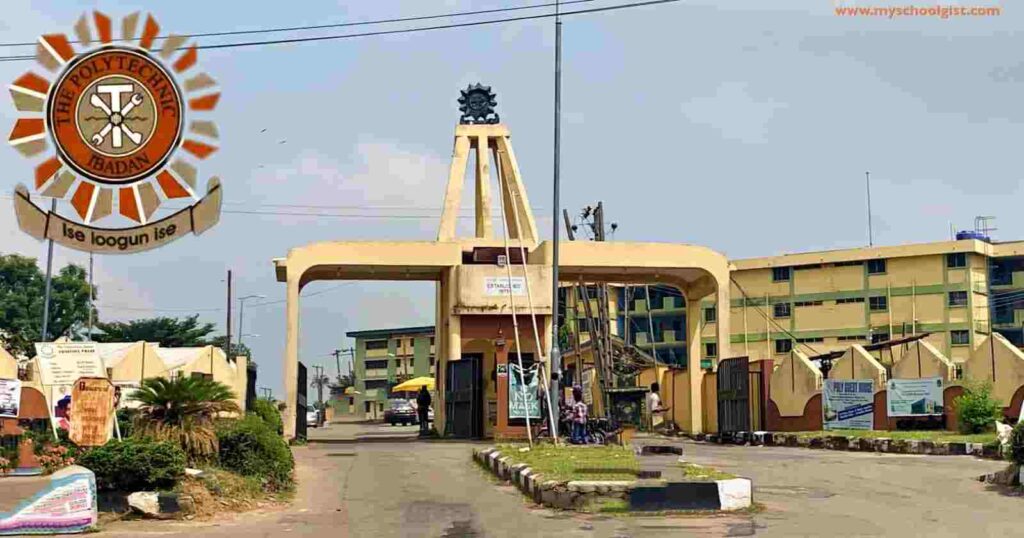
The Polytechnic, Ibadan was established in 1970 as a successor to the former Technical College, Ibadan. Owned by the Oyo State Government, it stands as one of the premier and most prestigious polytechnics in Nigeria, renowned for its strong focus on engineering, applied sciences, and technical vocational education. More than five decades of continuous operation under state government ownership – with the infrastructure, accreditation standing, and graduate employment track record that longevity produces – make it one of the most defensible choices in South-West Nigeria’s tertiary education landscape.
This review gives you the specific, verified information you need to decide whether The Polytechnic, Ibadan is the right institution for you – covering courses, fees, cut-off marks, admission process, campus life, and the honest assessment of what this institution delivers and where its limitations lie.
Quick Verdict: The Polytechnic Ibadan Review 2026
Legitimacy: Fully legitimate – state government-owned, NBTE-accredited polytechnic established 1970. Awards National Diploma (ND) and Higher National Diploma (HND) certificates recognized by Nigerian employers and professional bodies.
Best for: Students seeking practical, vocational, and technical education in engineering, applied sciences, business, and communications; candidates who want an affordable, accredited diploma from an established South-West institution; working adults who need the Daily Part-Time (DPP) programme.
Admission reality: Do not let the ‘Polytechnic’ title or the 150 JAMB cut-off deceive you; gaining admission into Poly Ibadan for flagship courses like Mass Communication, Accountancy, or Computer Science is just as competitive as applying to a federal university. The Post-UTME CBT is notoriously rigorous and carries massive weight in your final aggregate.
Biggest limitation: Awards ND and HND only – not a Bachelor’s degree. Students who eventually want a B.Sc. must pursue a degree top-up at a university after HND, which adds time and cost to the educational journey.
Brands.Ng Assessment: One of Nigeria’s most credible state polytechnics with genuine practical training depth; competitive admission, affordable fees, and a campus culture that produces work-ready graduates.
What You Need to Know First
- Full name: The Polytechnic, Ibadan (commonly called Poly Ibadan or POLYIBADAN)
- Founded: 1970 (successor to the former Technical College, Ibadan)
- Ownership: Oyo State Government
- Location: Sango area, Ibadan, Oyo State
- Official website: polyibadan.edu.ng
- Student portal: polyibadan.edu.ng (student login available for registered students)
- Qualifications awarded: National Diploma (ND) and Higher National Diploma (HND) – not Bachelor’s degrees
- Accreditation body: National Board for Technical Education (NBTE)
- General JAMB cut-off mark (2026/2027): 150 for National Diploma programmes
- Post-UTME: Required – CBT format
- ND application fee: ₦2,000 (local); $7.50 (international)
- HND application fee: ₦5,000 (local); $15.00 (international)
- Acceptance fee (ND1 freshers): ₦30,000
- Acceptance fee (HND1 freshers): ₦32,500
- Estimated tuition range: ₦45,000 to ₦85,000 per session
- Hostel refusal fee: ₦5,000 for students not taking hostel accommodation
- Study modes available: Full-time ND, Full-time HND, Daily Part-Time (DPP)
- 2026/2027 admission form: Available – the Polytechnic of Ibadan has opened its admission form for the 2026/2027 academic session.
What The Polytechnic Ibadan Actually Is
Understanding what Poly Ibadan is – and what it is not – is the most important context for any prospective student making an informed decision.
The Polytechnic, Ibadan is a purely polytechnic institution. It awards National Diploma (ND) and Higher National Diploma (HND) certificates, not Bachelor’s degrees (B.Sc./B.A.). This distinction matters structurally. The ND is a two-year programme equivalent to the first two years of university study in its respective field, with a heavier emphasis on practical, applied, and vocational competence than university coursework typically provides. The HND is a further two-year programme completed after a mandatory one-year industrial training (IT) period, producing graduates with a combination of theoretical grounding and documented workplace experience.
The institution’s founding mission – as a successor to the Technical College, Ibadan in 1970 – established a specific pedagogical orientation that has persisted across five decades: practical technical and applied education for industries that need graduates who can work, not just theorize. Engineering workshops, laboratory infrastructure, and industry-facing curricula are core to what Poly Ibadan delivers, not supplementary additions to a lecture-based programme.
The Polytechnic Ibadan has a large and diverse student body with students from different age brackets, religions and cultural backgrounds. This demographic range reflects the institution’s accessibility – affordable fees relative to private universities, multiple study modes including the Daily Part-Time (DPP) programme for working adults, and a JAMB cut-off that, while competitive in practice, is nominally accessible to a wider range of UTME scores than federal university entry requirements typically allow.
What Poly Ibadan is not: it is not a university-equivalent institution for students whose career paths require a Bachelor’s degree as a minimum entry credential. Law, Medicine, Pharmacy, and Architecture all require university degrees that Poly Ibadan cannot award. Students in these career paths need a university admission, not a polytechnic placement. For students in engineering, business, communications, applied sciences, and technology – where the ND and HND are recognized and valued entry-level credentials – Poly Ibadan is a legitimate and often commercially sensible choice.
Why Nigerian Students Choose The Polytechnic Ibadan
The student who genuinely prefers applied education over lecture-heavy academics. Engineering technology, building technology, electrical installation, and laboratory science programmes at Poly Ibadan are built around workshop and laboratory practice that university equivalents rarely match in hands-on hours. A student who learns through doing rather than through lecture-hall instruction often thrives in the polytechnic environment and struggles with the passive learning model that university teaching in Nigeria frequently defaults to.
The JAMB candidate with a competitive score who wants South-West Nigeria’s strongest polytechnic credential. Among state polytechnics in the South-West, Poly Ibadan’s brand recognition with employers – particularly in Ibadan, Lagos, and the broader Oyo State commercial environment – is stronger than most alternatives. A Mass Communication ND or Accountancy HND from Poly Ibadan carries more employer recognition than equivalent credentials from many private or newer state polytechnics.
The working adult who needs the Daily Part-Time (DPP) programme. If your JAMB score is borderline, applying for the Daily Part-Time (DPP) program is an incredibly strategic backdoor – you attend classes on the same campus and graduate with the exact same National Diploma (ND) certificate. For candidates who cannot interrupt employment for a full-time programme, or whose JAMB score falls below the threshold for competitive full-time admission, the DPP is not a lesser alternative – it produces the same certificate from the same institution.
The HND applicant returning after industrial training. HND applicants must have an ND certificate from a recognized school and a one-year work experience after ND for lower credit holders; candidates with a Pass in ND need two years of IT experience. Students who completed ND at Poly Ibadan or another accredited polytechnic and have served their industrial training period find the HND route a structured continuation of a professional trajectory that the polytechnic system is specifically designed to support.
Courses Offered at The Polytechnic Ibadan
The Polytechnic, Ibadan offers programmes across four broad faculty groupings: Science and Technology, Engineering Technology, Business and Management Studies, and Communication and Information Technology. All programmes are available at ND level; most are also available at HND level subject to accreditation status.
Science and Technology
- Science Laboratory Technology (SLT)
- Statistics
- Food Technology
- Agricultural Technology
- Hospitality Management
Engineering Technology
- Electrical/Electronics Engineering Technology
- Mechanical Engineering Technology
- Civil Engineering Technology
- Building Technology
- Computer Engineering Technology
- Quantity Surveying
- Estate Management
Business and Management Studies
- Accountancy
- Business Administration and Management
- Banking and Finance
- Marketing
- Office Technology and Management
- Public Administration
Communication and Information Technology
- Mass Communication
- Computer Science
- Information and Communication Technology (ICT)
- Library and Information Science
Note on course availability: NBTE accreditation status for specific programmes can change between academic sessions. Always verify that your chosen programme has current accreditation at both ND and HND levels on the official Poly Ibadan portal before applying. Admission into an accredited programme protects the recognition and transferability of your certificate in ways that provisional or under-review accreditation does not.
Cut-Off Marks: The Full Picture
For the 2026/2027 academic session, The Polytechnic, Ibadan has approved a general JAMB cut-off mark of 150 for admission into its National Diploma programmes. Candidates who score 150 and above in JAMB are eligible to apply for Post-UTME screening.
This 150 general cut-off is the floor – not the admission guarantee. Understanding the distinction between the general cut-off and departmental effective thresholds is the most consequential piece of information for any candidate applying to Poly Ibadan.
General cut-off (all programmes): 150 qualifies a candidate to apply and sit the Post-UTME screening.
High-competition departmental cut-offs: The cut-off mark for SLT in Ibadan Polytechnic is set at 160 by the management. The Poly Ibadan Cut-Off Mark for Mass Communication is 160 or above. Mass Communication, Accountancy, Computer Science, and Business Administration consistently attract higher effective admission thresholds driven by competition volume.
How departmental thresholds actually work: Ibadan Poly determines departmental cut-off marks based on course competition – courses with high competition may have stricter admission benchmarks. This means the effective admission threshold for Mass Communication or Accountancy in a year of unusually high applicant volume may be significantly above 160, as the aggregate of JAMB score and Post-UTME performance determines ranking among all qualified candidates.
What this means practically: A candidate scoring 158 in JAMB who performs exceptionally well in the Post-UTME CBT may gain admission to Mass Communication ahead of a candidate who scored 170 in JAMB but prepared inadequately for screening. The Post-UTME aggregate weight is high enough to make JAMB performance alone an insufficient predictor of admission outcome.
Post-UTME process: Poly Ibadan usually conducts a Computer-Based Test (CBT) for its Post-UTME screening. Candidates are tested on subjects relevant to their chosen course of study. The CBT format means preparation using past questions in the subjects relevant to your chosen programme is the most direct investment of time before screening.
HND cut-off: For HND admission at Poly Ibadan, candidates must have their O’Level results, a National Diploma (ND) certificate with at least a Lower Credit, and evidence of one year of mandatory Industrial Training. HND admission is a separate process from ND admission and does not involve JAMB.
School Fees: The Complete Breakdown
Poly Ibadan’s fee structure reflects its status as a state government-funded institution – materially more affordable than private polytechnics in the South-West, and comparable to or below federal polytechnic fee levels for most programmes.
Tuition fees (2026/2027 session): Estimated school fees range from ₦45,000 to ₦85,000. Science and Engineering programmes generally attract slightly higher fees than Management or Arts programmes. DPP (Daily Part-Time) programmes have a separate fee structure, typically lower than full-time programmes.
Acceptance fees (one-time, non-refundable):
- ND1 (fresh students): ₦30,000
- HND1 (fresh students): ₦32,500
- The acceptance fee must be paid usually within 2-3 days after the admission has been offered. Failure to pay within this period may result in cancellation of admission.
Application fees:
- ND application: ₦2,000 (local); $7.50 (international)
- HND application: ₦5,000 (local); $15.00 (international)
Hostel accommodation: Hostel spaces are limited. Students who do not take hostel accommodation pay a hostel refusal fee. This hostel refusal fee is pegged at ₦5,000.
Payment process: Students log into the portal, select “Pay as Student,” provide their matriculation number, surname, and other details, select their year and course of study, generate a transaction ID, and pay at any authorized POS or designated bank using the generated RRR code. Banks including Wema Bank, First Bank, and UBA are designated for Remita-based payment.
Additional fees to budget for: Beyond tuition and acceptance fees, students should budget for examination fees, library fees, laboratory fees (for Science and Engineering students), student union dues, and the cost of recommended textbooks and practical materials. These are not always captured in the headline tuition figure and can add meaningfully to total session costs. Always request a complete fee schedule from the bursary department after admission rather than relying on the tuition figure alone.
Financial aid: Scholarships are available for eligible students, including state government scholarships, private sponsorships, and student loans like the Nigerian Education Loan Fund (NELFUND). NELFUND applications are available to Nigerian students at accredited tertiary institutions – Poly Ibadan qualifies.
Is the Poly Ibadan Admission Form Out for 2026?
The Polytechnic of Ibadan has opened its admission form for the 2026/2027 academic session. The Continuing Education Centre of the Polytechnic has also commenced sale of its part-time admission forms for the current session.
How to apply for ND admission (2026/2027):
Step 1 – Visit the admission portal at odfel.polyibadan.edu.ng and fill out the application form with your personal and academic details.
Step 2 – Pay the application fee: ₦2,000 for ND (local students). Payment generates a transaction ID.
Step 3 – Upload required documents: O’Level result, JAMB registration details, passport photograph, and any other documents specified on the portal.
Step 4 – Submit your application and note your reference number for tracking.
Step 5 – Monitor the portal and your registered email for Post-UTME screening date and venue announcements.
If the portal is not opening, keep checking, and also visit the official website to get information about when it will be open.
First choice requirement: The Polytechnic, Ibadan requires all ND candidates to make the institution their first choice in JAMB. If you initially chose another school, you must do a Change of Institution on the JAMB portal. This is a mandatory requirement – candidates who have Poly Ibadan as a second or third choice in JAMB must change their institution choice before the application can be processed.
HND admission process: HND applicants must have an ND certificate from a recognized polytechnic with at least a Lower Credit. Apply on the school’s website, upload the ND certificate, O’Level result, IT certificate, and passport photograph, and pay the ₦5,000 application fee. HND admission does not require JAMB.
Closing date: The closing date for the Polytechnic of Ibadan admission form for the 2026/2027 session is announced through the official institutional portal. Candidates are advised to complete applications well before the closing date to avoid last-minute portal congestion and technical complications. Do not rely on third-party websites for closing dates – always verify directly at polyibadan.edu.ng.
Campus Life and Student Experience
Located in the bustling Sango area of Ibadan, the campus offers a highly energetic and vibrant student experience. The institution blends intense practical academic work with a rich social culture, providing students with access to massive tech hubs, workshops, and extracurricular societies within the historic city of Ibadan.
Accommodation reality: On-campus hostels exist, but they are highly competitive and usually given to freshers. The vast majority of students live off-campus in surrounding areas like Apete, Awotan, and Agbaje. Apete is the undisputed student capital of Poly Ibadan – it is packed with affordable lodges, cheap cafeterias, and direct transport links to the campus.
The cost of living in Ibadan is significantly lower than Lagos, making Poly Ibadan one of the more affordable higher education experiences in South-West Nigeria in total annual cost terms when tuition, accommodation, feeding, and transport are calculated together. Students who secure on-campus hostel accommodation benefit from proximity and lower housing costs during their first year.
Academic culture: Poly Ibadan’s academic culture reflects its practical orientation – laboratory sessions, workshop practicals, and industrial visits are core components of most programmes rather than optional supplements. Students in Engineering Technology programmes in particular spend substantial scheduled time in workshops. This is the feature that makes the polytechnic model genuinely different from university education, and it is the feature that produces the employment readiness that Poly Ibadan graduates are consistently associated with.
Industrial Training (IT): The mandatory one-year industrial training between ND and HND is both a formal academic requirement and a genuine career development tool. IT placements expose students to real workplace environments – manufacturing firms, financial institutions, media organizations, government agencies – before they complete their full qualification. Students who approach IT seriously, rather than treating it as a bureaucratic requirement, graduate from HND with documented professional experience that recent university graduates rarely have at the same stage.
Legitimacy and Accreditation
The Polytechnic, Ibadan is a fully legitimate state government institution with more than five decades of continuous operation. Its programmes are accredited by the National Board for Technical Education (NBTE), which is the statutory body responsible for polytechnic programme standards in Nigeria.
ND and HND certificates from Poly Ibadan are recognized by Nigerian employers, professional associations, and the relevant regulatory bodies for professions accessible through polytechnic qualification. They are also recognized as qualifying credentials for degree top-up programmes at accredited Nigerian universities for students who subsequently want to pursue a B.Sc. after completing their HND.
The institution is not a diploma mill or an unaccredited private outfit. It is an Oyo State Government institution whose legal standing, funding, and accreditation status are publicly verifiable through the NBTE and the Oyo State government records.
Honest Assessment: Where Poly Ibadan Excels and Where It Falls Short
Where it genuinely delivers:
The practical and technical depth of its Engineering Technology, Science Laboratory Technology, and applied sciences programmes is the institution’s strongest asset. Students who complete these programmes with strong grades and genuine engagement with practicals graduate with employment-relevant competencies that many Nigerian employers value over the theoretical grounding of equivalent university graduates.
The cost-to-quality ratio is compelling. At ₦45,000-₦85,000 per session in tuition – well below private university fees in the same region – and with Ibadan’s low cost of living, Poly Ibadan provides accredited technical education at a price point that is genuinely accessible to Nigerian families of moderate income.
The Daily Part-Time programme is one of the institution’s most underappreciated offerings. Working adults who cannot afford to interrupt employment for two years of full-time study access the same ND qualification on the same campus through a schedule that accommodates employment – an option that most Nigerian tertiary institutions do not offer with equivalent flexibility.
Where it falls short:
Customer service and administrative efficiency at Nigerian state polytechnics – including Poly Ibadan – frequently frustrate students during registration, clearance, and fee payment periods. Long queues, portal downtime, and bureaucratic friction at administrative offices are documented features of the student experience that no prospective student should underestimate. These are systemic issues common to state-funded tertiary institutions in Nigeria and reflect resource and systems constraints rather than institutional malice – but they carry real time and stress costs for students who experience them.
Infrastructure quality varies across faculties. Engineering and Science facilities – workshops, laboratories, and equipment – are the institution’s strongest investment areas. Library resources, ICT infrastructure, and classroom facilities in some departments have not kept pace with student population growth. Students in technology and science-adjacent programmes generally have better access to the practical facilities they need than students in management and humanities programmes.
The ND/HND ceiling is a genuine limitation for students whose career aspirations require a university degree. Nigeria’s formal sector still treats university and polytechnic qualifications differently in recruitment – particularly in the public sector and in professions regulated by university-degree-only councils. Students who want to avoid the degree top-up process should consider this before committing to the polytechnic route.
Frequently Asked Questions
What Are the Courses Offered in Poly Ibadan?
The Polytechnic, Ibadan offers programmes at both National Diploma (ND) and Higher National Diploma (HND) levels across four broad academic divisions.
In Science and Technology: Science Laboratory Technology, Statistics, Food Technology, Agricultural Technology, and Hospitality Management are among the core programmes. In Engineering Technology: Electrical/Electronics Engineering, Mechanical Engineering, Civil Engineering, Building Technology, Computer Engineering, and Quantity Surveying. In Business and Management Studies: Accountancy, Business Administration and Management, Banking and Finance, Marketing, Office Technology and Management, and Public Administration. In Communication and Information Technology: Mass Communication, Computer Science, Information and Communication Technology, and Library and Information Science.
All programmes are NBTE-accredited, though accreditation status should be verified at the time of application on the official portal (polyibadan.edu.ng) as it can change between sessions. Most programmes are available in both full-time and Daily Part-Time (DPP) study modes.
What Is the Cut-Off Mark for Polytechnic Ibadan Courses?
The general JAMB cut-off mark for The Polytechnic, Ibadan for the 2026/2027 academic session is 150. Candidates who score 150 and above in JAMB are eligible to apply for Post-UTME screening.
However, the effective admission threshold is higher than 150 for competitive programmes. The cut-off mark for Science Laboratory Technology (SLT) is set at 160. The cut-off mark for Mass Communication is 160 or above. Accountancy, Computer Science, and Business Administration similarly attract higher effective thresholds in practice due to competition volume.
Meeting the cut-off mark does not guarantee admission. Candidates may still miss admission due to poor Post-UTME performance, insufficient O’Level grades, or because their programme was oversubscribed in that session. The Post-UTME CBT aggregate – combining JAMB score with screening performance – is the decisive admission variable, not the JAMB score alone.
For HND admission, the cut-off is academic rather than exam-based: candidates must have a National Diploma with at least a Lower Credit classification and evidence of one year of mandatory Industrial Training (IT). Candidates with a Pass in ND need two years of IT experience.
How Much Is the Ibadan Poly School Fee?
Estimated tuition fees at The Polytechnic, Ibadan range from ₦45,000 to ₦85,000 per session, with Science and Engineering programmes typically at the higher end and Management or Arts programmes at the lower end.
Beyond tuition, fresh students must pay an acceptance fee: ₦30,000 for ND1 freshers and ₦32,500 for HND1 freshers. This one-time, non-refundable fee must be paid within 2-3 days of admission offer to avoid cancellation.
Application fees are ₦2,000 for ND (local students) and ₦5,000 for HND (local students). Students who decline hostel accommodation pay a hostel refusal fee of ₦5,000.
Always verify the current fee schedule directly on the official Poly Ibadan portal (polyibadan.edu.ng) before payment – fees are reviewed between sessions and third-party sources may not reflect the most current figures. Pay through Remita using the generated RRR code at any designated bank (Wema Bank, First Bank, UBA) or through the online payment option on the portal.
Is Poly Ibadan Form Out for 2026?
Yes. The Polytechnic of Ibadan has opened its admission form for the 2026/2027 academic session. The Continuing Education Centre has also commenced sale of part-time admission forms for the current session.
To apply: visit the admission portal at odfel.polyibadan.edu.ng(check back if it’s down), fill out the application form, pay the ₦2,000 ND application fee (or ₦5,000 for HND), upload required documents including your O’Level result and JAMB details, and submit your application to receive a tracking reference number.
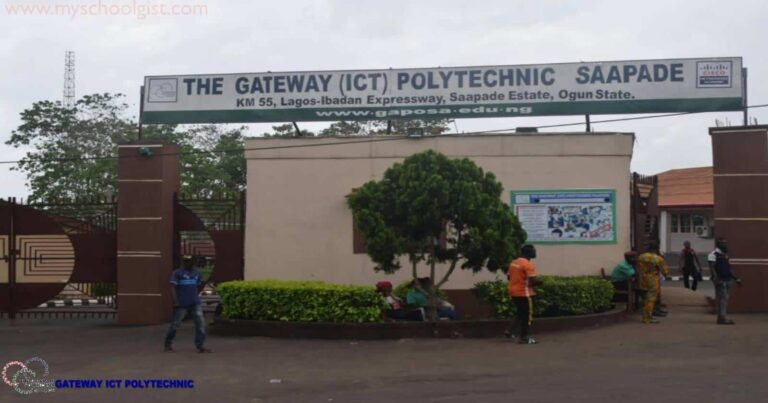
Also read: Gateway Polytechnic Saapade Review: Cut-Off Mark, Fees, and Admission Requirements (2026)
Poly Ibadan requires all ND candidates to make the institution their first choice in JAMB. Candidates who chose another institution must complete a Change of Institution on the JAMB portal before applying.
The closing date for the 2026/2027 session is published on the official portal. Apply well before the deadline to avoid portal congestion near the closing date. Monitor polyibadan.edu.ng directly for the confirmed application deadline.
The Brands.Ng Submission
The Polytechnic, Ibadan is not a consolation institution. It is a deliberate choice – one that makes sense for specific students with specific career trajectories, and makes limited sense for others.
For the student who wants practical technical education in an institution with 55 years of operational history, NBTE-accredited programmes, an affordable fee structure, and the campus culture that Ibadan’s vibrant student environment produces, Poly Ibadan is a strong choice. The Daily Part-Time option adds a flexibility that most South-West competitors cannot match. The employment recognition of its engineering and technology programmes in the Nigerian industrial sector is genuine and documented.
For the student who wants a Bachelor’s degree, or who is applying to a professional programme that requires university qualification, or who needs the NDIC-insured deposit equivalent of a Federal university’s accreditation standing – Poly Ibadan is not the right institution.
The honest question for every prospective student is not “is Poly Ibadan a good institution?” The honest question is “is the ND or HND certificate from Poly Ibadan the right qualification for the career path I am building?” For the right student, the answer is clearly yes.
Apply early, prepare seriously for the Post-UTME CBT, and be clear about whether your programme has current NBTE accreditation before you pay an acceptance fee.
Editorial Note: This review reflects publicly available information, verified institutional data, and student-reported experiences as of July 2026. Brands.Ng does not receive payment for editorial coverage of educational institutions. All fees, cut-off marks, and admission details should be verified directly at polyibadan.edu.ng before making any payments or decisions. The Polytechnic, Ibadan was given the opportunity to respond to findings prior to publication.
Stay ahead of the businesses shaping Nigeria.
Get important company developments, analysis, research and business intelligence from Brands.Ng directly on WhatsApp.