
OPay has the most users. Moniepoint moves the most money. Kuda and Flutterwave are racing to turn transactions into deposits. And the big banks are no longer sitting still.
On the surface, Nigeria’s fintech sector looks like a straight user‑count contest. Dig deeper and a different picture emerges: the race is fragmenting into four separate battles – for everyday users, for merchant transactions, for deposits, and for regulatory legitimacy. The leaders in each lane are not the same.
The Builder at a Glance
| Company | Primary focus | Reported users / customers (latest) | Key 2025 metric | Licence status (2026) |
|---|---|---|---|---|
| OPay | Consumer payments, wallet, lending | 39.3 million monthly active users (FY2025); ~45 million users by Q2 2026 | $358 billion gross transaction value in 2025; revenue $536.3 million; net profit $72.47 million | Licensed Mobile Money Operator (MMO); CBN has designated OPay as systemically important |
| Moniepoint | SME payments, POS, business banking, credit | 6 million+ active businesses (2025) | ₦412 trillion processed in 2025; over 14 billion transactions; over ₦1 trillion in credit disbursed to businesses | Licensed payment service provider / payments company; CBN has designated Moniepoint as systemically important; pursuing full banking capabilities via payments licence |
| PalmPay | Consumer wallet, payments, credit | 35 million+ registered users (2025) | Reported 15 million daily transactions in Q1 2025; strong retention (circa 80%) cited in industry profiles | Licensed Mobile Money Operator (MMO); CBN has designated PalmPay as systemically important |
| Kuda | Digital bank (neobank), retail accounts, overdrafts | About 7 million registered users; target 1.7 million monthly active users in 2026 | ₦16.4 billion in overdrafts in Q1 2025 (up 43%); national MFB licence upgrade in January 2026 | National Microfinance Bank (MFB) licence (upgraded Dec 2025/Jan 2026); NDIC cover up to ₦2 million per depositor |
| Flutterwave | Payments infrastructure, pan‑African gateway | Not publicly disclosing total end‑users; focuses on merchants and developers | Crossed $40 billion in lifetime payments volume by early 2026; secured national MFB licence in April 2026 | National Microfinance Bank (MFB) licence (April 2026); previously operated via partner banks for deposits |
| FairMoney | Digital lending (consumer + SME), savings | Not disclosing total users; focuses on borrowers and savers [legit] | Over ₦150 billion in loans disbursed in 2025; nearly 15,000 loans daily; paying over ₦7 billion in interest on savings | Microfinance Bank (MFB) licence; working towards national MFB licence to match scale |
| Paga | Agent network, payments, merchant services | 23 million users (2024); 335 million transactions totalling ₦14 trillion cumulative by 2024 | 300 million transactions worth ₦14.3 trillion in a recent quarter across retail and business arms | Licensed MMO / payment service provider; part of CBN’s systemically important fintech group |
Data notes: User figures come from company disclosures, investor documents and reputable industry profiles. Where companies report “registered users”, “monthly active users” and “daily active users” differently, this table uses the most specific active metric available for 2025 – 2026. Transaction values are in local currency unless stated otherwise; USD conversions in source documents vary by exchange rate and date.
The Origin Story: What Problem Were They Solving?
Nigeria’s fintech boom did not start with apps. It started with frictions:
- Cash was dominant, but unsafe and inefficient.
- Bank accounts were cumbersome to open and maintain for many Nigerians.
- SMEs and market traders relied on cash and informal credit.
- Cross‑border payments were slow and expensive.
- Traditional banks were slow to innovate on retail and SME digital experiences.
Early fintechs attacked different slices of this problem:
- OPay and PalmPay targeted mass‑market consumers and agents, offering easy wallet onboarding, bill payments, airtime, and zero‑fee transfers. Their model mirrors China’s mobile money evolution: win users with payments, then monetise via credit, merchant services and value‑added products.
- Moniepoint started with POS terminals for merchants, then layered on business accounts, collections, payroll and credit. Its thesis: own the merchant’s entire cash flow, not just a single transaction.
- Kuda positioned itself as a “bank for the free”, offering free transfers, no minimum balance and a mobile‑first experience for salary earners and young urban customers.
- Flutterwave focused on infrastructure: helping businesses accept payments online and across borders, then expanding into payouts, cards and embedded finance.
- FairMoney leaned into digital credit, using alternative data to underwrite consumer and SME loans at speed, then adding savings products to fund part of its loan book.
- Paga built one of the earliest large agent networks, enabling cash‑in/cash‑out, bill payments and merchant payments in areas underserved by branches.
Each model addressed a genuine gap. But as the market matured, the gaps began to overlap.
The Scoreboard: Users, Transactions, Deposits, Licences
To understand who is “winning”, you need four separate scoreboards.
1. Users: OPay Leads on Active Consumers
On raw consumer reach, OPay is ahead.
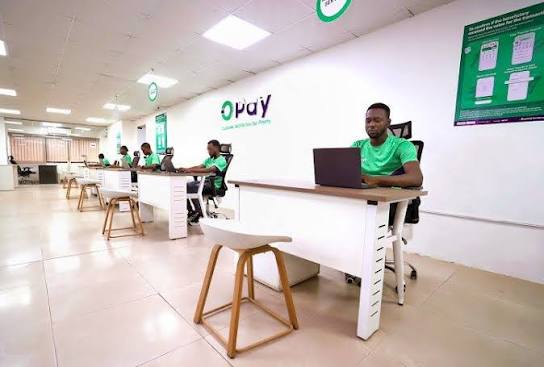
- OPay reported 39.3 million monthly active users in FY2025, up 57% from 25.1 million in 2024, with daily active users at 22.7 million in Q4 2025.
- Company materials and Nigerian media cite over 45 million users by mid‑2026, with more than 1 million merchants and agents.
- PalmPay reports 35 million+ registered users and 15 million daily transactions in Q1 2025, with high retention cited in industry profiles.
- Kuda has about 7 million registered accounts but is targeting around 1.7 million monthly active users in 2026, reflecting a more focused, salary‑earner segment.
OPay’s advantage is scale and frequency. Its daily‑to‑monthly active user ratio of about 57.8% in Q4 2025 suggests high engagement, which is critical for monetisation via payments, credit and merchant services.
2. Transaction Volume: Moniepoint Moves the Most Money
If the metric is transaction value and volume, Moniepoint is the clear leader.
- Moniepoint processed over 14 billion transactions worth ₦412 trillion in 2025, nearly tripling its 2023 volumes.
- It handles about ₦10 trillion monthly and powers roughly 8 out of 10 in‑person POS payments in Nigeria, according to company statements and independent profiles.
- OPay and PalmPay together processed ₦20.71 trillion in Q1 2025, a massive increase from 2021 but still smaller than the volumes moving through Moniepoint’s merchant network and some large banks.
Moniepoint’s model is different: fewer end‑users than OPay, but far higher transaction value per active business. This gives it leverage in credit (using cash‑flow data for underwriting) and in locking merchants into its ecosystem.
3. Deposits and Banking: Banks Still Lead, but Fintechs Are Closing In
On deposits, traditional banks remain dominant.
- Nigeria’s five tier‑one banks processed a combined ₦286.19 trillion in mobile transactions in 2025, with Zenith, GTCO and UBA alone investing over ₦415 billion in technology upgrades since 2024.
- FUGAZ (FirstBank, UBA, GTBank, Access, Zenith) held around ₦110 trillion in deposits as of September 2025, with retail deposits up 24% in FY2025.
Fintechs are building deposit bases, but mostly under microfinance or MMO frameworks:
- Kuda and Flutterwave now hold national MFB licences, allowing them to take deposits directly (with NDIC cover up to ₦2 million per depositor for MFBs).
- OPay and PalmPay operate as MMOs with NDIC insurance up to ₦5 million for wallet balances, and have been designated systemically important by the CBN.
- FairMoney, as an MFB, is building a savings book to fund part of its loan portfolio, paying over ₦7 billion in interest to savers in 2025.
The strategic implication: banks still own large corporate and high‑net‑worth deposits, but fintechs are winning the everyday transaction relationship. If OPay, PalmPay or Kuda aggressively scale savings and salary‑account products, they could begin to pull meaningful deposit share from smaller banks over time.
Also Read: Moruf Oseni, The Digital Architect Who Turned Nigeria’s Oldest Bank Into a Fintech Powerhouse
4. Regulatory Legitimacy: The Licence War Is Underway
Regulatory status is no longer a side issue; it is central to who can do what.
- CBN’s 2025 fintech report highlights about 11 billion instant‑payment transactions in 2024, up from 5 billion in 2022, and frames fintechs as critical to financial inclusion and payments efficiency.
- CBN has designated several fintechs – including Flutterwave, OPay, Moniepoint, Kuda, PalmPay and Paga – as systemically relevant, putting them in a similar “too important to fail” category as some banks.
- Flutterwave secured a national MFB licence in April 2026, allowing it to hold deposits and lend directly in Nigeria without relying on partner banks.
- Kuda’s licence was upgraded to a national MFB in December 2025/January 2026, removing geographic restrictions and strengthening its institutional standing.
- FairMoney is pursuing a national MFB licence to match its scale, having already disbursed over ₦150 billion in loans in 2025.
- OPay and PalmPay remain MMOs but are deeply integrated into the payments system and under heightened regulatory scrutiny as their volumes grow.
Licences matter because they determine who can hold deposits, who can lend, who can issue cards, and who can be seen as a “real bank” by customers and regulators. The trend is clear: the largest fintechs are moving towards full banking‑like permissions, either directly or via partnerships.
What the Evidence Shows: Four Different Races
When you line up the data, four distinct races appear.
Race 1: Everyday Consumer Wallets – OPay vs PalmPay
For the average Nigerian making daily payments, buying airtime, paying bills and sending money, OPay and PalmPay are the most visible brands.
- OPay’s 39.3 million monthly active users and $358 billion in gross transaction value in 2025 show it has become a default wallet for millions.
- PalmPay’s 35 million+ users and reported 15 million daily transactions suggest a similar, if slightly smaller, footprint.
Both are winning on convenience, agent density and zero‑fee transfers. Their next battle is credit: OPay originated $938.3 million in new loans in 2025, up 285% from 2024, with 4.6 million unique borrowers in Nigeria in Q4. PalmPay is also expanding lending and savings. Whoever builds the best risk models on top of these payment histories will capture disproportionate value.
Race 2: Merchant Payments and SME Banking – Moniepoint’s Lane
Moniepoint is not trying to be OPay. It is trying to be the operating system for Nigerian businesses.
- Six million active businesses, ₦412 trillion processed in 2025, and over ₦1 trillion in credit disbursed to businesses in the same year.
- Eight out of 10 in‑person POS payments flow through Moniepoint, giving it unmatched visibility into merchant cash flows.
This is a different kind of moat. Once a merchant uses Moniepoint for collections, payroll, POS and credit, switching costs are high. Moniepoint can price credit more accurately than most banks because it sees real‑time transaction data. Its risk is concentration: if the SME segment suffers in a downturn, its loan book could be exposed.
Race 3: Salary Accounts and Digital Banking – Kuda, OPay, and the Banks
The next frontier is the salary account: where Nigerians receive their pay and keep their main balances.
- Kuda is explicitly built for this segment, with over 7 million registered users and a focus on young, urban salary earners.
- OPay is expanding beyond wallets into more banking‑like features, with high engagement and a large user base that overlaps heavily with the salary‑earner demographic.
- Traditional banks are fighting back with improved apps, pay‑with‑transfer features and aggressive digital marketing. GTCO, for example, reported a 7,814.8% surge in pay‑with‑transfer transactions.
Whoever owns the salary account wins a stable, low‑cost deposit base and the first claim on monthly spending. Kuda’s national MFB licence strengthens its position, but its NDIC cover is capped at ₦2 million, which may limit its appeal for higher‑balance customers compared to commercial banks.
Race 4: Infrastructure and Pan‑African Ambition – Flutterwave, Paystack, Interswitch
Flutterwave is playing a different game: infrastructure and pan‑African scale.
- Over $40 billion in lifetime payments volume by early 2026 and a national MFB licence that allows it to hold deposits and lend directly in Nigeria.
- Investments in US money transmitter licences, stablecoin rails (via Tempo), and acquisitions such as Mono show a strategy of building a financial operating system for Africa, not just a payments app.
Flutterwave may never have the most consumer users, but it can become the backbone on which many other fintechs and banks build. Its licence upgrade reduces dependency on partner banks and improves margin capture on Nigerian flows.
Risks to Watch: Regulation, Fraud, and Macro Shocks
No analysis of Nigeria’s fintech leaders is complete without acknowledging the risks.
- Regulatory enforcement: CBN and other regulators have fined several fintechs and banks for infractions ranging from crypto‑related transactions to reporting failures and cybersecurity gaps. As fintechs grow larger and more systemically important, scrutiny will intensify.
- Fraud and security: OPay and others have publicly emphasised fraud detection, with OPay citing over 5,000 blocking rules to protect customers. High transaction volumes attract fraudsters; any major breach could damage trust.
- Macro volatility: Currency depreciation, inflation and interest rate shifts affect loan performance, funding costs and customer behaviour. Digital lenders like FairMoney and Moniepoint must manage credit risk carefully in this environment.
- Licence limitations: MFB licences come with lower NDIC cover (₦2 million) than commercial banks (₦5 million), which may constrain deposit growth for Kuda and Flutterwave among higher‑balance customers.
- Profitability pressure: OPay only turned profitable in FY2025 after years of heavy investment. Others are still balancing growth and profitability. A tighter funding environment could force tougher choices.
What This Means for Different Readers
For Fintech CEOs and Founders
The market is no longer about being the biggest app. It is about choosing your lane and executing deeply:
- If you are consumer‑facing, focus on engagement and monetisation per active user, not just registered accounts.
- If you are SME‑focused, deepen integration into merchants’ cash flows and use data to price credit better than banks.
- If you are infrastructure‑focused, licences, compliance and reliability are your product as much as your API.
For Investors
Look beyond headlines about user counts and valuations. Key questions:
- What is the quality of revenue (payments fees vs interest income vs one‑off gains)?
- How diversified is the loan book, and what is the true NPL ratio?
- What licence class does the company operate under, and what are the deposit insurance implications?
- How dependent is the business on a single market (e.g., Nigeria) versus pan‑African or global flows?
OPay’s path to profitability and potential US IPO, Moniepoint’s transaction scale, and Flutterwave’s licence strategy are all different models of value creation. Each carries distinct risk‑return profiles.
Also Read: From Merchant Bank to Tier‑One Contender: How Nneka Onyeali‑Ikpe Is Rebuilding Fidelity Bank
For Customers and Small Businesses
- For everyday payments and agent access, OPay and PalmPay are hard to beat on convenience.
- For business collections, POS and working capital, Moniepoint and similar platforms offer deep integration.
- For salary accounts and digital banking, compare licence type, NDIC cover, fees and customer support quality between Kuda, OPay, PalmPay and traditional banks.
- For cross‑border and online business payments, Flutterwave and similar infrastructure providers are critical, even if you never see their brand as a consumer.
What Could Happen Next
Three scenarios look plausible over the next 24 to 36 months:
- Further consolidation around licensed players. As CBN tightens rules and capital requirements, smaller or undercapitalised fintechs may merge, exit, or become acquisition targets for larger fintechs or banks.
- Deposit competition intensifies. With MFB licences, Kuda, Flutterwave and others could aggressively market savings and salary products, forcing smaller banks to defend their retail deposit base with better rates and digital experiences.
- Pan‑African infrastructure wins. Players like Flutterwave, Moniepoint and OPay that build cross‑border rails, remittance products and multi‑country compliance capabilities could capture disproportionate value as African trade and digital commerce grow.
What Remains Uncertain
- Exact active user numbers for some players remain opaque; companies disclose different metrics (registered vs monthly active vs daily active).
- Asset quality data for digital lenders is not always audited or fully disclosed; NPL figures should be treated with caution.
- The ultimate shape of CBN’s regulatory framework for large fintechs – especially around deposits, lending and interoperability – is still evolving.
Brands.Ng’s view is that the “winner” in Nigeria’s fintech race will not be a single company. It will be a small set of players that each dominate a specific layer: consumer wallets, merchant banking, deposits, and infrastructure. OPay, Moniepoint, Kuda, Flutterwave, PalmPay, FairMoney and Paga are each building strong positions in one or more of these layers. The next phase will be about depth, not just breadth.
Key Takeaways
- OPay leads on consumer users and engagement, with 39.3 million monthly active users and $358 billion in transaction value in 2025.
- Moniepoint leads on transaction volume and merchant lock‑in, processing ₦412 trillion across 14 billion transactions in 2025 and serving 6 million+ businesses.
- Kuda and Flutterwave are strengthening their banking credentials with national MFB licences, positioning them to compete more directly for deposits and lending.
- Traditional banks still dominate deposits, but fintechs own a growing share of everyday transactions, especially among SMEs and young consumers.
- Regulatory status, fraud management and macro resilience will be as important as user growth in determining long‑term winners.
Sources
- Central Bank of Nigeria (CBN) – 2025 Annual Report and 2025 Fintech Assessment Report (mobile money transactions, systemically important fintechs)
- Nigeria Inter‑Bank Settlement System (NIBSS) – e‑payment and instant payment data for 2024-2025
- OPay investor documents and company disclosures reported by Nairametrics, Brands.Purng, Innovation Village, Standard Bank coverage (FY2025 GTV, users, revenue, profit)
- Moniepoint company statements and profiles (2025 transaction volumes, business customers, credit disbursement)[
- PalmPay and OPay industry profiles (users, daily transactions, market positioning)
- Kuda licence and product details from CBN filings, Brands.Ng reviews, user documentation (national MFB licence, NDIC cover, user numbers)
Stay ahead of the businesses shaping Nigeria.
Get important company developments, analysis, research and business intelligence from Brands.Ng directly on WhatsApp.