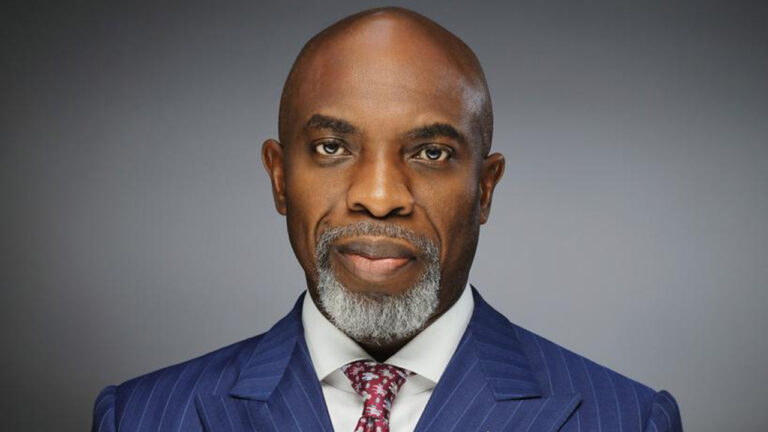

Nneka Onyeali‑Ikpe has repositioned Fidelity Bank from a mid‑tier universal lender into a capital‑strong, digitally enabled franchise with a clear path to regional expansion. Under her leadership since January 2021, the bank has delivered record earnings, tightened asset quality and used the CBN’s 2024 recapitalisation directive as a strategic springboard rather than a compliance burden. The result is a bank that is no longer just surviving Nigeria’s volatile macro environment, but actively shaping its next growth phase.
The Builder at a Glance
| Field | Details |
|---|---|
| Full Name | Dr. Nneka Onyeali‑Ikpe, OON |
| Known For | First female MD/CEO of Fidelity Bank Plc; steering post‑consolidation growth and digital transformation |
| Core Institutions | Fidelity Bank Plc (Nigeria); FidBank UK Limited |
| Key Industries | Commercial banking, retail banking, corporate banking, digital financial services, sustainability finance |
| Year Founded | 1988 (as Fidelity Union Merchant Bank Limited) |
| Corporate Headquarters | Lagos, Nigeria |
| 3 Major Historical Milestones | – 2005: Merger with FSB International Bank and Manny Bank under CBN consolidation, creating the “enlarged Fidelity” – 2021: Onyeali‑Ikpe appointed first female MD/CEO, launching a seven‑point transformation agenda – 2024–2025: Successful equity raise and strong FY2025 results (N1.52tn gross earnings, N10.46tn assets, CAR 30.94%) positioning the bank for regional expansion |
The Origin Story & Problem Solved
Fidelity Bank entered Nigeria’s financial system in 1988 as a merchant bank, at a time when the sector was fragmented, undercapitalised and heavily reliant on corporate and government balances. The 1999 conversion to commercial banking and 2001 universal banking licence reflected a broader industry shift: banks needed retail deposits, diversified income and stronger balance sheets to survive.
The decisive moment came in 2005, when the Central Bank of Nigeria (CBN) forced a consolidation exercise to create stronger, more resilient banks. Fidelity merged with FSB International Bank and Manny Bank, cancelling their shares and exchanging them for Fidelity Bank Plc shares under a defined scheme. Strategically, this was not just a capital fix; it was a distribution and capability play. The merger gave Fidelity a larger branch network, a broader customer base and the scale needed to compete in a post‑consolidation landscape dominated by a few large players.
By the time Nneka Onyeali‑Ikpe joined as Executive Director in 2015, the bank had stabilised but still faced the classic mid‑tier dilemma: how to break into the top tier without taking excessive risk in a high‑inflation, high‑NPL, FX‑constrained environment. Her appointment as MD/CEO in January 2021, following a structured succession plan, signalled a shift from steady management to deliberate transformation.
Onyeali‑Ikpe’s core problem statement was clear: Fidelity needed to move from “safe and stable” to “resilient and scalable”. That meant strengthening capital, improving asset quality, digitising distribution, and building a brand that could attract both retail and institutional confidence.
Strategic Moats & The Scaling Blueprint
Onyeali‑Ikpe’s approach can be read as a series of calculated moats designed to protect margins, reduce risk and enable expansion.
1. Capital as a strategic weapon, not just a regulatory requirement
The CBN’s March 2024 recapitalisation directive raised the minimum capital floor for banks, forcing a new round of consolidation and capital raises. Fidelity moved early, securing shareholder approval for an equity raise in August 2023 and completing a N127.10 billion capital exercise in 2024. Publicly available evidence suggests this was not defensive; it was intended to fund three priorities: business growth and regional expansion, technological transformation, and diversification of earnings through digital channels. The payoff shows in the numbers: capital adequacy ratio rose from 23.47% in FY2024 to 30.94% in FY2025, well above regulatory minimums and peer averages.
2. Asset quality discipline in a high‑risk macro environment
Nigeria’s banking sector has battled rising non‑performing loans (NPLs) driven by FX volatility, inflation and sector‑specific stress (especially oil & gas and some SME segments). Fidelity’s management explicitly targeted asset quality as a differentiator. The bank’s NPL ratio (Stage 3) fell from 3.5% in 2023 to 3.1% in 2024, then to 2.4% in 2025, while coverage ratios improved significantly. This is not accidental; it reflects tighter credit underwriting, proactive restructuring and stronger risk governance. In a sector where a few bad corporate exposures can wipe out years of profit, this discipline is a core moat.
3. Digital distribution and financial inclusion as growth engines
When Onyeali‑Ikpe took over in 2021, she announced a seven‑point agenda centred on innovation, brand refresh, workforce transformation, service excellence, digital transformation, performance discipline and accelerated growth. The digital pillar is critical: with over 10 million customers served across 251 business offices and digital channels, Fidelity has invested heavily in mobile, USSD and online platforms to reduce reliance on physical branches and lower cost‑to‑serve. While specific product metrics are not always disclosed in public filings, the bank’s emphasis on digital onboarding, transaction banking and agency channels aligns with EFInA’s finding that 36% of Nigerian adults were financially excluded as of 2020, creating a large addressable market for low‑cost digital accounts.
4. International foothold as a hedge and testing ground
Fidelity’s UK subsidiary, FidBank UK Limited, serves a dual purpose: it provides a platform for diaspora banking and trade finance, and acts as a testing ground for governance and product standards that can be imported back to Nigeria. The subsidiary has been narrowing losses, moving from a $1.3 million loss in H1 2024 to $0.4 million in H1 2025, and is on course to post its first full‑year profit in 2025 since acquisition. This is a classic “regulatory hedge”: a stable, hard‑currency jurisdiction that diversifies risk and enhances credibility with international partners.
5. Sustainability and ESG as a capital and reputation advantage
Fidelity has positioned itself as a leader in sustainability reporting among Nigerian banks, publishing an ISSB‑compliant sustainability and climate report in 2024 and launching a Three‑Year Climate Strategy Implementation Plan (2025–2027) with partners such as AfricInvest and Proparco. In a global environment where development finance institutions and large asset managers increasingly screen for ESG compliance, this is not just optics; it improves access to cheaper funding, technical assistance and co‑investment opportunities. It also helps the bank navigate emerging climate‑related risks in its loan book, particularly in energy and agriculture.
The Modern Footprint & Outlook (as of August 2026)
As of August 31, 2026, Fidelity Bank Plc stands as one of Nigeria’s top‑10 banks by assets and earnings, with a clear ambition to become a regional player. Key markers of its current position include:
- Scale and profitability: Gross earnings grew 45.6% year‑on‑year to N1.52 trillion in FY2025, with profit after tax of N242.4 billion. Total assets reached N10.46 trillion, up 18.6% from N8.82 trillion in 2024, while customer deposits rose 16.1% to N6.89 trillion.
- Capital strength: Capital Adequacy Ratio of 30.94% as at December 31, 2025, providing significant headroom for growth and potential M&A.
- Asset quality: Stage 3 NPL ratio at 2.4% in 2025, down from 3.1% in 2024, with improved coverage ratios.
- Digital and customer reach: Over 10 million customers served through 251 business offices and digital channels in Nigeria and the UK.
- Regional ambition: Management has publicly stated intentions to expand into 2–5 African countries over the next 3–5 years, with a preference for brownfield and greenfield opportunities that fit its risk and return model.
Looming Challenges and Expansion Hurdles
Despite the strong momentum, Fidelity faces several structural and macro challenges:
1. Recapitalisation‑driven industry reshuffle
The CBN’s 2024 directive has triggered a new wave of mergers, acquisitions and capital raises across the sector. While Fidelity is well‑capitalised, the risk is that larger, better‑funded peers may use the same window to consolidate aggressively, potentially squeezing mid‑tier banks on pricing, talent and deal flow. Onyeali‑Ikpe’s stated strategy is to be selective and value‑driven, but the pressure to “move or be moved” is real.
2. Regulatory scrutiny and compliance costs
Like its peers, Fidelity has faced regulatory fines for infractions ranging from AML/CFT breaches to reporting failures and data protection issues. In 2023, the bank paid N42.96 million in fines, down from N100.71 million in 2022, but 2024 saw a sector‑wide surge in penalties, with Fidelity among the banks fined for various breaches. The bank has also indicated it would challenge certain fines, such as a N555.8 million data breach penalty from the Nigeria Data Protection Commission, arguing no violation occurred. Going forward, compliance costs and reputational risk management will be critical as regulators tighten enforcement.
3. Macro volatility: FX, inflation and interest rate risk
Nigeria’s macro environment remains volatile, with currency depreciation, high inflation and shifting monetary policy impacting both asset quality and funding costs. While Fidelity’s improved net interest margin and strong deposit growth are positive signs, any sharp deterioration in macro conditions could reverse gains, particularly in corporate and SME portfolios.
4. Execution risk on regional expansion
Expanding into 2–5 African countries within 3–5 years is ambitious, especially given the diverse regulatory regimes, currency risks and competitive dynamics across the continent. Fidelity’s cautious, value‑driven approach is prudent, but the bank will need to balance speed with discipline to avoid overpaying for assets or entering markets where it lacks a clear competitive edge.
5. Talent and technology race
As Nigerian banks invest heavily in digital transformation, the competition for top technology, data and product talent is intensifying. Fidelity’s ability to execute its technological transformation agenda will depend on attracting and retaining the right people, while also managing the cost and complexity of legacy system upgrades.
Strategic Outlook
Public statements and financial disclosures suggest Fidelity’s next phase will be defined by three priorities:
- Selective regional growth: Using its strengthened capital base to pursue targeted acquisitions or partnerships in anglophone West Africa and possibly East Africa, with a focus on markets where it can leverage trade corridors and diaspora flows.
- Deepening digital and data capabilities: Investing in IT infrastructure, analytics and product distribution channels to diversify earnings, improve customer experience and reduce cost‑to‑serve.
- Embedding ESG into core banking: Expanding its climate and sustainability finance offerings, aligning with global standards to attract development finance and institutional capital.
For Nneka Onyeali‑Ikpe, the test is no longer just about stabilising Fidelity Bank; it is about proving that a Nigerian mid‑tier bank can transition to a resilient, regionally relevant franchise without compromising risk discipline. The capital, asset quality and digital foundations are in place. The next 3–5 years will show whether the strategy can withstand the twin pressures of Nigeria’s macro volatility and an increasingly consolidated African banking landscape.
Sources & Further Reading (selected)
- Fidelity Bank Plc – “About Us” and investor relations pages (2025–2026)
- Fidelity Bank FY2024 and FY2025 audited financial results and investor presentations
- Wikipedia – “Nneka Onyeali‑Ikpe” biography
- Premium Times, Business Insider Africa, Nairametrics, TechCabal – coverage of Fidelity Bank’s 2025 results and recapitalisation