The Cement Trader Who Said “No More Imports”
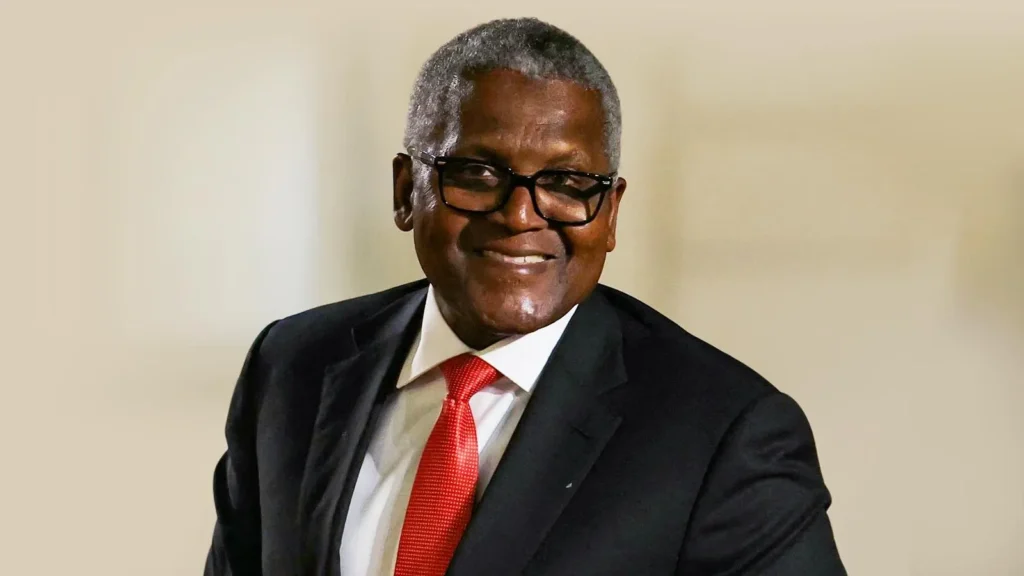
In a city where many traders come and go, one man stayed long enough to change the rules of the game. Aliko Dangote began in the late 1970s as a young cement trader in Lagos, moving a few trucks a day. By 2026, he presides over Africa’s largest industrial conglomerate, spanning cement, sugar, salt, flour, fertilizer and the world’s largest single-train oil refinery. His story is not just about wealth; it is about how one person’s disciplined focus on basic needs can reshape an entire continent’s industrial landscape.
The Builder at a Glance
- Name: Alhaji Aliko Dangote, GCON
- Known for: Building Africa’s largest industrial conglomerate; cement, sugar, salt, flour, fertilizer, and the 650,000 bpd Dangote Refinery
- Founder/Co-founder: Founder, Dangote Group (1981)
- Current roles: President and Chief Executive, Dangote Group; Chairman, Dangote Cement Plc; Chairman, Dangote Petroleum Refinery & Petrochemicals FZE
- Major companies/institutions: Dangote Cement Plc; Dangote Sugar Refinery Plc; Nascon Allied Industries Plc; Dangote Fertilizer Plant; Dangote Petroleum Refinery & Petrochemicals; Aliko Dangote Foundation
- Core industries: Cement, consumer foods (sugar, salt, flour, pasta), oil and gas (refining, petrochemicals, fertilizer), logistics, port operations
- Year founded: 1981 (trading); manufacturing from 1989/1992
- Headquarters: Lagos, Nigeria
- Education: B.Sc. Business Studies, Al-Azhar University, Cairo (1977)
- Major achievements:
- Africa’s richest person (Forbes/Bloomberg, 2026)
- Led Nigeria to cement self-sufficiency; Obajana plant commissioned 2007 as largest in sub-Saharan Africa at the time
- Built the world’s largest single-train refinery (650,000 bpd at full capacity, Feb 2026)
- Received Nigeria’s GCON honour (2011) and multiple national honours across Africa
The Story Behind the Builder
The Dangote story begins not in a boardroom, but on the dusty streets of Lagos, where a young man in his early twenties was buying and selling cement. He had just returned from Cairo, where he studied business at Al-Azhar University, graduating in 1977. With a loan of about $3,000 from his uncle, he started a small trading business.
In a 2026 conversation with the International Finance Corporation, Dangote described those early days with unusual clarity. “I started with just selling, trading, selling four trucks of cement every day,” he said. Customers would pay in advance and return months later to collect their cement. Within months, he had more cash than he knew what to do with.
That was the first lesson: trade what people need, collect cash early, and let working capital compound.
Before the Business
Born on April 10, 1957, in Kano, Dangote grew up in one of West Africa’s most established merchant dynasties; his maternal grandfather, Alhaji Sanusi Dantata, was a prominent commodities trader. He attended Sheikh Ali Kumasi Madrasa School and Capital High School in Kano, then Government College, Birnin Kudu, before studying business at Al-Azhar University in Cairo, graduating in 1977.
He returned to Nigeria and, with the loan from his uncle, began trading commodities, primarily cement. By the early 1980s, he had moved to Lagos and expanded into sugar, salt, flour, rice and other goods. In 1981, he formalised his operations into what became the Dangote Group.
The Problem They Set Out to Solve
Nigeria’s post-independence economy was import-dependent: cement, sugar, salt, wheat flour and refined petroleum products were largely sourced abroad, exposing the country to foreign exchange volatility, supply disruptions and high consumer prices. Dangote’s early trading gave him direct visibility into these gaps.
When import licenses were abolished in 1986, many traders panicked. Dangote saw it differently. If the government was ending import licenses, the future belonged to those who could make things locally. His strategic response was backward integration: replace imports with locally manufactured, high-volume, low-cost products.
Building Dangote Group
Dangote began trading in 1977 – 1978 and formally incorporated Dangote Nigeria Limited and Blue Star Services in 1981, importing sugar, cement, rice and other consumer goods. He moved to Lagos and ramped up imports throughout the 1980s and 1990s, adding textiles, fish, milk and iron to his portfolio.
The group’s first manufacturing foray came in 1989 with textiles, followed by sugar refining and flour milling from 1997–1999. Dangote Sugar Refinery began local production in 1999, competing with Brazilian and European imports.
Cement became the transformational bet. In 2000, the group acquired a controlling stake in the state-owned Benue Cement Company following its privatisation. In 2002, it bought Obajana Cement from Kogi State Government, though no factory existed at the time. Construction began in 2003–2004, and the plant was commissioned in 2007 with two production lines and a capacity of about 5 million tonnes per annum, making it the largest plant in sub-Saharan Africa at the time.
Dangote Cement was consolidated and listed on the Nigerian Stock Exchange in 2010, becoming West Africa’s largest listed company and the first Nigerian firm to join the Forbes Global 2000. Between 2014 and 2020, it expanded across Africa, with plants in South Africa, Cameroon, Ghana, Senegal, Tanzania, Zambia, Ethiopia and others, reaching 48.6 million tonnes per annum capacity by 2020 and targeting 15 countries.
The next frontier was energy. In 2013, Dangote broke ground on the Lekki Refinery and adjacent fertilizer plant. After delays and cost overruns (commonly cited at $19–$20 billion), the refinery was commissioned on May 22, 2023, began processing crude in early 2024, and started producing petrol in September 2024. In February 2026, Dangote announced it had reached full designed capacity of 650,000 barrels per day, with licensor testing later pushing runs to about 700,000 bpd. In June 2026, the group broke ground on a second 700,000 bpd unit, targeting roughly 1.4 million bpd by end-2028.
The Business Model
Dangote Group operates as a fully integrated conglomerate focused on “basic needs”: cement, food staples, and energy. Revenue comes from high-volume sales of cement, sugar, salt, flour, fertilizer and refined petroleum products, supported by in-house logistics, port operations and power generation. The model relies on:
- Scale and vertical integration: owning mines, plants, logistics, and ports to control costs.
- Import substitution: targeting products with large import bills and replacing them with local production.
- Pan-African distribution: using Nigeria as a base to serve regional markets, especially in cement.
- Regulatory alignment: leveraging Nigerian government backward integration policies in cement and oil and gas.
Publicly available evidence suggests Dangote’s strategy is to identify what Nigeria (and Africa) imports but should be producing, then build the capacity to make it locally.
The Builder’s Strategy
Publicly available evidence suggests several recurring strategic themes:
- Backward integration as a moat: Dangote’s interviews and company materials consistently emphasise local manufacturing to reduce import dependence.
- First-mover scale: building plants larger than local demand to achieve lowest unit cost and deter competitors.
- Patient capital and reinvestment: using cash flows from trading and early manufacturing to fund ever-larger projects (cement, then refinery).
- Family governance: key commercial and operational roles are held by family members (e.g., Halima, Mariya, Fatima Dangote), supporting long-term decision horizons.
In a 2026 conversation with Nicolai Tangen of Norges Bank Investment Management, Dangote described his business method as “backward integration”: identify what a country imports but should be producing, then build the capacity to make it locally.
Major Challenges and Turning Points
- Policy shifts: The 1986 removal of import licenses forced a pivot from trading to manufacturing.
- Cement wars: Rapid expansion triggered price wars and regulatory scrutiny; Dangote navigated antitrust concerns while consolidating market leadership. Competitor Cletus Ibeto accused Dangote of using political connections to disadvantage his own cement operations; court and ministry fights lingered for years.
- Refinery delays: The Lekki project faced multi-year delays, cost escalation and financing pressure, testing Dangote’s balance sheet and reputation. Dangote later described the refinery as “the biggest risk of my life”.
- Panama Papers: In 2016, Dangote’s name appeared in the Panama Papers, linked to four offshore companies; he and his associates denied any wrongdoing, and no Nigerian charges resulted from this disclosure.
- FX and macro volatility: Dangote Cement’s 2023–2025 reports note foreign exchange scarcity and inflation as ongoing risks to pan-African expansion.
Beyond the Original Business
Dangote’s activities extend beyond core operations:
- Aliko Dangote Foundation (ADF): Established in its current form in 2018 but with roots going back to 1994, it is sub-Saharan Africa’s largest private philanthropic organisation, focusing on health, nutrition, education and economic empowerment. The foundation has an endowment of about $1.25 billion and has given over $100 million to support health, education, empowerment and humanitarian relief.
- Health and nutrition: ADF runs an Integrated Nutrition Programme targeting over one million malnourished children, supports polio eradication with the Bill & Melinda Gates Foundation, and co-led CACOVID during the pandemic. In 2020, the foundation contributed N1.5 billion to the Nigeria UN COVID-19 Basket Fund, and CACOVID distributed N23 billion worth of food palliatives.
- Policy and global platforms: Dangote has served as Chair of the National End Malaria Council (2022), Nigerian Ambassador for Malaria, and on the Global End Malaria Council. He regularly speaks at the World Economic Forum and other global forums.
The Numbers Behind the Builder
- Net worth: $35.2 billion (Bloomberg, August 24, 2026); $36.5 billion (Bloomberg, June 9, 2026); $31.6 billion (Forbes, 2026)
- Dangote Refinery capacity: 650,000 bpd (full capacity, Feb 2026); expansion to ~1.4 million bpd by end-2028 announced June 2026
- Dangote Cement capacity: 48.6 Mta (2020), operating in 10 African countries, targeting 15
- Group turnover: >$4 billion (2016); >$4.1 billion revenue (2017)
- Employees: 30,000+ across the group
Awards and Recognition
- Grand Commander of the Order of the Niger (GCON): Nigeria’s second-highest honour, conferred November 14, 2011; first non-government recipient
- Grand Commander of the National Order of the Republic of Benin (2013); Commander of the National Order of Valour, Cameroon (2021); Commander of the Order of Merit of Niger (2022); National Order of the Lion, Senegal (2024)
- NECA Lifetime Achievement Award (2021, 2023)
- Forbes Africa’s richest person (annually since 2011)
These honours reflect both industrial impact and regional diplomatic recognition of Dangote’s investments across West and Central Africa.
Education and Thought Leadership
- Degrees: B.Sc. Business Studies, Al-Azhar University, Cairo (1977)
- Speeches and forums: Regular participant at the World Economic Forum; co-chair of US-Africa Business Center (2016); board member, Clinton Health Access Initiative (from 2017)
- Public positions: Advocates public–private collaboration, local manufacturing, and African self-reliance in energy and food security.
The Builder’s Playbook
- Target import gaps: Focus on products with large, persistent import bills and policy support for local production.[
- Build for scale: Design plants to exceed domestic demand, achieving lowest unit cost and regional export optionality.
- Integrate vertically: Control raw materials, logistics, power and distribution to protect margins.
- Reinvest aggressively: Use cash flows from early businesses to fund progressively larger, more complex projects.
- Stay policy-aware: Align with government industrial strategies (backward integration, local content) while managing regulatory risk.
The Business Ecosystem
Key entities connected to Dangote’s career include: Dangote Cement Plc (NSE: DANGCEM); Dangote Sugar Refinery Plc (NSE: DANGSUGAR); Nascon Allied Industries Plc (NSE: NASCON); Dangote Petroleum Refinery & Petrochemicals FZE (NNPC holds 7.25% stake, 2021) ; Aliko Dangote Foundation; NNPC; Nigerian Stock Exchange; US Chamber of Commerce (US-Africa Business Center); Clinton Health Access Initiative; World Economic Forum; Bill & Melinda Gates Foundation (polio and nutrition partnerships).
Where They Are Today
As of August 2026, Dangote remains President and CEO of Dangote Group, overseeing cement, foods, and the rapidly scaling refinery and petrochemicals complex. The refinery reached full 650,000 bpd capacity in February 2026 and is preparing for a potential IPO, while a second 700,000 bpd unit is under construction. His net worth is tracked in real time by Forbes and Bloomberg, reflecting movements in Dangote Cement’s share price and private refinery valuations.
What Comes Next
Publicly announced plans include:
- Refinery expansion: A second 700,000 bpd crude processing unit, targeting ~1.4 million bpd total capacity by end-2028.
- Refinery IPO: Management has indicated intentions to list the refinery, though timing and structure remain subject to market and regulatory conditions.
- Pan-African cement growth: Continued consolidation and selective expansion in African markets, contingent on FX and macro conditions.
Brands.Ng Perspective
Aliko Dangote matters to Nigerian and African business not because he is rich, but because he industrialised at a scale rarely seen on the continent. He turned policy windows (backward integration, local content) into enduring assets, shifted Nigeria’s cement and sugar markets from import dependence to local surplus, and is now attempting the same with refined fuel. The Dangote story is a case study in how patient capital, operational discipline and regional ambition can build institutions that outlive any single product cycle.
For a business intelligence platform like Brands.Ng, Dangote’s journey offers a template: identify structural deficits, build for scale, integrate vertically, and reinvest relentlessly. Whether one agrees with every tactic or not, the footprint is undeniable: factories, jobs, regional trade flows and a new benchmark for what African industrialisation can look like.
Sources & Further Reading
- Dangote Industries Limited – “About Us” (history, leadership, footprint). Accessed August 2026.
- Encyclopædia Britannica – “Aliko Dangote” biography (updated Oct 8, 2025).
- Forbes – Aliko Dangote profile (2026 billionaires list).
- Billionaires Africa – “Aliko Dangote hits $30 billion mark on Forbes billionaires list” (April 28, 2026).
- Vanguard – “Beyond Profit: How Dangote Group is redefining the soul of African business” (October 25, 2025).
Stay ahead of the businesses shaping Nigeria.
Get important company developments, analysis, research and business intelligence from Brands.Ng directly on WhatsApp.