
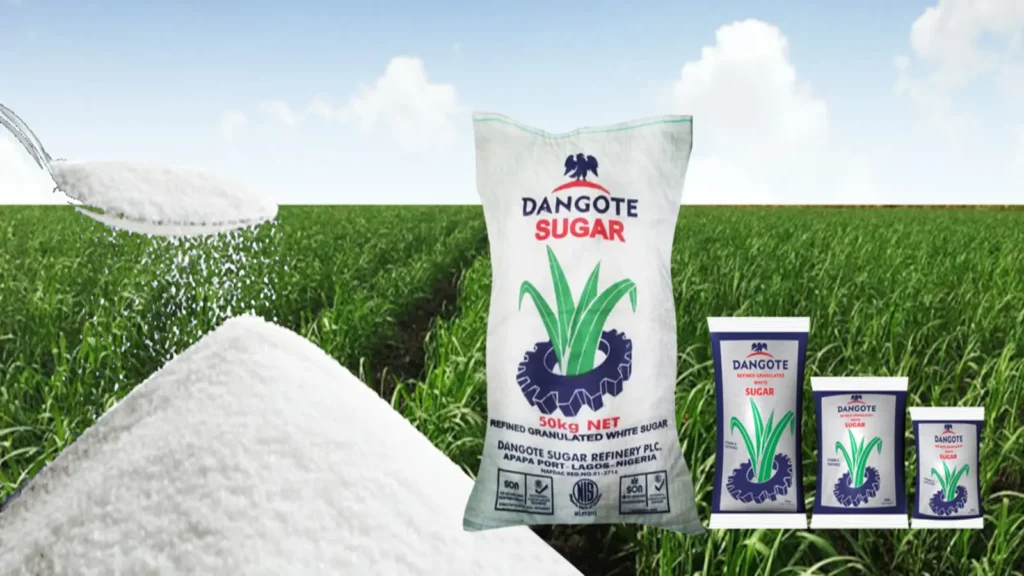
Dangote Sugar Refinery has closed one of the largest capital raises in Nigerian corporate history, securing N485.9 billion through an oversubscribed rights issue. But the timing, coming just as the company returns to profitability after three years of losses, reveals a deeper strategic calculation about debt, foreign exchange exposure and the race to dominate Nigeria’s $2 billion sugar market.
The Development
On August 13, 2026, Dangote Sugar Refinery Plc disclosed to the Nigerian Exchange that its rights issue had achieved 100 percent allotment, raising N485.88 billion from the sale of 8.10 billion ordinary shares at N60 each. The offer attracted 14,595 valid applications covering 8.31 billion shares worth N498.57 billion, representing 102.6 percent subscription before a major shareholder scaled back its request for additional stock by 211.53 million units.
The Securities and Exchange Commission approved the basis of allotment, with Veritas Registrars Limited expected to credit successful allottees’ Central Securities Clearing System accounts by August 14, 2026.
Why It Matters
This is not merely a capital raise. It is the largest rights issue in Nigerian corporate history and arrives at a pivotal moment for Dangote Sugar, and for Nigeria’s manufacturing sector more broadly.
The company has just returned to profitability in the first half of 2026, posting N41.51 billion profit after tax compared with a N24.27 billion loss in the corresponding period of 2025. Yet despite this turnaround, Dangote Sugar remains Nigeria’s most indebted fast-moving consumer goods company, with total borrowings of N725.31 billion at the end of 2025 and net debt of N672.73 billion.
The sequencing is revealing: management is using the company’s first profitable quarter in years to shore up the balance sheet before the next foreign exchange or input-cost shock. This is not a celebration of durable recovery. It is an admission of continued fragility.
The Bigger Picture
Company Context: Three Years of Losses, One Quarter of Profit
Dangote Sugar Refinery, founded by Aliko Dangote – Africa’s richest person – has endured a punishing three-year stretch. The company recorded losses of N72.3 billion in 2024 and N270.9 billion in 2023, before slashing losses by 73 percent in 2025 as revenue surged to N665.6 billion. Total liabilities stood at N836.9 billion at the end of 2025, leaving shareholders’ equity of just N128.9 billion.
Borrowings remained heavy at N684.4 billion in 2025, down only modestly from N717.6 billion the year before. As of March 2026, Dangote Sugar held around N50 billion in cash but faced substantial short-term debt of N625 billion, including N295 billion in letters of credit, N182 billion in short-term borrowings, N81 billion in commercial paper and N63 billion in bank overdrafts.
The first half of 2026 brought relief: revenue of N391.9 billion produced gross profit of N93.85 billion, operating profit of N91.99 billion and profit after tax of N41.51 billion. But this recovery came almost entirely from cost efficiency and foreign exchange gains, not demand growth – revenue actually declined 8.9 percent year-on-year.
Industry Context: Nigeria’s $2 Billion Sugar Deficit
Nigeria’s sugar market is valued at approximately $2 billion, with the broader African sugar market at around $7 billion. Yet domestic production meets less than 5 percent of consumption. For the 2025/26 marketing year, total sugar imports are forecast at 2.03 million metric tons, rising to 2.13 million metric tons in 2026/27.
Brazil dominates Nigeria’s raw sugar import market with over 97 percent market share, making Nigeria almost entirely dependent on a single origin for its primary sugar supply. Only companies participating in the government’s Backward Integration Programme – Dangote Sugar Refinery, BUA Sugar Refinery and Golden Sugar Company – are permitted to import raw sugar under the quota system.
The National Sugar Development Council’s policy framework is designed to protect domestic refining while incentivising local cane production. Importation of refined sugar in retail packaging is completely banned. Local companies involved in packaging and cubing must source refined sugar from domestic producers or submit detailed multi-year demand projections to justify any import requirements.
Competitive Context: The Race for Backward Integration
Dangote Sugar’s N500 billion rights issue (approved at the April 2026 AGM) is tied directly to its backward integration initiative, themed “Sugar for Nigeria.” The company plans to produce 1.5 million metric tonnes of sugar annually from domestically cultivated sugarcane, developing approximately 45,000 hectares across Adamawa, Nasarawa and Taraba states.
But Dangote is not alone. BUA Group has announced a major expansion of its food production operations in 2026, targeting Nigeria’s largest food business by 2027. The expansion covers flour milling, sugar refining, domestic sugar production under backward integration, edible oil processing, animal feed and noodles manufacturing. BUA Foods posted a 14 percent rise in profit after tax to N142.32 billion in Q1 2026, and is aggressively expanding processing capacity to challenge market leaders like Dangote Sugar and Flour Mills of Nigeria.
What the Move Really Means
1. Balance Sheet Repair Takes Priority Over Growth
The N486 billion raise is first and foremost a defensive move. Moody’s Ratings upgraded Dangote Sugar to B3 from Caa1 in July 2026, explicitly citing the debt-cutting rights issue as the rationale. The proceeds will be used to “materially deleverage the company’s balance sheet, strengthen liquidity and reposition the organisation on a more sustainable capital structure.”
This is not growth capital. It is survival capital. Management is acknowledging that the profit recovery built on falling input costs and a stabilising naira is real but fragile – borrowed time if the underlying volume story does not also turn.
2. Foreign Exchange Risk Remains the Core Vulnerability
Dangote Sugar’s losses over the past three years were driven largely by foreign exchange volatility and the cost of importing raw sugar. The company’s backward integration programme is designed to reduce dependence on imported raw sugar, improving FX stability and cost predictability.
But the timeline is long. Developing 45,000 hectares of sugarcane plantation and building processing infrastructure takes years. In the meantime, Dangote Sugar remains exposed to naira depreciation and global raw sugar prices. The rights issue buys time—but it does not eliminate the structural vulnerability
3. The Discount Signals Management’s Urgency
The rights issue was priced at N60 per share, carrying a 5.51 percent discount to the stock’s value on the qualification date of April 20, 2026. This is a meaningful discount for a rights issue – management needed to ensure full subscription, and it worked.
But the discount also signals urgency. Management was willing to dilute existing shareholders at below-market pricing to guarantee the capital raise succeeded. This is not a company raising capital from a position of strength. It is a company raising capital because it must.
4. Shareholder Confidence – With Caveats
The 102.6 percent subscription rate demonstrates strong shareholder confidence. Of the total, 13,426 shareholders took up their rights in full, accounting for 6.99 billion shares worth N419.18 billion. A further 1,047 applications for partial acceptances covered 99.08 million shares worth N5.94 billion.
But the scale-down by a major shareholder – who reduced its request for additional shares by 211.53 million units, worth N12.69 billion – suggests not all investors were willing to increase their exposure. The core shareholder received only 78.85 percent of the extra shares it had sought.
This is nuanced confidence: shareholders believe in the company’s long-term prospects, but they are not betting the farm.
The Competitive Implications
Dangote Sugar’s Market Position
Dangote Sugar remains Nigeria’s largest sugar producer and refiner. The company’s backward integration programme, when fully implemented, will become the key driver of profitability and value creation. But the timeline is uncertain, and competitors are not standing still.
BUA Sugar’s Aggressive Expansion
BUA Group’s 2026 expansion programme covers sugar refining and domestic sugar production under backward integration. The projects are expected to be completed in 2027, significantly increasing BUA Foods’ production capacity. BUA is aggressively expanding processing capacity and supply chains to challenge market leaders like Dangote Sugar.
If BUA can execute faster than Dangote on backward integration, it could erode Dangote’s first-mover advantage. The N486 billion capital raise gives Dangote financial firepower – but it does not guarantee execution speed.
Import Substitution Policy as Competitive Moat
Nigeria’s import policy framework protects domestic refiners while incentivising local cane production. Only companies participating in the Backward Integration Programme can import raw sugar under the quota system. This creates a regulatory moat around Dangote Sugar, BUA Sugar and Golden Sugar.
But the policy also creates a race: whichever company can achieve meaningful domestic cane production first will capture the largest share of Nigeria’s $2 billion sugar market. The rights issue is Dangote’s bet that it can win that race.
The Risks
1. Execution Risk on Backward Integration
Developing 45,000 hectares of sugarcane plantation and building processing infrastructure is a multi-year, capital-intensive undertaking. Delays, cost overruns or agricultural challenges (pests, weather, land acquisition disputes) could derail the timeline.
If backward integration takes longer than expected, Dangote Sugar remains exposed to foreign exchange volatility and import costs. The N486 billion raise buys time – but it does not guarantee successful execution.
2. Foreign Exchange Volatility
Despite the rights issue, Dangote Sugar’s core vulnerability remains: dependence on imported raw sugar. If the naira depreciates sharply, input costs will rise, margins will compress and profitability will suffer.
The company’s H1 2026 profit recovery was driven partly by foreign exchange gains. But FX gains can reverse as quickly as they appear.
3. Competitive Pressure from BUA
BUA Group’s aggressive expansion could erode Dangote’s market share if BUA executes faster on backward integration. BUA Foods’ Q1 2026 profit after tax of N142.32 billion – up 14 percent – suggests strong momentum.
If BUA can achieve meaningful domestic cane production before Dangote, it could capture a larger share of Nigeria’s sugar market. The rights issue gives Dangote financial resources – but it does not guarantee competitive advantage.
4. Demand Risk
Dangote Sugar’s H1 2026 revenue declined 8.9 percent year-on-year, reflecting weaker demand across its key sugar sales categories. The profit recovery came from cost efficiency and FX gains, not volume growth.
If Nigerian consumer demand remains subdued – due to inflation, economic slowdown or competitive pricing pressure – Dangote Sugar’s revenue growth could stagnate even as costs rise.
What Happens Next
Brands.Ng will be watching the following developments to assess whether Dangote Sugar’s strategy succeeds:
- Debt Reduction Progress: How much of the N486 billion proceeds is actually used to retire debt versus fund expansion? Moody’s upgrade suggests debt reduction is the priority – but execution matters.
- Backward Integration Milestones: What progress does Dangote Sugar make on its 45,000-hectare plantation projects in Adamawa, Nasarawa and Taraba states? Look for updates on land acquisition, cane planting, infrastructure development and first harvest timelines.
- Revenue Growth Trajectory: Can Dangote Sugar reverse the 8.9 percent revenue decline seen in H1 2026? Sustained profitability requires volume growth, not just cost efficiency.
- Competitor Response: How does BUA Sugar respond? Look for announcements on BUA’s backward integration progress, capacity expansion and market share gains.
- Foreign Exchange Exposure: How does Dangote Sugar’s FX exposure evolve as the naira fluctuates? Look for updates on hedging strategies, import volumes and raw sugar sourcing.
Brands.Ng Analysis
Dangote Sugar’s N486 billion rights issue is a strategically sound move – but it is not a transformation. It is balance sheet repair, not growth acceleration. Management is using the company’s first profitable quarter in years to strengthen its capital position before the next foreign exchange or input-cost shock.
The deeper question is whether Dangote Sugar can execute its backward integration programme faster than competitors -particularly BUA Sugar – can catch up. The N486 billion raise provides financial firepower. But it does not guarantee execution speed, agricultural success or market dominance.
For investors, the rights issue reduces near-term default risk and improves financial stability. But it does not eliminate the structural vulnerabilities that drove three years of losses: foreign exchange exposure, import dependence and demand uncertainty.
For business executives, the lesson is clear: in Nigeria’s volatile manufacturing environment, capital raises are not optional luxuries. They are survival mechanisms. Dangote Sugar’s move is not a sign of strength. It is a sign of prudence.
The objective is not to be first with the news. The objective is to be among the best at explaining what the news means.
Key Takeaway
Dangote Sugar’s N486 billion rights issue is less about funding growth than about buying time – time to execute backward integration, time to reduce debt and time to prepare for the next foreign exchange shock. The capital raise strengthens the balance sheet, but it does not eliminate the structural vulnerabilities that drove three years of losses. Success now depends on execution speed: can Dangote Sugar achieve meaningful domestic cane production before competitors – particularly BUA Sugar – can catch up?
Research Notes / Uncertainties
- Exact debt reduction target: While sources indicate the proceeds will be used to “materially deleverage,” the specific proportion allocated to debt repayment versus expansion capital is not explicitly disclosed in the NGX filing.
- Backward integration timeline: Multiple sources cite the 45,000-hectare target and 1.5 million metric tonne production goal, but specific milestones and expected completion dates for the Numan, Nasarawa and Taraba projects are not uniformly reported.
- BUA Sugar’s specific capacity targets: While BUA’s expansion is well-documented, specific production capacity targets for sugar refining and backward integration are not quantified in publicly available sources.
- Major shareholder identity: The filing mentions a “major shareholder” that scaled back its request for additional shares, but the identity of this shareholder is not disclosed in the sources reviewed.
Stay ahead of the businesses shaping Nigeria.
Get important company developments, analysis, research and business intelligence from Brands.Ng directly on WhatsApp.