University of Ibadan Postgraduate Admission 2026: Everything You Need to Know Before You Apply
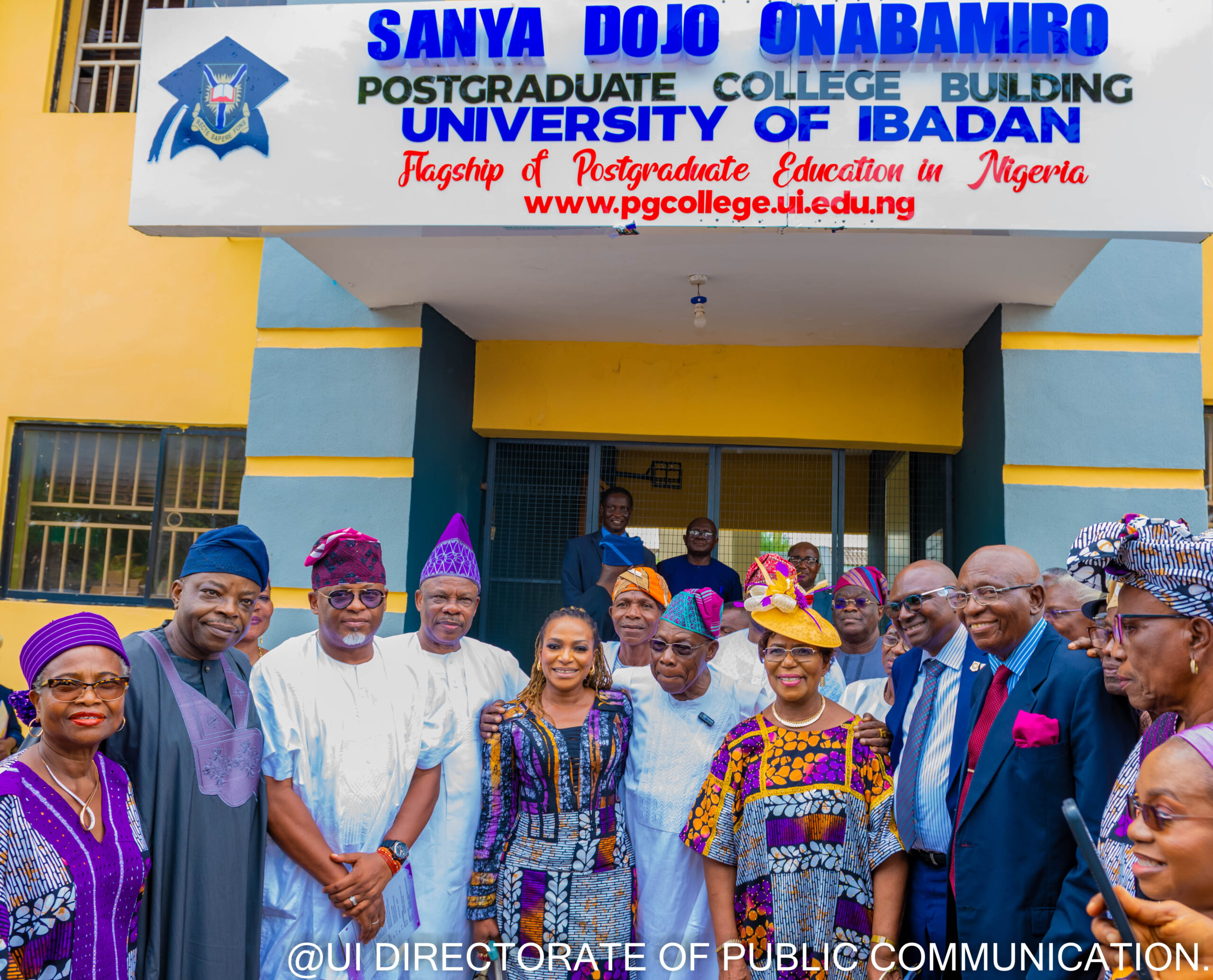
If you are considering postgraduate study in Nigeria, the University of Ibadan is where the conversation starts.
The University of Ibadan Postgraduate, Masters, Honours, Doctorate, and PhD Programmes admission is open to all qualified applicants irrespective of colour, race, ethnic identity, religion, gender, or national origin, provided they qualify for the programme for which they want to apply. Both Nigerian and international interested students can apply.
That openness — to Nigerians and internationals alike, across every discipline — is part of what makes UI’s postgraduate offering distinctive. But openness is not the same as ease. UI postgraduate admission is competitive, the requirements are specific, and the application process has enough moving parts that candidates who do not understand the full picture before they begin consistently run into avoidable problems.
This guide covers the full picture: what programmes are available, who qualifies, what the application involves, what it costs, and how to position yourself for the best possible admission outcome. It does not go into the technical portal steps in detail — those are covered in the dedicated portal guide — and it does not replicate the institutional overview of the Postgraduate School covered in our companion article. What it does is answer the one question every prospective applicant really has: should I apply, and if so, how do I give myself the best chance?
Why Choose University of Ibadan for Postgraduate Study?
Before the requirements and the process, the case for UI at postgraduate level — because this is a decision worth making with full information.
With its long-standing reputation as the first and best university in Nigeria, the University of Ibadan provides a rich academic environment and top-notch research opportunities.
At postgraduate level specifically, UI’s advantages concentrate in three areas.
Research infrastructure. UI’s research facilities — libraries, laboratories, field stations, and data archives — represent decades of accumulated institutional investment. For a Masters or PhD candidate, access to this infrastructure is the difference between research that is possible and research that is excellent. No other Nigerian university offers comparable depth across as many disciplines simultaneously.
Faculty depth. UI’s academic staff includes some of Nigeria’s most published and internationally recognised researchers across medicine, agriculture, social sciences, law, and the humanities. Postgraduate study is fundamentally a supervisory relationship — the quality of your supervisor determines the quality of your research experience. UI’s supervisor pool is the deepest in Nigeria.
International recognition. A UI postgraduate degree is recognised by universities, research institutions, and professional bodies internationally. For candidates planning careers in academia, international organisations, or regulated professions, UI’s global recognition matters in ways that newer Nigerian institutions cannot yet match.
The University of Ibadan offers a wide range of Masters, MPhil, and PhD programmes across various faculties and departments, providing opportunities for advanced academic and professional development.
University of Ibadan Postgraduate Programmes Available in 2026
UI offers a wide range of postgraduate programmes leading to Postgraduate Diplomas (PGD), Masters Degrees, and Doctor of Philosophy (PhD) programmes.
The full programme range spans four degree categories:
Postgraduate Diploma (PGD) A one-year taught programme typically designed for graduates seeking structured academic upgrading in a specific discipline without committing to a full Masters degree. Available in select disciplines across Arts, Social Sciences, Education, and Management.
Masters Degrees (MA, MSc, MBA, MEd, LLM, MPH, and others) Typically one to two years in duration. Available in taught, research, or combined taught-and-research modes depending on the faculty. The MBA and professional Masters programmes are generally two years; research-focused Masters are typically 12 to 18 months.
MPhil (Master of Philosophy) A research degree that sits between a Masters and a PhD. Candidates admitted to MPhil may upgrade to PhD on the recommendation of their supervisory committee upon demonstrating sufficient research progress.
PhD (Doctor of Philosophy) Candidates for the degree of MPhil and PhD are admitted in the first instance to a Masters Degree Programme. However, candidates who, in addition to a good first degree, and already holding acceptable postgraduate degrees, may be considered for direct admission to the MPhil and PhD.
A PhD at UI typically requires three to five years of supervised original research culminating in a written thesis examined by internal and external examiners. Some faculties offer full-time and part-time PhD modes to accommodate working professionals.
Available across all 16 faculties — including Arts, Science, Social Sciences, Education, Agriculture and Forestry, Renewable Natural Resources, Technology, Law, Basic Medical Sciences, Clinical Sciences, Dentistry, Public Health, Pharmacy, Veterinary Medicine, Economics and Management Studies, and Environmental Design and Management.
For a full list of specific programmes by faculty, download the UI Postgraduate Prospectus from the official Postgraduate College website at pgcollege.ui.edu.ng — the prospectus is updated each academic session and is the authoritative source for programme availability.
University of Ibadan Postgraduate Entry Requirements
Entry requirements vary by programme level and faculty. Admissions requirements may vary from one postgraduate research programme to another, so you should look at the relevant programme information before applying.
The general minimum requirements by degree level are:
Postgraduate Diploma (PGD)
PGD applicants must be holders of HND or a Third-Class degree in a relevant field.
The PGD route is specifically designed to provide a pathway for candidates whose undergraduate performance — Third Class or HND — would otherwise disqualify them from direct Masters admission. Successful completion of a PGD with good grades can position a candidate for Masters admission in subsequent sessions.
Masters Degree
Masters applicants must be graduates with at least a Second Class Lower (2:2) in a related discipline.
Some highly competitive Masters programmes — particularly in Medicine, Law, and the professional faculties — may require a Second Class Upper (2:1) or better. Some programmes may have additional departmental requirements. Applicants are advised to check the UI Postgraduate Prospectus before applying.
PhD
PhD applicants must be holders of a relevant Masters degree with good grades.
Candidates without any previous higher degrees in the relevant discipline may be admitted only to either Masters Degree or a Professional Masters Degree. Candidates with recognised Research Higher Degree in the relevant discipline may be admitted to the MPhil or PhD degree programmes as appropriate, on the recommendation of the appropriate Faculty Postgraduate Committee.
O-Level Requirements (All Levels)
In addition to individual departmental requirements, applicants must satisfy the O-Level first degree matriculation requirements of the University of Ibadan — five O-Level credit passes at ONE sitting or six O-Level credits at TWO sittings including English Language and subject areas for all disciplines, and Mathematics for all Science-based disciplines, Educational Management and Economics, and at least a pass in Mathematics for other Social Science courses.
This O-Level requirement applies to all postgraduate applicants regardless of how long ago they completed secondary school — it is a standing university requirement, not a JAMB-era relic.
Letters of Recommendation
The Postgraduate College, University of Ibadan requires three e-letters of recommendation from faculty members or qualified academic referees. These are submitted electronically through the application portal. Candidates should approach potential referees — ideally former lecturers, supervisors, or senior academic colleagues familiar with their work — well before the application deadline. Last-minute referee requests are a common and avoidable reason for incomplete applications.
International Applicants
Both Nigerian and international interested students can apply for the UI Application Form provided they qualify and meet the entry requirements for the programme they want to apply to. International applicants whose first degrees were obtained outside Nigeria must provide certified transcripts and, in some cases, a letter of equivalency from the Nigerian Universities Commission or the relevant professional body.
The University of Ibadan Postgraduate Application Process: Step by Step
The application process is fully online. Candidates are expected to complete registration through the official portal — this setup supports both local and international applicants.
The outline of the process is:
Step 1 — Visit the official Postgraduate College portal at pgcollege.ui.edu.ng
Step 2 — Create an applicant profile and generate a payment invoice for the application fee.
Step 3 — Pay the application fee — currently published at ₦10,000 for Nigerian applicants. Visit the official portal: pgcollege.ui.edu.ng, create an applicant profile and generate a payment invoice.
Step 4 — Complete the online application form — personal details, academic history, programme choice, research proposal (for research degrees), and statement of purpose.
Step 5 — Upload necessary documents — academic certificates, transcripts, NYSC certificate, passport photo, and others as required.
Step 6 — Submit three e-letters of recommendation through the portal.
Step 7 — Submit the completed application before the closing date.
Step 8 — Monitor your application status through the portal dashboard.
University of Ibadan Postgraduate Application Dates 2026
Opening Date for 2025/2026 session: Friday, 29th August 2025. Closing Date: October 2025 — with an extension to November 24, 2025 as announced by the university.
The University of Ibadan extended the 2025/2026 Postgraduate Admissions Application Form deadline to Sunday, November 24, 2025.
For the 2026/2027 academic session, application dates will follow a similar pattern — typically opening in August or September 2026 and closing in October or November 2026. The supplementary admission window, which opened in February 2026 for the 2025/2026 session, provides a fresh opportunity for qualified candidates who missed the initial application window to pursue advanced degrees at Nigeria’s premier university.
The practical advice: do not wait for the supplementary window if you can apply during the main window. The supplementary window exists for candidates who missed the primary deadline — but available places in the most competitive programmes are significantly reduced by the time supplementary admissions open.
Always check pgcollege.ui.edu.ng for the current session’s exact opening and closing dates — dates are confirmed and sometimes adjusted at the start of each cycle.
University of Ibadan Postgraduate Fees 2026
The full postgraduate fee breakdown — by programme level, faculty, and student status — is covered in our dedicated guide: [University of Ibadan School Fees 2026: Full Breakdown for All Levels and Faculties.]
The summary for postgraduate applicants planning their budget:
| Programme Level | Fresh Student Fee | Returning Student Fee |
|---|---|---|
| Postgraduate Diploma | ₦75,000 – ₦90,000 | ₦50,000 – ₦70,000 |
| Masters — Arts, Social Sciences, Education, Law | ₦120,000 – ₦170,000 | ₦75,000 – ₦100,000 |
| Masters — Science, Technology, Medicine | ₦150,000 – ₦200,000 | ₦100,000 – ₦150,000 |
| PhD — All disciplines | ₦150,000 – ₦200,000 | ₦100,000 – ₦150,000 |
| Professional Masters programmes | ₦250,000 – ₦500,000 | ₦200,000 – ₦400,000 |
| PG Acceptance fee | ₦30,000 | — |
Application fee: ₦10,000 (non-refundable, paid before completing the application form).
How to Strengthen Your UI Postgraduate Application
The difference between a competitive and a weak UI postgraduate application is rarely the minimum qualification — most applicants who apply meet the minimum. The difference is in the quality of the application itself.
Your research proposal matters enormously for research degrees. For Masters by research, MPhil, and PhD applications, the research proposal is the primary document the Faculty Postgraduate Committee uses to assess whether you are ready for independent research. A vague, underdeveloped proposal — even from a candidate with a strong first degree — signals unpreparedness. A well-constructed proposal that identifies a clear research gap, articulates a methodology, and situates the work within existing literature signals readiness regardless of your undergraduate class.
Contact your prospective supervisor before applying. You might wish to contact a lecturer in the area of research that interests you before submitting your application. A supervisor who is already aware of your application and supportive of your research direction is significantly more likely to recommend your admission than a supervisor who encounters your application cold. This step is not formally required — but it is informally consequential.
Choose referees who know your academic work specifically. Three generic reference letters from professors who barely remember you carry less weight than two specific letters from supervisors who can describe your research abilities, intellectual rigour, and capacity for independent work. Quality over quantity applies to referee selection — a single referee who knows your work well and writes a specific, evidenced letter is worth more than three generic endorsements.
Apply early — not at the deadline. Administrative delays in transcript requests, referee letter submissions, and document uploads are common. Applying in the first two weeks after the portal opens gives you time to resolve these issues. Applying in the final days before the deadline means any problem — a missing document, a referee who has not submitted — causes your application to be incomplete at closure.
University of Ibadan Postgraduate: Frequently Asked Questions
What are the requirements for UI postgraduate admission? Masters applicants need at least a Second Class Lower (2:2) degree in a related discipline plus five O-Level credits including English Language. PhD applicants need a relevant Masters degree with good grades. PGD applicants need an HND or Third Class degree. All applicants need three e-letters of recommendation submitted through the portal.
How do I apply for UI postgraduate admission? Apply through the official Postgraduate College portal at pgcollege.ui.edu.ng. Create an applicant profile, generate and pay the ₦10,000 application fee invoice, complete the online form, upload required documents including academic certificates and transcripts, submit three e-referees, and submit before the closing date.
When does UI postgraduate application open for 2026? The 2025/2026 session opened August 29, 2025 and closed November 24, 2025 after an extension. The 2026/2027 application window is expected to follow a similar pattern — opening around August to September 2026. Check pgcollege.ui.edu.ng for the confirmed date when announced.
Is a Third Class degree eligible for UI postgraduate admission? A Third Class degree qualifies for the Postgraduate Diploma (PGD) programme. It does not qualify for direct Masters admission. Successful completion of the PGD with strong grades may position a candidate for Masters admission in a subsequent session.
Can international students apply for UI postgraduate admission? Yes. UI postgraduate admission is open to both Nigerian and international applicants. International candidates must provide certified transcripts and may need an NUC equivalency letter for degrees obtained outside Nigeria. The application process is entirely online and accessible internationally.
How long does a Masters degree take at UI? Most taught Masters programmes at UI take 12 to 18 months. Research-focused Masters programmes and professional Masters degrees typically take 18 to 24 months. The MBA and some clinical Masters programmes may extend to two years. Part-time modes available in some faculties extend the duration accordingly.
What is the application fee for UI postgraduate? The application fee for University of Ibadan postgraduate admission is ₦10,000 for Nigerian applicants. This fee is non-refundable and must be paid before the application form can be completed on the portal.
Does UI offer postgraduate programmes for working professionals? Yes. Several UI postgraduate programmes offer part-time study modes designed for working professionals — particularly in Education, Business, Social Sciences, and Law. The Distance Learning Centre also offers some postgraduate-level programmes. Check the UI Postgraduate Prospectus at pgcollege.ui.edu.ng for the full list of programmes available in part-time mode.
Sources: UI Postgraduate College official website — pgcollege.ui.edu.ng; MySchoolGist.com, February 2026; MySchool.ng, February 2026; CampusFlash.com.ng, November 2025; CampusInfo.com.ng, August 2025; ValidInfoConsult.com.ng, August 2025; TheInfoPortal.com, January 2025.


The Brands.Ng Editorial Team, led by Augustine Tom, is a multidisciplinary group of researchers, analysts, writers, and industry contributors focused on helping consumers, businesses, investors, and decision-makers better understand Africa's evolving digital economy. Brands.Ng is an African business intelligence and brand discovery platform covering fintech, digital platforms, ecommerce, logistics, payments, consumer technology, business growth, and emerging market trends across the continent. Our work combines market research, industry analysis, consumer insights, regulatory developments, and operational intelligence to evaluate the companies, technologies, and systems shaping how Africans access financial services, digital commerce, online platforms, and modern business infrastructure. Drawing on expertise in business strategy, digital marketing, SEO, brand analysis, market intelligence, and technology research, the editorial team produces independent reviews, comparisons, industry reports, and investigative guides designed to help readers make more informed decisions. Through Brands.Ng Intelligence, we also analyze broader market developments, competitive dynamics, consumer behavior, and regulatory changes affecting businesses and industries across Africa.