
OPay POS Machine: How to Get One, Charges & What Agents Earn
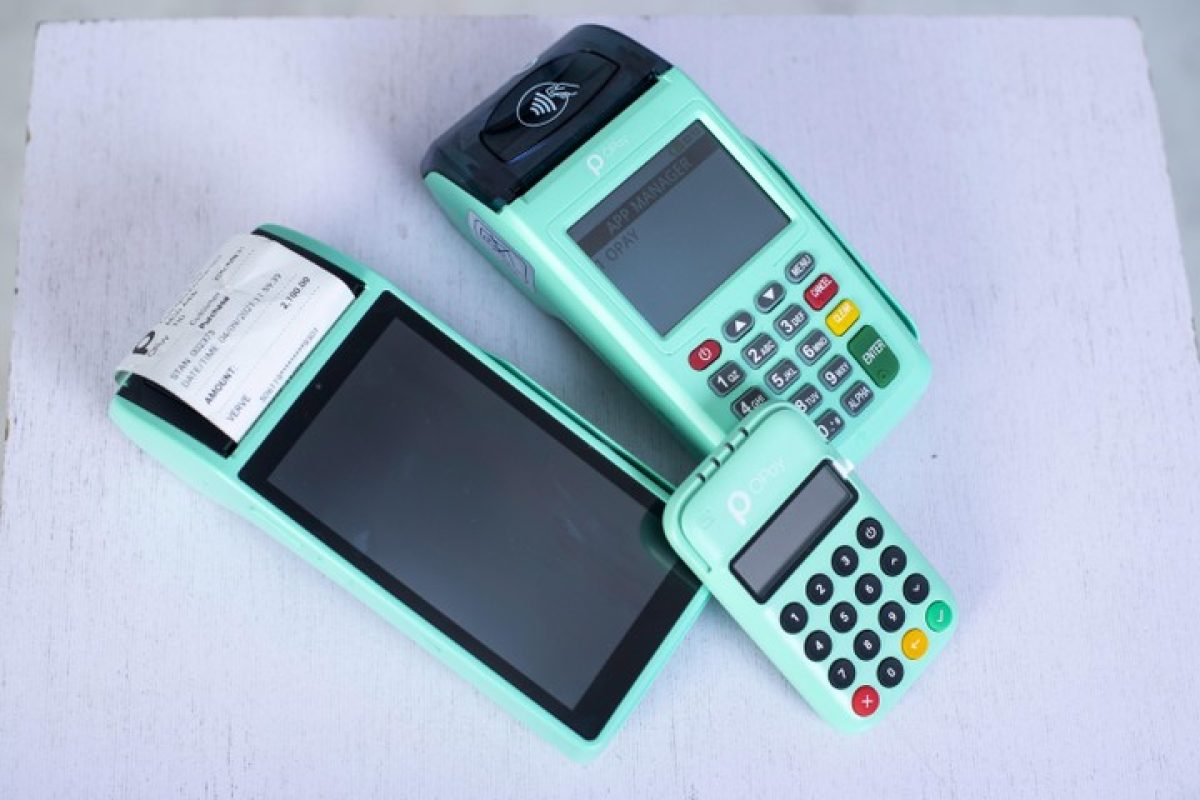
The OPay POS machine is one of the most accessible entry points into Nigeria’s agent banking economy — free to apply for, widely deployed, and built on a network that now exceeds 2 million service points nationwide. But the decision to become an OPay POS agent in 2026 is more operationally complex than it appears from the outside. Three machine types exist at different price points. Transaction charges vary by operation type. The CBN’s April 2026 rule requiring agents to commit to a single principal institution has permanently changed how agents structure their businesses. This guide covers all of it — what the machines cost, what you keep per transaction, and what separates agents earning ₦150,000 monthly from those barely breaking even.
The Machine Nobody Tells You Has Three Versions
Most aspiring OPay POS agents begin their research expecting one product. What they find — if they look carefully — is three distinct machines at three different price points, each serving a different operational profile.
The OPay Mini POS is the entry-level device, priced at approximately ₦10,000. It is compact, portable, and built for low-to-medium transaction volumes. Market traders, kiosk operators, and agents who are testing the business before committing significant capital typically start here. Its limitation is processing speed and feature depth — the Mini POS handles the core cash-out, transfer, and bill payment functions but lacks the processing power of the higher-tier devices.
The OPay Traditional POS sits in the mid-range at approximately ₦35,000–₦45,000 depending on current pricing at the time of application. This is the most widely deployed OPay terminal in Nigerian neighborhoods — it handles the full transaction suite reliably and is suitable for agents processing moderate daily volumes.
The OPay Smart POS (Android) is the premium option at approximately ₦50,000–₦60,000. It runs on Android, offers a larger touchscreen interface, faster processing, and supports QR code payments alongside card and transfer transactions. High-volume agents — those operating near markets, transport hubs, or commercial areas — find the Smart POS justifies its cost through processing speed during peak periods when a slow terminal loses customers to the nearest competitor.
Note: Prices are subject to change. Verify current pricing directly through the OPay app or the OPay merchant portal at opayweb.com/merchants before committing.
| Terminal Type | Approximate Price | Best For |
|---|---|---|
| Mini POS | ₦10,000 | Entry-level, low volume, testing the business |
| Traditional POS | ₦35,000–₦45,000 | Standard agent operations, moderate volume |
| Smart POS (Android) | ₦50,000–₦60,000 | High-volume agents, QR payments, speed priority |
Why the Application Process Is Designed the Way It Is
OPay’s agent application is free — no application fee, no deposit for the Mini POS terminal. That zero-cost entry is a deliberate market penetration strategy, not altruism. OPay’s revenue from its agent network comes from transaction commissions and fees, not from hardware sales margins. Every additional agent point increases network density, which increases transaction volume, which increases OPay’s commission income. The low entry barrier is commercially rational.
However, the application has a structural gate that most guides fail to explain clearly: you must be a Level 3 OPay user to qualify for a POS terminal.
OPay’s account tiering system — which governs transaction limits and feature access — requires Level 3 verification before POS access is granted. Reaching Level 3 requires submitting identity documentation including BVN, NIN, a valid government-issued ID, proof of address, and in some cases a utility bill. Users who attempt to apply for a POS terminal from a Level 1 or Level 2 account will be blocked at the application stage regardless of how otherwise qualified they are.
This tiering requirement exists because of the CBN’s Customer Due Diligence regulations — the same regulatory framework that produced OPay’s ₦1 billion KYC compliance penalty in 2024. The CBN requires that agents operating as financial intermediaries meet a higher identity verification standard than retail users. OPay’s Level 3 gate is its operational response to that requirement. Understanding this saves applicants the frustration of initiating an application they cannot complete.
The Step-by-Step Application Process
Step 1 — Verify your OPay account to Level 3. Open the OPay app, go to your profile, and check your account level. If you are below Level 3, follow the upgrade prompt. You will need to submit your BVN, NIN, a valid government-issued ID (National ID card, driver’s licence, or international passport), a passport photograph, and a utility bill or proof of address. Approval typically processes within 24 to 72 hours.
Step 2 — Access the POS application. Once Level 3 is confirmed, navigate to the “Business” or “Merchant” section within the OPay app. Select “Apply for POS.” Alternatively, apply through the OPay merchant web portal at opayweb.com/merchants.
Step 3 — Complete the merchant application form. You will need to provide your business name, business address, business type, and contact details. OPay uses this information to verify that the agent has a physical operating location — a requirement under the CBN’s agent banking framework, which mandates that agents maintain identifiable premises rather than operating as purely mobile intermediaries.
Step 4 — Pay for your chosen terminal. Payment is made through the app at the time of application. The Mini POS is the lowest-cost entry point if capital is a constraint.
Step 5 — Await approval and delivery. Application review takes between 24 hours and 7 days. OPay’s field agents contact successful applicants to coordinate terminal delivery and setup. Rejection occurs primarily when the business address cannot be verified, when KYC documentation is incomplete, or when the applicant’s account history raises compliance flags.
Common friction point: Agents in secondary cities and peri-urban areas sometimes experience longer delivery timelines than Lagos or Abuja-based applicants due to field agent coverage density. If delivery extends beyond 10 working days after approval confirmation, escalate through the OPay merchant support channel.
What OPay POS Charges Actually Mean for Your Margin
The charge structure on an OPay POS terminal determines how much of every transaction the agent keeps. Understanding it correctly is the difference between an accurate and an inaccurate business case.
OPay’s published transaction charge starts at 0.6% per transaction for new merchants, reducing to 0.5% for Preferred Merchants — a status earned through sustained transaction volume. This percentage is OPay’s platform fee deducted from each transaction processed.
For cash withdrawals specifically: 0.5% on withdrawals below ₦20,000, with a flat fee of ₦100 on withdrawals above ₦20,000. For transfers of ₦10,000 and above, the ₦50 stamp duty introduced under the Nigeria Tax Act 2025 applies — this is a government tax, not an OPay fee, but it affects the total cost of each qualifying transaction.
The agent’s revenue comes from the customer-facing fee they charge for providing cash-out services — separate from OPay’s platform deductions. Industry practice for POS cash-out in 2026 is approximately ₦100 per ₦5,000 withdrawn in competitive urban areas, rising to ₦150–₦200 per ₦5,000 in less competitive secondary locations where agent density is lower. Agents set their own customer-facing fees within the constraints of their local competitive environment.
| Transaction Type | OPay’s Platform Charge | Agent Sets Customer Fee? |
|---|---|---|
| Cash withdrawal (below ₦20,000) | 0.5% of amount | Yes |
| Cash withdrawal (above ₦20,000) | ₦100 flat | Yes |
| Transfer (₦10,000+) | ₦50 stamp duty (govt. tax) | Yes |
| Airtime (Airtel, Glo, 9Mobile) | 3.2%–5.5% | Partially |
| Utility bills | 2.2% flat | No |
| Merchant transactions | 0.6% (new) / 0.5% (preferred) | No |
Verify current charges at opayweb.com/merchants. Rates change periodically.
What Agents Actually Earn — The Honest Calculation
The gap between aspirational income projections and realistic POS business earnings is wider than most guides acknowledge. Here is an honest model.
A mid-volume agent processing ₦500,000 in withdrawals daily — a realistic figure for a well-located kiosk near a market or transport hub — at ₦100 customer fee per ₦5,000 generates approximately ₦10,000 in gross customer fees per day. Monthly gross from customer fees: approximately ₦300,000.
From this gross, deduct: OPay’s platform charges on processed volume, float costs (the capital tied up as withdrawal float earns no interest and has an opportunity cost), operational expenses including SIM card data costs for terminal connectivity (₦3,000–₦8,000 monthly), and any location rent if operating from a dedicated kiosk rather than an existing shop.
Net monthly income for a well-located, well-managed mid-volume OPay agent: approximately ₦120,000–₦180,000.
A low-volume agent processing ₦100,000 daily in a less competitive location earns considerably less — approximately ₦40,000–₦70,000 monthly net. A high-volume agent near a market or transport hub processing ₦1,000,000+ daily can net ₦250,000–₦400,000 monthly — but this level requires significant float capital (₦500,000–₦1,000,000 held as cash) and active management of replenishment cycles.
The single most important variable in POS business profitability is not the platform choice. It is location. An OPay terminal in the right location consistently outearns a Moniepoint terminal in the wrong one.
The April 2026 CBN Rule That Changed the Agent Business Permanently
From April 1, 2026, the CBN’s revised agent banking guidelines require every POS agent to work exclusively with one principal financial institution. Multi-terminal operations — running OPay, Moniepoint, and PalmPay terminals simultaneously from the same location — are no longer permitted.
This rule has structural implications for agents and for OPay’s competitive position. For agents, it eliminates the risk-hedging strategy of maintaining multiple terminals to cover for downtime on any single platform. If OPay’s network goes down during peak hours, an agent who has committed exclusively to OPay has no backup. This increases the operational premium on network reliability — and OPay’s stability during high-volume periods becomes a more consequential factor in the agent’s choice of principal than it was before April 2026.
For OPay, the single-principal rule is a net competitive advantage at current market position. Its brand recognition, network density, and transaction volume mean it wins more exclusive commitments than it loses. Agents in markets where OPay terminals are the customer expectation are unlikely to switch principals even without the flexibility of multi-terminal hedging.
The rule also changes the economics of switching. An agent who commits to OPay and later finds a competitor’s commission structure more favorable must formally exit the OPay principal relationship before onboarding with another institution — a friction that increases retention regardless of service satisfaction.
Float Management: The Operational Variable Most Guides Skip
Float — the physical cash an agent holds to fund customer withdrawals — is the operational nerve center of any POS business. It is also the most underanalyzed variable in POS business planning.
An agent who runs out of float during peak morning or market hours loses transactions to competitors. Every declined cash-out is lost revenue and a damaged customer relationship in a trust-sensitive market where customers will simply walk to the next terminal rather than wait. Maintaining sufficient float requires either holding large cash balances overnight — with the associated security risk — or replenishing from a nearby bank branch or ATM multiple times daily, adding both time cost and transport cost.
High-earning OPay agents manage float as a business discipline, not an afterthought. They track withdrawal velocity by hour of day, pre-position float before peak periods (Monday mornings, market days, salary payment dates), and build relationships with nearby bank branches for efficient replenishment. The agents who report the highest monthly earnings consistently identify float management as the operational skill that most determines their income ceiling.
CONCLUSION
The OPay POS machine is a genuine business opportunity — but its profitability is location-dependent, capital-intensive in ways that the zero-cost application obscures, and operationally demanding in ways that projections rarely capture. The April 2026 single-principal rule has raised the stakes of platform selection by eliminating the safety net of multi-terminal hedging. Agents choosing OPay in 2026 are making a longer-term commitment than their predecessors were. That commitment is rational for operators in markets where OPay’s brand recognition drives customer footfall to their terminals. It requires more careful evaluation for agents in markets where competitor networks have stronger local presence. The terminal is the easy part. The float discipline, the location selection, and the platform commitment are where the actual business is won or lost.
For further reading:
1. OPay Nigeria Review 2026: The Honest, Complete Guide | 2. Moniepoint vs OPay Agent (2026): Which Is Better for POS Business in Nigeria? | 3. How to Build Brand Trust in Nigeria: The Operational Reality Behind Consumer Confidence
Editorial Note: Transaction charges, terminal prices, and CBN regulatory details are based on publicly available information as of June 2026. Verify current figures directly at opayweb.com/merchants before making business decisions. Brands.Ng does not receive payment for editorial coverage.


The Brands.Ng Editorial Team, led by Augustine Tom, is a multidisciplinary group of researchers, analysts, writers, and industry contributors focused on helping consumers, businesses, investors, and decision-makers better understand Africa's evolving digital economy. Brands.Ng is an African business intelligence and brand discovery platform covering fintech, digital platforms, ecommerce, logistics, payments, consumer technology, business growth, and emerging market trends across the continent. Our work combines market research, industry analysis, consumer insights, regulatory developments, and operational intelligence to evaluate the companies, technologies, and systems shaping how Africans access financial services, digital commerce, online platforms, and modern business infrastructure. Drawing on expertise in business strategy, digital marketing, SEO, brand analysis, market intelligence, and technology research, the editorial team produces independent reviews, comparisons, industry reports, and investigative guides designed to help readers make more informed decisions. Through Brands.Ng Intelligence, we also analyze broader market developments, competitive dynamics, consumer behavior, and regulatory changes affecting businesses and industries across Africa.