Is LASU a Good University? A Complete Lagos State University Review (2026)
Last Updated: May 2026 Reviewed by: Brands.Ng Editorial Team
The University Sitting in Africa’s Largest Commercial City — and Not Always Taking Advantage of It
There is an argument that Lagos State University should be one of the most strategically advantaged universities in Africa. It sits inside the continent’s most commercially active city. Its students are surrounded by the headquarters of multinationals, the offices of Nigeria’s largest law firms, the studios of its biggest media companies, and the trading floors of its most active financial institutions. The internship pipeline, the alumni employment network, the professional exposure — all of it should be, by geography alone, exceptional.
Whether LASU actually converts that locational advantage into educational outcomes is the honest question behind every Lagos state university review that matters. Thousands of families across Nigeria — not just Lagos — ask a version of this question every year when JAMB results arrive: Is LASU worth choosing over a federal university? Over a private institution? Over the alternative of not going to a Lagos-based school at all?
The answer is neither a simple yes nor a simple no. It depends on which faculty, which campus, which career target, and whether your family has made honest financial plans for all the costs — visible and hidden — that LASU attendance actually involves.
This review gives you that specific answer.
Quick verdict
Quick Verdict: Lagos State University (LASU) Review
Legitimacy: Fully legitimate — LASU is accredited by the National Universities Commission (NUC) and is a state government university established in 1983, continuously operational for over four decades.
Academic standing: Consistently ranked among the top state universities in Nigeria; particularly strong in Law, Medicine (through LASUCOM), Business Administration, and Mass Communication.
Best for: Lagos State indigenes and non-indigenes who want affordable, NUC-accredited education with direct access to Lagos’s professional networks — particularly in law, business, media, and health.
Biggest risk: Strike action — LASU experienced an indefinite staff union strike in July 2025 that disrupted second semester examinations, demonstrating that timeline disruption is an active, not theoretical, risk.
Brands.ng Rating: 7.0/10 — A strategically located state university with genuine academic strengths and structural weaknesses that informed students can navigate; the Lagos location is its most underutilized competitive advantage.
What you need to know
What You Need to Know First
- Founded: Lagos State University founded 1983 officially, 1983, established by the Lagos State Government
- Location: Main campus — Ojo, Lagos State; College of Medicine (LASUCOM) — Ikeja, Lagos; Engineering and Agriculture — Epe Campus, Lagos
- Type: State Government University (public)
- Accredited by: National Universities Commission (NUC), Nigeria
- Estimated student population: 43,362 enrolled students across all campuses
- Number of campuses: Three — Ojo (main), Ikeja (LASUCOM), Epe (Engineering and Agriculture)
- Acceptance fee (2025/2026): ₦20,000
- School fees (2026): ₦90,000–₦300,000 depending on course, level, and stream
- JAMB minimum cut-off: 195
- Admission system: 70% indigene / 30% non-indigene quota
- Vice Chancellor (2025–2026): Prof. Ibiyemi Olatunji-Bello
- Key faculties: Law, Medicine and Dentistry, Engineering, Management Sciences, Social Sciences, Communication and Media Studies, Science, Education, Humanities
What is LASU?
What LASU Actually Is — Beyond the Marketing
LASU is a state-owned public university funded primarily by the Lagos State Government. That funding relationship is the single most important structural fact about the institution — because it explains everything from the fee differential between indigenes and non-indigenes, to why staff industrial actions at LASU are disputes with the Lagos State Government rather than the university management, to why LASU’s budget and infrastructure development is ultimately a political question determined in Alausa rather than a purely institutional one.
The indigene and non-indigene fee differential is one of LASU’s most structurally distinctive features. Unlike federal universities where all Nigerian students pay the same consolidated charges, LASU’s development fee distinguishes between Lagos State indigenes (₦10,000) and non-indigenes (₦40,000). This four-to-one differential reflects the Lagos State Government’s subsidization of higher education specifically for residents and indigenes of the state — a policy choice with legitimate rationale that nonetheless creates a pricing structure unlike any federal university equivalent.
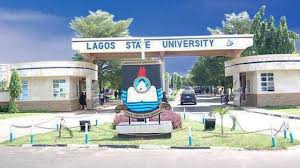
LASU operates across three geographically separated campuses that serve functionally different student populations. The Ojo main campus is the administrative and academic centre — large, urban, and dense with the faculty buildings, lecture halls, libraries, and student facilities that constitute the primary LASU experience for most undergraduates. The Ikeja campus hosts the elite Lagos State University College of Medicine (LASUCOM) immediately adjacent to its teaching hospital — a deliberately clinical location that gives medical students immediate practical exposure. The Epe campus houses Engineering and Agriculture — a deliberately quieter, semi-rural environment that separates technical students from the social intensity of the Ojo campus.
This three-campus structure is a genuine operational differentiator from most Nigerian state universities. It allows curriculum-appropriate physical environments for different disciplines. It also creates a logistical reality that prospective students frequently underestimate: LASU is not one campus. The experience of studying medicine in Ikeja is categorically different from studying law in Ojo, which is categorically different from studying engineering in Epe. Which campus your program sits on shapes your entire university experience — from commute dynamics to social life to housing costs.
What LASU is not, despite its location in Nigeria’s commercial capital, is an institution that has systematically formalized its city advantage into structured internship pipelines, industry partnership programs, or career development infrastructure equivalent to what its location could support. The advantage is real but largely informal — accessible to students with the initiative to pursue it themselves, less accessible to those who wait for the institution to organize it.
Why students choose LASU
Why Nigerian Students Choose LASU — The Specific Reasons
The motivations driving LASU enrollment are more varied than the institution’s official marketing suggests.
Lagos State indigenes pursuing affordable professional education. For Lagos residents whose family educational investments have already been stretched by secondary school costs in one of Nigeria’s most expensive cities, LASU’s relatively affordable consolidated charges — combined with the indigene development fee advantage — make it the most accessible formal university option. A Lagos State indigene can complete an undergraduate law or business administration degree at LASU at a fraction of what the same degree costs at Covenant University or Lagos Business School.
Law students targeting Lagos legal practice specifically. LASU’s Faculty of Law has produced a significant proportion of the barristers and solicitors currently practicing in Lagos — Nigeria’s most commercially active legal market. The alumni network of LASU law graduates in Lagos courts, law firms, and corporate legal departments is a genuine professional asset for students who intend to practice in Lagos. This is not a generic claim about legal education quality — it is a specific observation about where LASU law alumni concentrate and what that concentration means for a graduate’s access to professional mentorship, referrals, and employment.
Mass communication and media students targeting Lagos-based careers. Nigeria’s media industry is disproportionately concentrated in Lagos. LASU’s Department of Mass Communication and Media Studies produces graduates who enter this industry regularly — partly because of the department’s academic programming and partly because of the proximity to production companies, broadcast stations, digital media outfits, and advertising agencies that are available for practical attachment, internship, and early employment from within LASU’s Ojo campus radius.
Non-indigenes who chose LASU as a strategic second choice. A meaningful proportion of LASU’s enrollment consists of students whose first-choice federal universities — UNILAG, UI, UNIBEN, OAU — did not accept them at their JAMB score. For students in this category, LASU represents a credible alternative in Nigeria’s most commercially important city, with NUC-accredited programs and a degree that carries national recognition. The strategic logic is sound — provided the student understands the structural differences between LASU and the federal university alternatives they originally targeted.
Students who specifically want to study in Lagos. The city itself is a factor. Students from Lagos-based families who do not want to relocate, students whose part-time work opportunities or family businesses make Lagos presence essential, and students who simply prefer urban life in Nigeria’s most dynamic city choose LASU because it lets them stay where their lives already are.
Honest breakdown
The Honest Breakdown — LASU's Key Dimensions
School Fees and True Cost of Attendance
What it is: LASU school fees for 2026 range between ₦90,000 and ₦300,000 depending on level and stream and also depending on the course. The acceptance fee for 2025/2026 is ₦20,000. Medicine, Law, and Engineering programs carry higher professional charges than arts and social science programs.
What it means in practice: The published fee range is the starting point, not the full picture. LASU operates a Stream I and Stream II system — where Stream II (part-time/evening) students pay at higher rates than Stream I (full-time/day) students. The development fee differential between Lagos State indigenes (₦10,000) and non-indigenes (₦40,000) is the most practically significant fee distinction for family financial planning.
Accommodation is not included in school charges and must be separately budgeted. Off-campus housing in Ojo — the area surrounding LASU’s main campus — is more affordable than equivalent accommodation near UNILAG’s Yaba campus, but Lagos generally is not a cheap city to live in. A realistic annual cost of attendance for a non-indigene LASU student in 2026 — including school charges, accommodation, feeding, textbooks, and transportation — is approximately ₦700,000–₦1,200,000 depending on lifestyle and faculty.
What to watch out for: LASU accepts dollar payments for school fees in addition to naira — an unusual feature among Nigerian state universities that reflects the institution’s international student ambitions. Domestic students paying in naira should verify current fee amounts on the official LASU portal before each academic session, as fee structures are reviewed periodically.
The 70/30 Indigene/Non-Indigene Quota System
What it is: LASU operates a strict 70/30 admission quota — 70% of available slots in each department are reserved for Lagos State indigenes, with the remaining 30% available for non-indigenes.
What it means in practice: This quota system has a more significant impact on competitive programs than on less competitive ones. For Medicine, Law, Pharmacy, and Computer Science — where departmental cut-off marks are well above the JAMB minimum — a non-indigene student competing for 30% of available slots faces a structurally more competitive admission environment than the published cut-off marks suggest. A non-indigene with a JAMB score that would secure admission as an indigene may not receive an offer because the non-indigene quota for that department was filled by students with higher scores.
What to watch out for: LASU verifies indigeneship claims through the Lagos State University Independent Indigeneship Verification Committee. Students who falsely claim Lagos State indigene status to access the more competitive indigene quota face admission revocation and potential blacklisting. The verification process is real and the consequences of misrepresentation are severe.
The Three-Campus Structure
What it is: LASU’s academic programs are distributed across three geographically separated campuses — Ojo (main), Ikeja (LASUCOM), and Epe (Engineering and Agriculture).
What it means in practice: Students admitted to the Epe campus for Engineering or Agriculture are studying approximately 80 kilometres from the main Ojo campus — in a semi-rural, quieter environment that offers a fundamentally different university experience from the urban intensity of Ojo. The Epe campus has been deliberately designed as a more residential, focused academic environment. Students who chose LASU imagining a Lagos urban campus experience and find themselves allocated to Epe sometimes experience significant expectation mismatch.
What to watch out for: Accommodation near the Epe campus is available and more affordable than Ojo equivalents, but the surrounding infrastructure — entertainment, commercial services, transportation frequency — reflects Epe’s semi-rural character. Students who require regular access to Lagos Island or Lagos mainland for work, family, or commercial reasons will find the Epe campus location logistically demanding.
Academic Programs and Faculty Strength
What it is: LASU offers undergraduate and postgraduate programs across faculties including Law, Medical Sciences (through LASUCOM), Engineering, Management Sciences, Social Sciences, Communication and Media Studies, Science, Education, Humanities, and Environmental Sciences.
What it means in practice: LASU’s academic strengths are concentrated in specific faculties rather than distributed uniformly. Law, Mass Communication, and Business Administration are the programs with the strongest alumni representation in Lagos’s professional market. LASUCOM produces medical graduates who sit MDCN qualifying examinations — the credential that matters most for clinical practice. Engineering graduates hold COREN-accredited degrees from the Epe campus.
Programs in the arts, humanities, and some social science departments face the same employment market challenges that affect equivalent programs at most Nigerian universities — not a unique LASU failing, but a structural reality of those disciplines’ professional pathway narrowness relative to their student enrollment.
Tradeoffs
The Real Tradeoffs — What LASU Doesn't Advertise
Strike action is not a theoretical risk. It is recent history.
This is the most important thing any prospective LASU student or their family must understand before accepting an admission offer. LASU unions commenced an indefinite strike in July 2025, forcing a full shutdown just days before second semester exams were to begin for the 2024/2025 academic session. The Joint Action Committee — comprising ASUU, SSANU, NASU, and NAAT — directed all members of staff of the university and its affiliate campuses at LASUCOM and the Epe campus to withdraw their services and vacate their official duty posts with immediate effect.
The trigger was unresolved disputes between the staff unions and the Lagos State Government over welfare and funding commitments. Students were left in uncertainty, with examinations postponed and no clear end in sight for the shutdown.
This strike — coming just days before scheduled examinations — is not an isolated incident in LASU’s history. It reflects a recurring pattern in which staff salary disputes, welfare arrears, and infrastructural funding disagreements between university unions and the state government periodically produce industrial actions that disrupt academic calendars. Unlike private universities insulated from this dynamic by their funding model, LASU’s dependence on Lagos State Government appropriations makes it structurally vulnerable to political and fiscal decisions that are ultimately outside the university’s direct control.
The Ojo-Badagry Expressway is an academic consideration, not just a transport one.
LASU’s main campus sits in Ojo, at the Lagos-Badagry Expressway. This road — one of the most congested in Lagos — is a significant practical factor in daily student life. Students who live beyond walking distance of the campus and rely on public transportation to attend morning lectures routinely deal with commute times that can exceed 90 minutes each way during peak traffic periods. Late arrivals to lectures, exhaustion from commuting, and the cost of daily transportation are not trivial inconveniences — they compound over a four to six year degree into a material impact on the quality of the educational experience.
The Lagos advantage is real but largely self-directed.
LASU’s location creates genuine professional opportunities — but the institution has not systematically organized them for students. Internship connections, industry exposure, and professional networking happen primarily through individual initiative at LASU rather than through organized career services infrastructure. Students who are self-directed and proactive about using Lagos proximity to build professional relationships while still in school extract significant value from the location. Students who expect the institution to organize these connections for them typically graduate without having accessed them.
Administrative processes at LASU require patience and persistence.
A pattern consistently reported by LASU students involves administrative processes — course registration, result collection, clearance procedures, accommodation applications — that require physical visits during limited office hours, paper-based documentation, and multiple trips to resolve straightforward issues. The digitization of LASU’s administrative infrastructure, while in progress, remains incomplete. Students accustomed to the administrative responsiveness of well-resourced private universities will find LASU’s administrative pace frustrating. This is not unique to LASU — it is common across Nigerian public universities — but it is worth naming specifically for families doing honest comparison.
Student sentiment
Student Sentiment Analysis
What students consistently praise: The Lagos location is the most consistently praised aspect of the LASU experience. Students in law, mass communication, and business administration frequently cite the practical exposure — industry visits, professional connections, internship access — that the Lagos environment makes possible. LASU’s relatively affordable fees compared to private university alternatives in Lagos receive consistent positive mention from students and families who made explicit cost comparisons before enrolling.
What students consistently criticize: Strike disruptions dominate negative student feedback — and after the July 2025 industrial action that postponed second-semester examinations, this criticism is recent and substantiated rather than historical. The Ojo campus commuting experience generates persistent complaints from students living off-campus at distance, particularly regarding Badagry Expressway congestion. Administrative process inefficiency — particularly around examination timetable changes at short notice, result compilation delays, and accommodation allocation systems — is the second most consistent complaint category across publicly observable student forums and social media discussions.
When problems most often occur: Strike actions emerge from labour disputes that are fundamentally unpredictable in timing — the July 2025 action came just days before scheduled examinations, with minimal advance warning to students. Administrative failures concentrate at session resumption periods when large student populations attempt to process registration, fee payment, and accommodation allocation simultaneously. Examination period timetable disruptions generate the most acute student distress because they directly affect academic progression and graduation timelines.
Sentiment trend: Based on publicly observable patterns across Nairaland education forums, Twitter/X discussions, and Nigerian student communities, LASU sentiment is mixed in ways that closely track the institution’s industrial relations history. Students in professional faculties — law, medicine, mass communication, business administration — tend toward cautiously positive long-term assessments, particularly after graduation and employment. Students whose programs have been most disrupted by strike actions express the strongest negative sentiment. The July 2025 strike created a concentrated period of strongly negative student sentiment that has not yet fully dissipated in publicly observable discussions.
Is LASU legit & safe?
Legitimacy and Safety Analysis
Is LASU a legitimate university? Unambiguously yes. Lagos State University is accredited by the NUC and has been continuously operational since 1983. Its degrees are recognized by Nigerian professional bodies, the Federal Government’s civil service, and international institutions for postgraduate admission purposes. LASU’s accreditation is not in dispute — the institution’s challenges are operational and industrial, not existential.
Is it safe to study at LASU? Generally yes, with the contextual awareness that Ojo is a large, dense Lagos neighbourhood with the security dynamics common to similar Nigerian urban environments. The campus itself has functional security infrastructure. Off-campus accommodation selection requires the standard urban safety research that any large Nigerian city demands. The Epe campus, by contrast, has a genuinely safer and quieter immediate environment.
What is the real risk? The primary risk of choosing LASU in 2026 is not academic quality or institutional legitimacy. It is calendar disruption. A student who enrolls in a four-year LASU program with a precise graduation target should honestly budget for the possibility of industrial action extending that timeline — as has occurred multiple times in the institution’s recent history, most recently in July 2025.
What students misunderstand about LASU’s state university status: Many prospective students assume that because LASU is a state university rather than a federal one, it is insulated from the ASUU dynamics that affect federal universities. This assumption is incorrect. ASUU operates at state universities as well as federal ones — and as the July 2025 action demonstrated, LASU-specific ASUU and SSANU branches can and do take independent industrial action against the Lagos State Government that has nothing to do with federal government ASUU dynamics.
Alternatives to LASU
Competitor Comparison: LASU vs Nigerian University Alternatives
| Feature | LASU | UNILAG | UNIBEN | Covenant University |
|---|---|---|---|---|
| NUC ranking (2026) | Top state university | Top 5 (federal) | 9th overall | Top 3 (private) |
| Annual fees (approx.) | ₦90k–₦300k | ₦180k–₦220k | ₦170k–₦190k | ₦1.5M–₦3M+ |
| Strike risk | Yes (state ASUU) | Yes (federal ASUU) | Yes (federal ASUU) | No (private) |
| Lagos location | Yes (Ojo/Ikeja/Epe) | Yes (Yaba) | No (Benin City) | No (Ota, Ogun) |
| Law faculty strength | Strong (Lagos focus) | Very strong (national) | Strong (South-South) | Good |
| Medicine | Yes (LASUCOM, Ikeja) | Yes (LUTH) | Yes (UBTH) | No |
| Indigene quota | 70/30 | None | None | None |
| Campus infrastructure | Moderate | Moderate | Moderate | Excellent |
| Industry proximity | Excellent (Lagos) | Excellent (Lagos) | Regional (Benin) | Moderate (Ota) |
| Hostel availability | Scarce | Scarce | Scarce | Mandatory/available |
Who should choose LASU over UNILAG: Prospective students who did not score highly enough in JAMB and Post-UTME to secure UNILAG admission, but whose target programs sit in LASU’s stronger faculties — particularly law, mass communication, and business administration. LASU and UNILAG share the same city advantage; the key difference is federal versus state funding, UNILAG’s stronger national alumni network, and the absence of a quota system at UNILAG.
Who would be better served by UNIBEN or a federal alternative: Students whose target programs are in UNIBEN’s stronger specializations — Medicine in the South-South region, Engineering with COREN accreditation, Pharmacy — and who are from or intend to practice in the South-South. Students whose first priority is avoiding the indigene quota dynamic should note that UNIBEN and other federal universities do not operate comparable state-specific quota systems.
The one area where LASU has no strong competitor: For Lagos State indigenes who want law or business education at affordable consolidated charges, with direct access to Lagos’s professional ecosystem and legal market, within a state-funded institution that doesn’t carry the federal ASUU national-level strike exposure — no other institution precisely replicates this combination. UNILAG is in the same city but federally funded and quota-free. Covenant University is private and dramatically more expensive. LASU’s specific value proposition for this specific student profile is genuinely unmatched.
Who should study at LASU?
Who Should Study at LASU — and Who Should Not
Study at LASU if you are: – A Lagos State indigene targeting law, medicine, mass communication, or business administration at affordable consolidated charges with the indigene fee advantage – A non-indigene whose JAMB score did not secure admission at a preferred federal university, and whose target program sits in LASU’s stronger faculties – A student who wants to remain in Lagos for family, work, or commercial reasons throughout your degree – A self-directed student who will proactively pursue the Lagos professional exposure that LASU’s location makes accessible without the institution organizing it for you – A student or family with honest financial plans that account for off-campus accommodation costs and potential timeline extensions from industrial action – A mass communication or media student who wants maximum proximity to Nigeria’s media and entertainment industry during their formative professional years
Avoid LASU if you: – Cannot financially sustain an extended program timeline if industrial action extends your degree by one or more sessions — the July 2025 strike demonstrated this risk is active, not theoretical – Are a non-indigene competing for a highly competitive program and did not score significantly above the stated cut-off mark — the 70/30 quota makes the non-indigene admission process more competitive than the raw cut-off figures suggest – Were allocated to the Epe campus and require frequent access to the Lagos mainland for personal or commercial reasons — the commute dynamics make this arrangement logistically difficult to sustain over a multi-year degree – Require reliably organized career services infrastructure rather than self-directed professional networking – Have strong private university options available and are comparing LASU primarily on cost without accounting for the hidden costs of off-campus living, transportation, and potential session disruptions
Realistic expectations
Realistic Expectations for LASU Students
What usually goes right: Students in LASU’s professional faculties — law, mass communication, medicine, business administration — who are academically serious and proactively engaged with the Lagos professional environment typically graduate with credentials that open real career doors. LASUCOM graduates sit MDCN qualifying examinations and enter clinical practice with recognizable credentials. Law graduates who actively built relationships with Lagos legal practitioners during their studies find employment pathways that the LASU alumni network genuinely supports.
What usually goes wrong — and when: Industrial action disrupts academic calendars at unpredictable intervals. The July 2025 strike — which came days before second-semester examinations — is the clearest recent evidence. Administrative complications with course registration, result processing, and clearance procedures generate delays that require persistent personal follow-up. Students at the Epe campus who underestimated the isolation of that environment sometimes experience significant social difficulty, particularly in early sessions before they have built adequate local networks.
What most students underestimate: The true cost of Lagos. Students and families who budget for LASU school charges without explicitly budgeting for Lagos accommodation, Lagos transportation, and Lagos cost of living consistently find their financial plans insufficient. Ojo is not the cheapest part of Lagos, and the Badagry Expressway commute is not the cheapest daily expense. Honest financial planning for LASU attendance must treat the school charges as the starting point of a much larger annual financial commitment.
How the university handles disputes: LASU’s formal dispute resolution runs through the Dean of Students office and relevant faculty administration. Strike-related academic disruptions — postponed examinations, delayed results, session extensions — are handled at the institutional level through Senate decisions and management-union negotiations. Individual students have limited leverage in these processes. Maintaining documentation of all academic records, examination registrations, and administrative correspondence is essential protection against the administrative consequences of institutional disruptions.
Our verdict
Lagos State University: The Brands.Ng Verdict
LASU is a strategically located state university that sits in Africa’s most commercially dynamic city and has not yet fully organized that advantage into the structured, systematic professional development infrastructure its location deserves — but whose graduates, particularly in law, medicine, and mass communication, consistently find that the Lagos advantage accrues to them anyway through informal networks, proximity, and initiative.
What LASU does genuinely well is provide affordable, NUC-accredited education in key professional disciplines to Lagos State students who would otherwise be priced out of quality tertiary education or forced to leave the city that is their commercial home. The fee structure, particularly for indigenes, represents a genuine subsidy that delivers real value.
Its most significant weakness — demonstrated as recently as July 2025 — is industrial action vulnerability. When staff unions and the Lagos State Government cannot resolve their disputes, students pay the price in postponed examinations and disrupted academic calendars. This is not a hypothetical risk. It is a documented recent reality that any prospective student must factor into their decision.
Recommend LASU without hesitation to a Lagos State indigene with strong JAMB performance targeting law, mass communication, or business administration, whose family has honestly planned for the full cost of Lagos attendance and the possibility of an extended timeline.
LASU is not Lagos’s best university — but for the Lagos student who approaches it with clarity about what it offers and what it demands, it can be the most strategically intelligent educational choice they make.
Editorial Note: This review reflects publicly available information, NUC accreditation records, published fee schedules, and student-reported experiences as of May 2026. Brands.ng does not receive payment for editorial coverage. Lagos State University was given the opportunity to respond to findings prior to publication. No response was received at the time of publishing.
Suggested readings: – University of Benin (UNIBEN) Review 2026: Courses, Fees, Admission, Ranking & Student Experience | University of Lagos (UNILAG) Review (2026): Courses, Cut-Off Mark, School Fees & Real Student Experience | Best Universities in Nigeria (2026 Ranking & Cut-Off Marks)


The Brands.Ng Editorial Team, led by Augustine Tom, is a multidisciplinary group of researchers, analysts, writers, and industry contributors focused on helping consumers, businesses, investors, and decision-makers better understand Africa's evolving digital economy. Brands.Ng is an African business intelligence and brand discovery platform covering fintech, digital platforms, ecommerce, logistics, payments, consumer technology, business growth, and emerging market trends across the continent. Our work combines market research, industry analysis, consumer insights, regulatory developments, and operational intelligence to evaluate the companies, technologies, and systems shaping how Africans access financial services, digital commerce, online platforms, and modern business infrastructure. Drawing on expertise in business strategy, digital marketing, SEO, brand analysis, market intelligence, and technology research, the editorial team produces independent reviews, comparisons, industry reports, and investigative guides designed to help readers make more informed decisions. Through Brands.Ng Intelligence, we also analyze broader market developments, competitive dynamics, consumer behavior, and regulatory changes affecting businesses and industries across Africa.