Last Updated: June 2026. Reviewed by: Brands.Ng Editorial Team
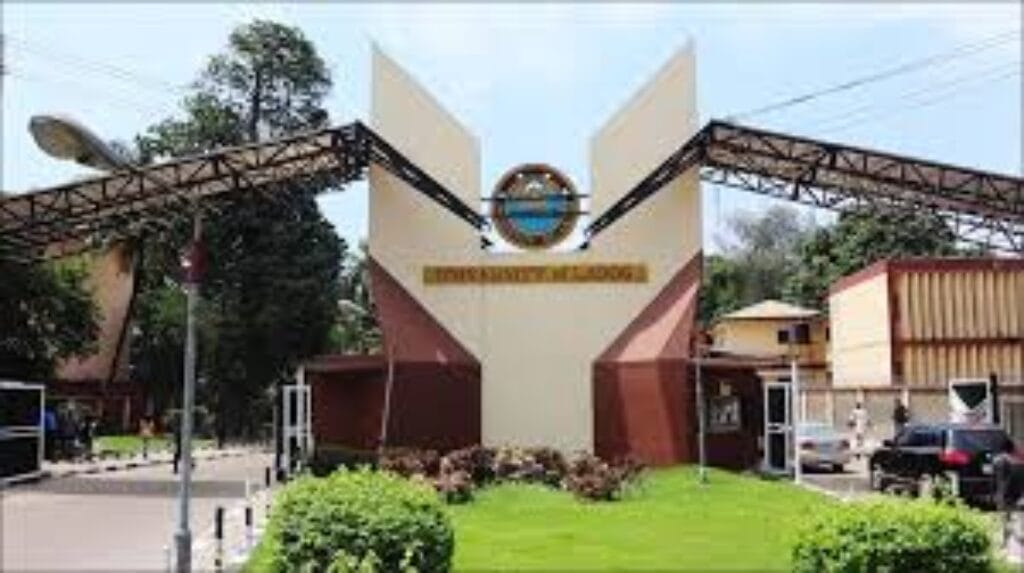
In October 2025, the Times Higher Education World University Rankings released its 2026 edition – and the University of Lagos found itself sharing the top spot in Nigeria with the University of Ibadan, both placed in the global 801–1000 band out of 2,191 institutions assessed worldwide. For a federal university sitting on 190 hectares in Lagos – Nigeria’s most expensive, most congested, and most commercially dynamic city – that ranking reflects something that cannot be manufactured: decades of consistent research output, an alumni network embedded in the top echelons of Nigerian industry, and a graduate profile that Nigerian employers have learned to recognise.
UNILAG is not for every student. The Lagos cost of living is real. The competition for admission is among the sharpest in Nigeria. The hostel shortage is documented and persistent. But for a student whose career ambitions intersect with banking, technology, media, law, or consulting – industries concentrated in Lagos and increasingly connected to global markets – no Nigerian university places its graduates closer to the epicentre of opportunity.
This is the complete UNILAG profile for 2026 – covering every question a prospective student, parent, or researcher needs answered, built on verified data and updated to reflect the most current admission requirements, fee structures, and rankings available.
Quick Facts
| Detail | Information |
|---|---|
| Full Name | University of Lagos |
| Acronym | UNILAG |
| Founded | 1962 |
| Type | Federal Government University |
| Location | Akoka, Yaba, Lagos State |
| Campus Size | Approximately 190 hectares (main campus) |
| Vice Chancellor | Professor Folasade Ogunsola |
| Student Population | Approximately 55,000 total students |
| Academic Staff | 1,736 faculty members |
| THE World Ranking 2026 | 801–1000 globally – joint 1st in Nigeria |
| QS World Ranking 2026 | 1001–1200 globally |
| NUC Accreditation | Full accreditation across all faculties |
| JAMB Cut-Off 2026 | 200 – minimum for Post UTME eligibility |
| Post UTME Format | Computer-Based Test (CBT) |
| Official Website | unilag.edu.ng |
| Student Portal | studentportal.unilag.edu.ng |
About the University of Lagos
The University of Lagos was established by an Act of Parliament in 1962, three years after Nigeria’s independence, with a deliberate mandate to serve the commercial capital of Africa’s most populous nation. Unlike older institutions built in university towns, UNILAG was designed from the outset for a city – and that urban orientation has shaped everything from its course offerings to its alumni networks to the career trajectories of its graduates.
The university operates from two campuses. The main campus in Akoka, Yaba covers approximately 190 hectares on the Lagos Lagoon. The College of Medicine campus in Idi-Araba, Surulere is a separate site housing UNILAG’s medical programmes and the Lagos University Teaching Hospital (LUTH) – one of Nigeria’s largest and most active tertiary health facilities.
What distinguishes UNILAG from other Nigerian federal universities is not primarily its ranking, though the rankings are significant. It is the structural advantage of location. A UNILAG student in Lagos is simultaneously a student and a participant in Nigeria’s most active economy. The banks, media organisations, technology firms, consulting houses, and government agencies that dominate Nigerian professional life are within commuting distance of the Akoka campus. Internship opportunities that students at universities in Nsukka, Ile-Ife, or Zaria must travel for are accessible from UNILAG as a matter of daily geography.
UNILAG ranked 2nd in Nigeria overall in EduRank’s 2026 assessment, placed 1269th globally, with 20,379 academic publications and 230,081 citations attributed to the university, and 187 notable alumni factored into the ranking methodology. The alumni dimension is telling. UNILAG’s notable graduates span Ngozi Okonjo-Iweala, Wole Soyinka (who studied here before proceeding to Leeds), Chief Justice Aloma Mukhtar, and hundreds of prominent figures in Nigerian banking, media, technology, and government – a network whose density reflects the university’s six decades of proximity to power.
University of Lagos Rankings 2026 – The Full Picture
Understanding UNILAG’s ranking requires looking at multiple systems simultaneously, because different ranking methodologies measure different things and produce different results.
Times Higher Education (THE) World University Rankings 2026: UNILAG shares the top spot in Nigeria with the University of Ibadan in the 801–1000 global band, as announced on October 9, 2025. Outside Nigeria, UNILAG shares this band with University of Cape Coast (Ghana), Alexandria University, Cairo University, Ain Shams University (Egypt), and Universidad Nacional Autónoma de México. The THE rankings assess teaching environment, research output, research quality, industry engagement, and international outlook.
QS World University Rankings 2026: UNILAG is ranked in the 1001–1200 band globally in QS 2026, holding that position for the second consecutive year after a significant improvement from the 1401+ band in 2024. UNILAG is one of only three Nigerian universities in the QS rankings, alongside UI and Ahmadu Bello University.
THE Emerging Economies Ranking: UNILAG achieved position 163 in the THE Emerging Economies University Ranking – its highest position across all 18 international rankings tracked for the institution. This ranking specifically compares universities in economies classified as emerging markets, making it the most contextually relevant benchmark for Nigerian higher education.
Subject-Specific Rankings: UNILAG ranked 4th in Nigeria and 1024th in the world for Medicine with 11,041 publications and 140,133 citations. It ranked 4th in Nigeria for Liberal Arts and Social Sciences globally at position 1370. In the QS Subject Rankings, UNILAG sits in the 701–850 band globally for subject-level assessments.
The honest ranking context: A global ranking of 801–1000 means UNILAG is in the same broad performance tier as established regional universities in Eastern Europe, Southeast Asia, and Latin America. It does not suggest equivalence with MIT, Imperial College, or even the University of Cape Town. What it does confirm – definitively, with rigorous methodology – is that UNILAG is the highest-performing or joint-highest-performing university in Nigeria by the most credible global standard, and that its research output and academic reputation register globally in a way that the vast majority of Nigerian universities do not.
University of Lagos Courses – All Faculties
UNILAG offers undergraduate programmes across twelve faculties plus the College of Medicine. Below is the complete faculty breakdown:
Faculty of Arts English, History, Philosophy, French, Linguistics and African Languages, Creative Arts, Music, European Languages
Faculty of Business Administration Accounting, Actuarial Science, Business Administration, Finance, Insurance
Faculty of Dental Sciences (College of Medicine Campus) Dental Surgery (BDS – five-year programme)
Faculty of Education Adult Education, Educational Management, Guidance and Counselling, Human Kinetics and Health Education, Science Education, Social Science Education, Arts and Language Education, Early Childhood Education
Faculty of Engineering Chemical and Polymer Engineering, Civil and Environmental Engineering, Computer Engineering, Electrical and Electronics Engineering, Marine Engineering, Mechanical Engineering, Metallurgical and Materials Engineering, Systems Engineering
Faculty of Environmental Sciences Architecture, Building, Estate Management, Quantity Surveying, Urban and Regional Planning
Faculty of Law Law (LLB – five-year programme)
Faculty of Medicine (College of Medicine Campus, Idi-Araba) Medicine and Surgery (MBBS – six-year programme), Physiotherapy, Radiography, Nursing, Medical Laboratory Science
Faculty of Pharmacy (College of Medicine Campus) Pharmacy (B.Pharm – five-year programme)
Faculty of Science Biochemistry, Botany, Cell Biology and Genetics, Chemistry, Computer Science, Geology, Marine Sciences, Mathematics, Microbiology, Physics, Statistics, Zoology
Faculty of Social Sciences Economics, Geography, Mass Communication, Political Science, Psychology, Sociology
Institute of Child Health (Postgraduate) Child Health Sciences
Most competitive undergraduate courses: Medicine and Surgery, Dentistry, Pharmacy, Law, Computer Science, Mass Communication, Accounting, Architecture, and Electrical Engineering consistently attract the highest applicant volumes relative to available spaces at UNILAG.
University of Lagos School Fees 2026
UNILAG’s fee structure is set by the university’s governing council and reviewed periodically. The fees below reflect the 2024/2025 structure which remains the reference point for 2025/2026 planning pending official 2026 confirmation.
Undergraduate School Fees – Freshers:
For freshers, school fees for courses without laboratory or studio components are ₦126,325. School fees for courses with laboratory or studio components are ₦176,300.
| Course Category | Fresher Fee (Est.) |
|---|---|
| Arts, Social Sciences, Law, Business (no lab) | ₦100,750 – ₦126,325 |
| Sciences, Engineering (with lab/studio) | ₦150,000 – ₦176,300 |
| Medicine, Dentistry, Pharmacy, Nursing | ₦180,000 – ₦200,000+ |
Undergraduate School Fees – Returning Students:
Returning undergraduate fees range between ₦100,000 and ₦200,000 per session depending on faculty and level. Returning students pay a lower base rate than freshers as the acceptance fee and some one-time charges do not recur.
Additional Compulsory Fees:
The following charges apply to all undergraduate students: Utility Charge of ₦20,000 applicable to all undergraduate students; Convocation Fee of ₦30,000 for all final-year students; Toxicology Test Fee of ₦10,000 for all new students.
For new students, the main acceptance fee is ₦30,700. In total, a new student should prepare approximately ₦60,700 at the start for acceptance, health testing, and utility charges alone.
Hostel Fees:
UNILAG hostel fee is ₦100,000 per academic session for on-campus accommodation. On-campus hostel spaces are significantly fewer than the student population – allocation is competitive and not guaranteed.
Off-campus accommodation reality: The majority of UNILAG students live off-campus in the surrounding Yaba, Akoka, Bariga, and Gbagada neighbourhoods. Off-campus room costs in these areas range from ₦200,000 to ₦600,000 annually depending on proximity to campus and accommodation quality. Lagos cost of living – transportation, feeding, and incidental expenses – adds significantly to the true cost of attending UNILAG compared to the headline tuition figure.
Postgraduate Fees:
Postgraduate fees at UNILAG average ₦110,000 to ₦200,000 per session. Specific fees vary by programme and level (PGD, Masters, PhD) – the postgraduate school office publishes updated figures each session.
Total realistic annual budget for UNILAG students:
| Student Type | Conservative Estimate | Realistic Total |
|---|---|---|
| Fresher (non-medical, on-campus hostel) | ₦290,000 | ₦400,000 – ₦550,000 |
| Fresher (non-medical, off-campus) | ₦350,000 | ₦500,000 – ₦750,000 |
| Medical/Pharmacy student (off-campus) | ₦450,000 | ₦700,000 – ₦1,000,000 |
These figures include tuition, acceptance, utilities, accommodation, and a conservative estimate of Lagos living costs. Families budgeting for UNILAG should plan to the realistic total, not the tuition headline.
UNILAG Admission Requirements
UTME (JAMB) requirements:
Candidates who made University of Lagos their first choice in the UTME and scored 200 and above are eligible to apply for Post-UTME Online Screening.
To participate in the UNILAG Post-UTME 2026 screening exercise, candidates must: choose UNILAG as their first-choice institution; score a minimum of 200 marks in the UTME; be at least 16 years old by September 30, 2026; and possess five credit passes in relevant O/level subjects including English Language and Mathematics – results must be obtained in one sitting.
O’Level requirements (general): Five credit passes at O’Level in not more than two sittings, including English Language and Mathematics, with relevant subject credits depending on the faculty applied for. Most competitive departments require these credits in one sitting.
Direct Entry requirements: Candidates with A’Level, OND, HND, or NCE qualifications may apply through Direct Entry with at least two A’Level passes in relevant subjects, or equivalent qualifications. Direct Entry candidates also undergo screening at UNILAG.
Faculty-specific subject requirements (selected courses):
- Medicine and Surgery: Credits in Biology, Chemistry, Physics, Mathematics, and English
- Law: Credits in English, Literature or Government, and three other relevant subjects
- Engineering: Credits in Mathematics, Physics, Chemistry, English, and one other science subject
- Accounting/Business Administration: Credits in Mathematics, English, Economics, and two others
- Mass Communication: Credits in English, Literature (preferred), and three other subjects
- Computer Science: Credits in Mathematics, Physics, English, and two others
UNILAG Cut-Off Mark 2026 – JAMB and Post UTME
UNILAG has set 200 as its general JAMB cut-off mark for the 2025/2026 admission session. Scoring 200 qualifies a candidate for the Post UTME screening process. This is the minimum threshold – not the competitive benchmark.
The Post UTME system:
UNILAG uses a 50:50 ratio to compute the admission aggregate score – combining JAMB performance and Post UTME performance in equal weight. Candidates must aim for a minimum aggregate of 60% to be competitive for most courses.
This means a JAMB score of 300 and a Post UTME score of 70% produces an aggregate of approximately 65% – competitive for many programmes but marginal for the most competitive ones.
2026 Post UTME registration timeline:
The UNILAG online registration for Post-UTME Screening for the 2026/2027 Academic Session commences from Monday, June 15 to Wednesday, July 8, 2026. Only candidates who upload their O’Level results on JAMB CAPS and the UNILAG application portal on or before Friday, August 14, 2026, will be considered for admission.
Departmental cut-off marks (Post UTME aggregate – estimated):
| Course | Approximate Aggregate Required |
|---|---|
| Medicine and Surgery (MBBS) | 75%+ |
| Dentistry | 73%+ |
| Pharmacy | 72%+ |
| Nursing | 70%+ |
| Law | 70%+ |
| Mass Communication | 68%+ |
| Accounting | 68%+ |
| Computer Science | 65%+ |
| Engineering (various) | 62%–68% |
| Economics | 62%–65% |
| Architecture | 65%+ |
| Sciences (various) | 58%–65% |
| Social Sciences | 55%–62% |
| Arts and Humanities | 50%–58% |
| Education | 50%–55% |
These departmental cut-off marks represent the minimum scores candidates need to stand a chance of admission after scoring 200 and above in JAMB. Some highly competitive courses like Medicine, Law, Engineering, and Mass Communication may require higher scores.
The critical admission insight: The 50:50 weighting means Post UTME preparation is as important as JAMB preparation. A candidate who scored 280 in JAMB and performs excellently in Post UTME will outcompete a candidate who scored 340 in JAMB but performed poorly in Post UTME. This structural feature of UNILAG’s admission system rewards focused Post UTME preparation over JAMB score alone.
UNILAG Post UTME 2026 – Complete Guide
The UNILAG Post-UTME 2026 screening exercise covers candidates seeking admission into undergraduate programmes for the 2026/2027 academic session. Participation in the Post-UTME Online Aptitude test is mandatory – candidates who do not participate will not be considered for admission under any circumstances.
Format: Computer-Based Test (CBT) – online, conducted through the UNILAG admission portal
Subject coverage: The Post UTME tests the same subjects registered for in JAMB – typically four subjects relevant to the faculty applied for
Duration: Approximately 30–45 minutes
Registration process:
- Visit the UNILAG admission portal at unilag.edu.ng
- Create an account using your JAMB registration number and personal email
- Select your course and complete the registration form
- Pay the Post UTME registration fee through the portal
- Upload all required O’Level results to both JAMB CAPS and the UNILAG portal
- Receive your screening date and instructions via email
Important age requirement: Candidates who will not be sixteen years of age by September 30, 2026 are not eligible and should not apply.
Preparation strategy: Past questions from previous UNILAG Post UTME examinations are the single most effective preparation resource. The CBT format and question style follow patterns established over multiple examination cycles. Candidates targeting competitive courses should prepare with a minimum of six to eight weeks of consistent past question practice.
UNILAG Postgraduate Programmes
UNILAG’s School of Postgraduate Studies offers Masters, PGD, and PhD programmes across virtually all faculties represented at the undergraduate level. Key postgraduate offerings include:
MBA and Business Programmes The UNILAG Business School offers MBA and executive education programmes with strong industry linkages to Lagos’s financial and corporate sector. The proximity to Nigeria’s largest concentration of financial institutions makes UNILAG’s MBA programme particularly well-connected for banking, finance, and consulting careers.
College of Medicine Postgraduate Programmes Residency training through the Lagos University Teaching Hospital (LUTH) covers the full range of medical specialisations. LUTH’s patient volume and case complexity provide clinical training depth comparable to the best teaching hospitals in Nigeria.
Faculty of Law – LLM UNILAG’s Law faculty offers postgraduate programmes in commercial law, international law, and human rights law – areas with strong demand from Nigerian law firms, corporations, and NGOs operating in Lagos.
Distance Learning Institute (DLI) UNILAG’s DLI provides degree programmes for working professionals through distance and online delivery – covering Business Administration, Economics, Mass Communication, Public Administration, and several other disciplines. Fees for DLI programmes are structured separately from main campus undergraduate fees.
Campus Life at UNILAG – What Students Actually Experience
The Lagos advantage The most consistent theme in UNILAG graduate testimonials is that Lagos itself is part of the education. Students who intern at Nigerian banks, tech startups, television stations, and consulting firms while still enrolled at UNILAG graduate with work experience that students at other universities acquire only after graduation. The network effects compound: an internship at a Lagos media house in year two becomes a full-time role in year four for the student who performed well.
Student associations and campus culture UNILAG has one of the most active student association ecosystems in Nigerian higher education. Departmental associations, cultural groups, professional development organisations, and media outlets (UNILAG FM is a campus radio station) create a social and professional environment that prepares students for organisational life in ways that classroom instruction alone does not.
Accommodation reality UNILAG hostel fee is ₦100,000 per academic session. However, getting a hostel room does not come easily – you must apply for rooms and may not get your former room in subsequent sessions. Each room is overpopulated and privacy is limited.
The honest accommodation picture is that most UNILAG students live off-campus. The surrounding communities – Akoka, Bariga, Yaba, Gbagada – have developed substantial student housing markets precisely because the campus cannot accommodate its population. Off-campus living in Lagos adds cost and commute pressure but also introduces students to the city more thoroughly, which many graduates describe as an advantage rather than a burden.
Traffic and commute Lagos traffic is a genuine daily challenge for UNILAG students. A student living in Yaba who needs to be in a 7am class navigates the same infrastructure realities as Lagos’s working population. This is not a small thing – it shapes daily schedules, study time, and the energy available for academic work. Students who manage it well develop time management habits under real-world conditions. Students who do not develop those habits find it erodes academic performance.
ASUU strikes UNILAG is a federal university and is subject to the same ASUU industrial action risk as all other federal universities. Recent years have seen government-level interventions reduce strike frequency, but the risk has not been eliminated. Students and families planning for UNILAG should factor potential calendar disruption into programme duration expectations.
User Sentiment Analysis
What students and alumni consistently praise: The career outcome impact of attending a Lagos-based university is the most consistent theme across alumni feedback on LinkedIn, Nairaland’s education forum, and graduate testimonials. The ability to complete internships, build professional networks, and access industry events while still enrolled is cited as a decisive advantage over universities in other locations. The academic competitiveness of the student population – being surrounded by driven, high-achieving peers – is described by alumni as one of the most formative aspects of the UNILAG experience.
What students consistently criticise: Hostel scarcity is the most cited operational frustration. Administrative delays – result processing, transcript requests, and registration bottlenecks – are documented and persistent. The Lagos cost of living creates genuine financial pressure for students from middle-income families who underestimated the true total annual cost. Overcrowded lecture halls in popular programmes dilute the quality of instruction.
Sentiment trend: Strongly positive among alumni who have entered the job market; mixed among current students navigating day-to-day operational friction. The 2026 THE ranking result generated significant pride and social media engagement from UNILAG alumni, reinforcing the institutional narrative of the university’s national leadership position.
Alternatives to UNILAG
University of Ibadan (UI) Shares the joint number one ranking in Nigeria with UNILAG in THE 2026, also in the 801–1000 global band. More academically rigorous in certain research-oriented disciplines. Quieter environment with significantly lower cost of living than Lagos. Less immediate access to industry internships and professional networks. The right choice for students prioritising research careers, Medicine, Law, and academic credentials over urban professional exposure.
Covenant University Ranked in the 1001–1200 band in THE 2026 – third in Nigeria. No ASUU strike risk, modern campus facilities, structured academic calendar. Significantly higher fees at ₦2.5–₦4 million annually. The right choice for families who can afford the fees and prioritise campus infrastructure, guaranteed academic calendar completion, and a structured environment over the Lagos professional network advantage.
Lagos State University (LASU) Also located in Lagos – offering partial access to the same city advantage as UNILAG at lower cost and with lower admission competition. Programme depth and global ranking profile are below UNILAG’s standard, but the Lagos location provides similar access to internship and networking opportunities for students who are proactive about pursuing them.
Obafemi Awolowo University (OAU) Strong academic reputation, significantly lower cost of living in Ile-Ife compared to Lagos, and a campus culture considered among the most cohesive in Nigerian federal university education. Less immediate access to industry but strong alumni network in law, medicine, and the arts.
Who Should Choose UNILAG
UNILAG is the right choice if you are: A student targeting a career in banking, finance, technology, media, consulting, or any profession concentrated in Lagos where proximity to industry during your undergraduate years creates a structural career advantage. A student who thrives in competitive, high-energy environments and will use the Lagos setting to build professional relationships and internship experience alongside academic work. A student applying for Medicine, Law, Mass Communication, or Business Administration who wants a degree that carries both national and emerging international recognition. A student from a family able to budget realistically for Lagos costs – both tuition and living – across four to six years of undergraduate study.
UNILAG is not the right choice if you: Cannot manage the financial reality of Lagos living costs on top of university fees. Prefer a quieter, more academically focused environment where campus life is not competing with the intensity of Nigeria’s largest city. Are applying to a programme where UNILAG is not among the strongest options nationally – Agriculture, for example, or certain Engineering specialisations where UNILAG’s equipment and industry links are not superior to peer institutions. Cannot tolerate the possibility of academic calendar disruption from ASUU industrial action.
Brands.Ng Verdict
The University of Lagos in 2026 is exactly what its location has always made it – Nigeria’s most commercially connected university, operating in the city that generates the largest share of Nigeria’s economic activity and housing the industries that employ its graduates.
UNILAG’s joint first-place position in Nigeria in the THE 2026 rankings – sharing the top spot with the University of Ibadan – marks a restoration of the national ranking leadership that appropriately reflects what the institution delivers for students who use it strategically.
The degree UNILAG awards is credible and globally recognised. The city it is located in provides career acceleration that no other Nigerian university campus can replicate purely through geography. The research output and alumni network it has built across sixty years create the institutional weight that employers and graduate schools recognise.
Its limitations are real but manageable: Lagos costs more than anywhere else in Nigeria, the hostel situation requires either luck or off-campus planning, and administrative systems have not fully modernised to match the demands of 55,000 students. These are inconveniences that the right student prepares for. They are not disqualifying – they are the price of admission to Nigeria’s most strategically located university.
For a student who understands what UNILAG offers and plans accordingly, it remains one of the clearest pathways to a competitive career start in Nigeria in 2026.
Editorial Note: This profile reflects publicly available data, official university records, and verified ranking information as of June 2026. Brands.ng does not receive payment for editorial coverage.
Frequently Asked Questions
What is UNILAG’s world ranking in 2026? UNILAG is ranked in the 801–1000 band globally in the Times Higher Education World University Rankings 2026, sharing the top position in Nigeria with the University of Ibadan. In the QS World University Rankings 2026, UNILAG is placed in the 1001–1200 band globally.
How much are UNILAG school fees in 2026? Fresher fees at UNILAG are ₦126,325 for courses without laboratory components and ₦176,300 for courses with laboratory or studio components. Medical and professional programme fees are higher. Total realistic annual expenditure including accommodation and Lagos living costs ranges from ₦400,000 to ₦1,000,000 depending on programme and living arrangements.
What is the JAMB cut-off mark for UNILAG? UNILAG’s general JAMB cut-off mark is 200 for the 2025/2026 admission session. Scoring 200 qualifies a candidate for Post UTME – it does not guarantee admission. Competitive courses require significantly higher aggregate scores combining JAMB and Post UTME performance.
Does UNILAG conduct Post UTME? Yes. Participation in the UNILAG Post-UTME Online Aptitude Test is mandatory for all candidates. Those who do not participate will not be considered for admission. The Post UTME is a Computer-Based Test covering the same subjects registered for in JAMB.
When is UNILAG Post UTME 2026? UNILAG Post-UTME registration for the 2026/2027 academic session runs from Monday, June 15 to Wednesday, July 8, 2026. O’Level results must be uploaded to JAMB CAPS and the UNILAG portal by August 14, 2026.
Is UNILAG the best university in Nigeria? UNILAG shares the top position in Nigeria in the THE 2026 rankings with the University of Ibadan, both placed in the global 801–1000 band. By global ranking metrics it is jointly Nigeria’s highest-ranked university. By career outcome relevance for business, media, and technology careers, its Lagos location gives it a structural advantage no other Nigerian university replicates.
How competitive is UNILAG admission? Extremely competitive. Tens of thousands of candidates apply annually for limited spaces. For most courses, candidates must aim for a minimum aggregate of 60% combining JAMB and Post UTME. Highly competitive courses like Medicine, Law, and Mass Communication require significantly higher aggregates.
What is UNILAG’s hostel fee? UNILAG hostel fee is ₦100,000 per academic session. On-campus accommodation is not guaranteed – students must apply each session and availability is limited. Most UNILAG students live off-campus in surrounding Lagos neighbourhoods.
Stay ahead of the businesses shaping Nigeria.
Get important company developments, analysis, research and business intelligence from Brands.Ng directly on WhatsApp.