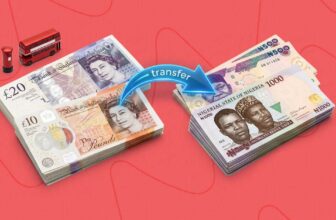
How to Receive Dollars in Nigeria as a Freelancer: Every Option Compared

Receiving payment from an international client used to be one of the most friction-heavy experiences a Nigerian freelancer faced. Wire transfers were expensive, took days, and required a domiciliary account most banks made difficult to open. PayPal has never offered full withdrawal functionality in Nigeria. Western Union and MoneyGram served personal remittances better than professional invoicing.
That situation has changed significantly. A new generation of platforms — Grey, Cleva, Payoneer, Wise, and others — now allows Nigerian freelancers to receive USD, GBP, and EUR payments with account details that look and function like local US or UK bank accounts to the person sending the money. The client in New York wires to what looks like a US bank account. The money arrives in Lagos.
But “it works” is not the same as “it works the same way.” Each platform has different fee structures, different conversion rates, different withdrawal timelines, and different reliability patterns. The platform you choose affects how much of every payment you actually keep — and how smoothly your workflow runs when things don’t go as expected.
This article compares every meaningful option available to Nigerian freelancers for receiving international payments, based on how they actually function rather than what their marketing pages claim.
The Core Problem These Platforms Solve
Before comparing specific platforms, it helps to understand the underlying mechanism.
When a US-based client pays a Nigerian freelancer, they are typically paying in USD from a US bank account. The Nigerian freelancer needs naira (or accessible dollars) in Nigeria. The gap between those two realities requires a financial infrastructure bridge.
Traditional solutions — wire transfers to Nigerian domiciliary accounts — bridge this gap but charge significant fees on both ends and take 3–5 business days. The newer platforms bridge the same gap by maintaining real bank accounts in the US, UK, and EU, collecting the payment at that end, and then either holding the balance in the foreign currency or converting to naira and transferring to a Nigerian account.
This is why these platforms can offer “US bank account details” — because they actually hold licensed accounts in those jurisdictions and pool client funds within their regulated infrastructure.
Grey: The Most Popular Option Among Nigerian Freelancers
Grey (formerly known as Aboki Africa before a rebrand) has become the default platform for many Nigerian freelancers, particularly those earning from US clients. It provides dedicated USD, GBP, and EUR account details — meaning each Grey user gets a unique account number and routing number (for USD), sort code (for GBP), or IBAN (for EUR) that is theirs alone, not a shared pool account.
This distinction matters because some platforms use shared or pooled accounts that require a reference number to identify the sender’s payment. Dedicated account numbers mean a client can set up a recurring payment without needing to include any special reference — it just works like a normal bank transfer.
Fees: Grey charges a conversion fee when funds are converted from USD/GBP/EUR to naira. The fee is applied as a spread on the exchange rate rather than a flat fee — meaning the rate Grey offers is slightly below the parallel market rate. As of recent periods, the spread has been broadly competitive with other platforms in the same category, though it fluctuates.
Withdrawal to Nigeria: Grey users can convert their balance to naira and withdraw to any Nigerian bank account. The transfer typically arrives same-day or within a few hours during business hours.
Holding foreign currency: Grey also allows users to hold a USD balance without converting to naira — useful for freelancers who prefer to time their conversion or who have USD expenses of their own to pay.
Limitations: Grey has faced occasional periods of payment processing delays, particularly for ACH transfers (as opposed to wire transfers). Some users have reported delays of 3–5 business days for ACH payments to reflect in their Grey account. Wire transfers are typically faster. If your US client is sending via ACH (which is the default for many US businesses paying contractors), factor in potential processing lag.
Cleva: The Dollar-Account Alternative Worth Knowing
Cleva launched more recently than Grey but has built a strong reputation, particularly among tech professionals and freelancers who tested multiple platforms and found Cleva’s exchange rates more consistently competitive.
Like Grey, Cleva provides dedicated USD account details. Its product positioning emphasizes exchange rate transparency — showing users the rate they will receive before they initiate a conversion, rather than applying a post-conversion spread.
Fees: Cleva charges a percentage fee on conversions with a publicly stated rate, plus the exchange rate spread. The combination of fee and spread determines total cost — and for many users, Cleva’s total cost has been lower than Grey’s, though this varies by period and amount.
Withdrawal to Nigeria: Similar to Grey — naira withdrawals to any Nigerian bank account, typically completing within hours.
Card access: Cleva has invested in card infrastructure, offering virtual and physical cards that allow users to spend their USD balance internationally. This is useful for freelancers who want to pay for software tools or international services directly from their USD earnings without first converting to naira.
Limitations: Cleva’s platform is younger and has a smaller user community, meaning there is less peer experience to draw on when things go wrong. Customer support has been generally responsive, but as with any early-stage fintech, the support infrastructure is thinner than at more established platforms.
Payoneer: The Freelance Marketplace Standard
Payoneer has been operating in Nigeria longer than any of the newer platforms and has one significant advantage that Grey and Cleva do not: marketplace integration. Payoneer is the payment method accepted on Upwork, Fiverr, Toptal, Amazon, Envato, and dozens of other freelance and creator platforms. If you work on any of these platforms, Payoneer is not optional — it is the infrastructure through which your earnings are released.
How it works: Your freelance marketplace pays into your Payoneer account. You can then hold the balance in USD, convert to local currency at Payoneer’s rate, or spend directly using the Payoneer Mastercard.
Fees: Payoneer charges a fee on receiving payments from clients (when clients pay directly via Payoneer rather than through a marketplace), and a currency conversion fee when converting to naira. For marketplace-based freelancers who are simply receiving from Upwork or Fiverr, the marketplace handles the Payoneer payout and Payoneer’s receiving fee is typically zero on those transactions.
Withdrawal to Nigeria: Payoneer withdrawals to Nigerian bank accounts incur a withdrawal fee plus the conversion spread. The rates have historically been less competitive than Grey or Cleva for direct conversion — meaning if your only goal is to convert USD to naira at the best rate, Payoneer is not the first choice.
The correct use: Use Payoneer as your marketplace payment destination, then withdraw to Grey or Cleva to convert — or withdraw directly to a Nigerian bank account and accept Payoneer’s conversion rate if the convenience is worth the premium.
Wise (formerly TransferWise): Best Rate, Most Friction
Wise is a UK-regulated money transfer platform that offers mid-market exchange rates — the rates you see on Google — with a transparent, low percentage fee. For pure rate quality, Wise is typically the best option available.
The limitation: Wise’s Nigerian withdrawal infrastructure has been inconsistent. Wise does not maintain a Nigerian banking license, which means naira withdrawals to Nigeria are processed through its partner banking relationships. There have been periods where Wise temporarily suspended or slowed NGN withdrawals, creating significant friction for freelancers who depended on it. This is not a permanent state, but it is a pattern worth being aware of.
Wise works best for Nigerian freelancers who are receiving payments from non-Nigerian international clients and want the best possible exchange rate, and who have a risk tolerance for occasional processing delays. It is not the most reliable daily-use platform for freelancers whose cash flow depends on predictable, fast withdrawals.
Direct Wire Transfer to a Domiciliary Account: Still Relevant for Large Payments
For large payments — typically above $5,000 — the economics of using a dedicated dollar account platform shift. The percentage-based fees on Grey, Cleva, or Payoneer become significant at large amounts, while wire transfer fees are typically flat ($20–$45 regardless of payment size).
A $10,000 payment incurring a 1.5% conversion fee costs $150 in conversion costs alone, before any spread. A wire transfer of the same amount might cost the sender $30 and arrive in a domiciliary account at a GTBank or Zenith Bank, where conversion can happen at the bank’s prevailing rate.
For freelancers doing large, infrequent project payments rather than frequent smaller payments, maintaining a domiciliary account at a traditional bank and receiving occasional wires is worth the account opening friction. For freelancers doing frequent, smaller payments, the dedicated dollar account platforms are more practical.
The Conversion Rate Question: What You Are Actually Losing
Every platform that converts USD to NGN applies some version of a spread — the gap between the rate they receive and the rate they give you. This spread is not always visible as a line item on your receipt, but it is always present.
As a practical benchmark: compare any platform’s offered conversion rate against the FMDQ official exchange rate on the same day. The gap is your real conversion cost, independent of any stated fees.
Nigerian freelancers who do not run this comparison consistently tend to underestimate their actual dollar-to-naira conversion cost by a meaningful percentage. Over the course of a year of regular earnings, the difference between the best and worst conversion rates available can amount to hundreds of thousands of naira.
A Practical Setup for Most Nigerian Freelancers
Given the strengths and limitations of each platform, the most robust setup for most Nigerian freelancers is:
- Payoneer — for receiving from Upwork, Fiverr, Toptal, or any platform that pays through Payoneer. Accept this as your marketplace rail; don’t try to replace it.
- Grey or Cleva — for receiving directly from clients who pay by bank transfer. Compare their current rates quarterly and use whichever is offering better conversion rates at the time. Maintaining accounts on both costs nothing.
- A Nigerian naira account on Kuda — for daily naira operations after conversion, with low transfer fees for paying suppliers and vendors.
- A domiciliary account at GTBank or Zenith Bank — for large-value wire transfers where the flat wire fee is more economical than a percentage-based conversion fee.
This setup is slightly more complex than using a single platform, but the additional accounts cost nothing to maintain and the financial benefit — better rates, lower fees, payment reliability — compounds significantly over a full year of freelance income.
Conclusion
The era of Nigerian freelancers losing significant money just to receive international payments is not over, but the tools to minimize those losses have improved dramatically. The difference between the best and worst platforms is no longer as stark as it was five years ago — but it is still meaningful.
The strategic approach is not to find the one perfect platform. It is to understand what each platform does best, route each type of payment accordingly, and monitor conversion rates regularly enough to know when the landscape has shifted.
Further reading:
- Grey Bank vs Cleva: Which Is Better for Nigerian Freelancers?
- Kuda Bank Hidden Charges in Nigeria: What They Don’t Tell You (2026)
- Work From Home Jobs in Nigeria: Legit Options That Actually Pay (2026 Guide)


Augustine Tom is the founder and publisher of Brands.Ng, an African business intelligence and digital economy platform covering fintech, ecommerce, logistics, startups, digital platforms, and consumer trust across Africa. He writes about branding, business growth, digital strategy, innovation, and emerging market trends, drawing from experience in business development, consulting, SEO, and digital marketing across diverse industries. His work focuses on analyzing the technologies, systems, and companies shaping Africa’s evolving digital economy.