
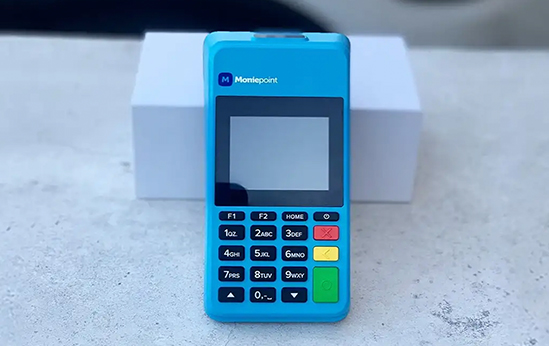
Walk into almost any shop, pharmacy, or market stall in Lagos, Port Harcourt, or Kano today and you will likely see a Moniepoint POS terminal on the counter. That orange-branded device has become so common that many Nigerians no longer call it by name — they just say “the machine.” Moniepoint claims to process 8 out of every 10 in-person transactions in Nigeria, and by transaction volume alone, that claim is difficult to dispute.
But for a small business owner considering adopting Moniepoint — or already using it and wondering why certain things work the way they do — the surface-level pitch of “Nigeria’s biggest POS provider” answers very little. The more useful questions are operational: How does the settlement actually work? What happens when a transaction fails? What does the terminal actually cost, and what are the ongoing obligations? Why do some businesses experience holds on their float while others don’t?
This article answers those questions from the inside out.
What Moniepoint Actually Is (Beyond the Marketing)
Moniepoint is not simply a POS company. It is a licensed financial institution — specifically a microfinance bank — that has built a merchant acquiring infrastructure on top of its banking license. This distinction matters operationally.
Because Moniepoint operates under a banking license regulated by the Central Bank of Nigeria, it can hold merchant float, issue business accounts, extend credit, and settle funds directly into accounts it controls — all within its own system. This is why the Moniepoint experience feels more integrated than using a third-party POS terminal connected to an external bank: the entire transaction lifecycle, from card tap to settlement, can happen within a single regulated entity.
For small businesses, this vertical integration is both the platform’s primary advantage and the source of some of its most frustrating friction points.
How the POS Terminal Actually Works
When a customer taps, swipes, or inserts their card at a Moniepoint terminal, the device initiates a transaction through Nigeria’s interbank settlement infrastructure — specifically the Nigeria Interbank Settlement System (NIBSS) and the card schemes (Verve, Mastercard, Visa) depending on the card used.
The terminal communicates in real time with Moniepoint’s switching infrastructure, which validates the transaction, checks the customer’s bank balance or card limit, and either approves or declines the payment. This happens within seconds under normal conditions.
What most business owners don’t fully understand is that approval at the terminal level does not mean the money has moved. Approval means the customer’s bank has authorized the deduction. The actual settlement — the transfer of funds to the merchant — happens on a separate schedule.
For Moniepoint merchants, the standard settlement window is T+1, meaning transactions approved today typically reflect in the merchant’s Moniepoint business account by the next business day. For merchants who have built enough transaction history and maintain consistent volumes, same-day settlement becomes available — but this is not the default and not guaranteed from day one.
The Float Model and Why It Matters for Agent Banking
Moniepoint’s widespread adoption is partly explained by its agent banking model, which is operationally distinct from its merchant POS model.
Agent banking works differently from merchant POS. In the agent model, a business owner (the agent) maintains a cash float in their Moniepoint account. When a customer wants to withdraw cash, the agent dispenses physical cash and their Moniepoint balance decreases by the equivalent amount. When a customer deposits, the agent collects cash and the customer’s account is credited.
The agent earns a commission on each transaction — typically a percentage of the transaction value that varies by transaction type (withdrawals, deposits, transfers, airtime purchases each carry different commission structures).
The critical operational reality here is that float management is the agent’s responsibility. If an agent’s float runs low, they cannot process withdrawals. If their cash on hand runs low, they cannot accept deposits. Managing the balance between digital float and physical cash is a continuous operational task that many new agents underestimate.
Moniepoint provides float top-up options — agents can transfer money from their personal or business accounts into their agent float — but in markets where banking infrastructure is thin, this can require physical trips to a bank or another agent. This is the hidden operational cost that no onboarding process explains adequately.
Costs, Fees, and What the Terminal Actually Costs
Moniepoint’s terminal pricing has evolved. As of recent periods, the company has offered terminals at subsidized rates to qualified merchants, with some promotional periods offering free terminal placement. The standard caution applies: free terminal placements typically come with transaction volume commitments or are contingent on maintaining an active merchant account.
The per-transaction fee structure is where the real cost conversation happens:
- Card transactions: Moniepoint charges a merchant service fee (MSC) on card transactions, typically a percentage of the transaction value subject to a cap. The exact rate varies by merchant category and volume — high-volume merchants negotiate better rates.
- Transfer transactions: When customers pay via bank transfer rather than card, a different fee structure applies.
- Agent banking commissions: As noted above, agents earn commissions rather than paying fees — the revenue model inverts.
For small businesses doing low to medium volumes, the transaction fees are manageable. Where costs become significant is in the float cost — the opportunity cost of keeping money locked in a Moniepoint account to maintain transaction capacity — and in failed transaction resolution, which can be time-consuming.
What Happens When a Transaction Fails
Failed transactions are the most common source of small business owner frustration with any POS provider in Nigeria, and Moniepoint is no exception.
A POS transaction can fail at multiple points in the chain:
- At the network level — the terminal cannot reach Moniepoint’s servers due to SIM card connectivity issues (Moniepoint terminals use SIM cards for connectivity, typically on MTN or Airtel)
- At the authorization level — the customer’s bank declines the transaction (insufficient funds, daily limit reached, card restriction)
- At the settlement level — the transaction is authorized but the settlement fails during processing (rarer, but it happens)
The most operationally painful scenario for a merchant is a “ghost debit” — where the customer’s account is debited but the merchant’s account is not credited. In Nigeria’s banking infrastructure, this is a known failure mode with a formal resolution process (the CBN mandates reversal timelines), but the process requires the merchant to log a dispute and wait.
Moniepoint’s dispute resolution channel operates primarily through its app and through its agent support network. For merchants in urban areas with good internet access, app-based dispute logging is functional. For merchants in semi-urban or rural areas, the process often requires calling a support line or visiting a Moniepoint agent hub — which introduces delays that are genuinely disruptive to daily operations.
The resolution standard mandated by CBN is 72 hours for most transaction disputes. In practice, straightforward reversals often happen faster. Complex disputes involving multiple banks can take longer.
Why Moniepoint Dominates but Doesn’t Work for Every Business
Moniepoint’s scale is real, but it is not a universal fit. Understanding where it works best and where it creates friction is commercially useful for small business owners.
It works exceptionally well for:
- High-volume retail merchants (pharmacies, supermarkets, provision stores) that process many transactions daily and benefit from settlement consistency
- Businesses in markets where customers regularly pay via card or transfer
- Agents in underbanked communities where cash handling is the primary service
It creates friction for:
- Businesses with irregular or seasonal transaction volumes, which may not qualify for premium settlement terms
- Business owners who need to move money across multiple accounts and find Moniepoint’s ecosystem constraints limiting
- Merchants who experience frequent connectivity issues and need a terminal that works reliably on degraded network conditions
The connectivity dependency is a genuine operational constraint. Moniepoint terminals require an active cellular connection to process transactions. In areas with poor MTN or Airtel coverage, transaction failure rates are higher. This is not a Moniepoint-specific problem — it applies to all Nigerian POS operators — but it is worth understanding before deploying Moniepoint as a primary payment channel.
The Business Account Layer
What separates Moniepoint from pure POS providers is the business account that comes with merchant onboarding. Moniepoint merchants receive a dedicated business account number that can receive transfers from any Nigerian bank. This means customers who prefer to pay via bank transfer rather than card can send money directly to the merchant’s Moniepoint account — which the merchant sees in real time.
This account also serves as the settlement destination for card transactions, which means a merchant can monitor both card and transfer revenues in a single dashboard. For small business owners who previously managed card settlements going to one account and transfers arriving in another, this consolidation has genuine operational value.
The business account also connects to Moniepoint’s credit products — merchants who build transaction history can access working capital loans assessed against their revenue data. This is one of the more strategically significant features of the platform and explains why Moniepoint has retained merchants who might otherwise have switched to competing terminals.
What to Know Before Signing Up
The practical checklist for a small business considering Moniepoint:
Connectivity first: Check which network has the strongest signal at your business location before committing. Moniepoint will work on whichever SIM is in the terminal — confirm coverage.
Understand the settlement timeline: Ask explicitly whether same-day settlement is available for your business category from day one, or whether you start on T+1. Cash flow planning depends on this.
Read the float requirements carefully: If you plan to operate as an agent rather than a pure merchant, understand the minimum float requirements and how you will replenish float when it runs low.
Keep transaction records independently: Despite Moniepoint’s app providing a transaction history, maintaining your own daily record of POS transactions allows you to identify discrepancies quickly without relying entirely on the platform’s dispute system.
Know the dispute channel before you need it: Save the Moniepoint support contact before your first failed transaction, not after. The experience of searching for support contact details while a customer is waiting is avoidable.
Takeaway
Moniepoint’s dominance in Nigerian merchant payments is not accidental. It reflects a deliberate infrastructure build — banking license, switching capability, agent network, and business account — that gives it operational depth that pure POS providers cannot match. For most small businesses in Nigeria, it is the most practical starting point for accepting card and transfer payments.
The friction points are real but manageable: connectivity dependency, T+1 default settlement, and a dispute resolution process that requires patience. Understanding these upfront converts what might otherwise be frustrating surprises into known operational parameters — which is how you build a payment setup that actually works for your business rather than against it.