
Last Updated June 2026
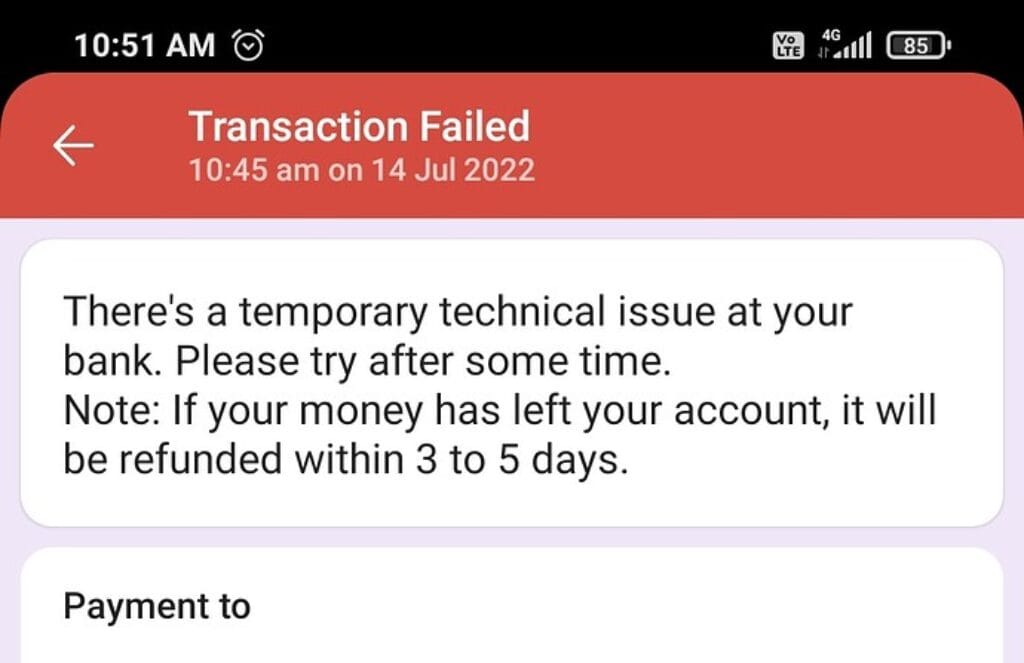
The term ‘Failed Bank Transfers’ doesn’t actually connote failed bank transfers. There is a lot that usually happens behind the scenes. Here is the scenario: a customer sends ₦12,000 for a delivery order. The app shows “processing.” The POS agent says “wait small.” The money is gone from one account and not yet in the other, and for the next few minutes – sometimes hours – nobody involved actually knows where it is.
Most explanations of this moment stop at description: it’s frustrating, it damages trust, it’s bad for business. All true, and all beside the point, because none of it explains what is actually happening to the money in that gap. That gap has a name, a mechanism, and a regulatory clock attached to it – and understanding it is the difference between a business that panics every time a transfer stalls and one that knows exactly what to do and how long to wait.
The System Was Never Actually “Instant” – It Only Looks That Way
Nigeria’s dominant transfer rail is NIBSS Instant Payment (NIP), built by the Nigeria Inter-Bank Settlement System in 2011 and now the backbone of internet banking, mobile apps, USSD, POS, and ATM transfers across every licensed bank and fintech in the country. NIP runs on a deferred net settlement model: when a transfer goes through, the sending and receiving banks exchange a real-time confirmation message – that’s the alert both parties get in seconds – but the actual movement of funds between the banks’ own settlement accounts happens later, in batches, across a fixed number of settlement sessions run through the Central Bank of Nigeria’s clearing infrastructure each day.
This split is deliberate, not a flaw. It is what lets NIP show the sender and recipient an instant result without requiring every single transaction to trigger a full, real-time interbank settlement – which would be far slower and far more fragile at Nigeria’s transaction volume. NIP processed close to 11 billion transactions in 2024, up from roughly 5 billion just two years earlier, and moved ₦284.9 trillion in the first quarter of 2025 alone. No settlement architecture handles that volume by clearing every transaction between banks in real time; batching is what makes the volume possible.
The problem is what happens when the confirmation message itself fails to complete the round trip – a timeout at the receiving bank’s core banking system, a stalled call to NIBSS’s Name Enquiry or Transaction Status Query service, a break in the handoff between a fintech and the sponsor bank it settles through. When that happens, the debit has occurred but the system has no confirmed instruction to credit the other side. The transaction doesn’t fail; it stalls in a queue built specifically to catch this scenario, and it stays there until either the confirmation completes or the debit is automatically reversed. That queue – not fraud, not stolen funds, not bank incompetence by default – is where the overwhelming majority of “failed” transfers actually sit.
Why Fintech Transfers Feel Riskier Than Bank-to-Bank Transfers
There is a structural reason transfers involving fintech apps feel less reliable to many Nigerians than transfers between two conventional banks, and it isn’t about which company builds better software.
NIBSS distinguishes between direct and indirect participants on its switch. Banks typically hold direct settlement access. Many payment service providers, switching companies, and super-agents do not – they route outward transfers through a sponsor bank’s settlement relationship rather than their own. In December 2023, NIBSS tightened this further, directing banks to remove non-deposit-taking institutions from direct outward-transfer access on the NIP rail entirely. That extra hop – fintech to sponsor bank to NIBSS switch to receiving bank, instead of bank directly to NIBSS switch to receiving bank – is one additional point where a message can stall, and it sits precisely on the rail carrying the fastest-growing share of Nigeria’s retail payment volume. Transactions through OPay, PalmPay, Moniepoint, and Kuda alone totalled ₦79.5 trillion in 2024, up more than 70 percent from the year before. The friction is concentrated exactly where adoption is accelerating fastest, which is why it feels more visible than it statistically is.
The 72-Hour Rule Almost Nobody Quotes Correctly
Ask most Nigerian bank customers how long a bank has to resolve a stuck or reversed transfer, and the honest answer is: nobody told them, so they assume “eventually,” which is the exact ambiguity that turns a routine technical delay into a trust crisis.
There is an actual number. NIBSS’s Dispute Resolution System – the formal mechanism sitting behind the NIP rail – requires participating banks to resolve transaction disputes within 72 hours, with automatic escalation triggers for issues that look systemic rather than isolated. That is the number a business owner should be quoting to an anxious customer instead of “it should sort itself out”: if a transfer is genuinely stuck rather than merely slow, there is a regulatory clock running, and 72 hours is the outer bound banks are held to, not a courtesy estimate.
Most stalled transfers resolve far faster than that – usually within minutes to a few hours, once the confirmation message that got lost is retried or the automatic reversal fires. The 72-hour window exists for the harder cases: cross-bank disputes, indirect-participant routing issues, or reconciliation problems that need manual investigation. Knowing that number changes how a business handles the moment: it converts an open-ended “we don’t know” into a bounded, explainable wait – which is a meaningfully different customer conversation.
The Scale Nobody Sees Because It’s Distributed Across Millions of Small Moments
It’s easy to underestimate how much economic activity now depends on this rail working cleanly, because the number never shows up in one place. Total electronic payment transactions in Nigeria crossed ₦1.07 quadrillion in 2024 – a figure so large it’s easy to read past – and one small proxy for its real-world weight is the Electronic Money Transfer Levy, the flat ₦50 government charge applied to transfers of ₦10,000 and above. That levy alone generated ₦31.2 billion in December 2024 in a single month. A ₦50 charge generating tens of billions monthly is only possible because hundreds of millions of individual transfers – deliveries, supplier payments, salaries, market trade – are running through this exact rail every month, each one carrying the same small probability of landing in the reversal queue described above.
That is the real shape of the “quiet operational crisis”: not a single large failure anyone can point to, but a fixed small failure rate multiplied across a volume that has grown roughly 120 percent in transaction count in just two years, according to the Central Bank of Nigeria’s own fintech reporting. The absolute number of stalled transfers grows with the ecosystem even if the failure rate itself doesn’t worsen – which is precisely why it can feel like things are getting less reliable when, mechanically, they’re mostly just getting bigger.
What’s Actually Being Built to Fix the Underlying Gap
NIBSS is not standing still on this. In mid-2025 it began rolling out the National Payment Stack, built on the ISO 20022 messaging standard and designed to close the exact gap described above: richer transaction data attached to every message (making it easier to trace where a stalled transfer actually broke), a more efficient dispute management system than the current DRS process, built-in request-to-pay and direct debit capability, and integration timelines for new participants measured in as little as 48 hours rather than months. It is, in effect, an admission from the infrastructure operator itself that the messaging-first, settle-later architecture underpinning NIP – while what made real-time payments possible in Nigeria at all – has reached the point where richer data and tighter dispute resolution matter more than raw throughput.
What This Means for a Business, Practically
A transfer that hasn’t landed in a few minutes is not evidence of fraud or a broken relationship with a customer – it’s evidence that a message somewhere in a four-party chain (sender, sender’s bank or sponsor, NIBSS switch, receiving bank) didn’t complete its round trip on the first attempt, which happens by design at Nigeria’s transaction volume and is, in the overwhelming majority of cases, resolved automatically well inside the 72-hour dispute window banks are held to. The businesses that handle this best aren’t the ones with the least friction – none of them have zero friction, because the rail itself batches settlement by design – they’re the ones that can tell a customer, with a specific number attached, exactly how long is normal and what happens if it runs past that. That specificity is what actually rebuilds trust in the moment it’s tested, and it’s the one thing most explanations of Nigeria’s transfer failures never get around to giving anyone.