Last Updated: June 2026 Reviewed by: Brands.Ng Editorial Team
Polaris Bank’s mobile app has a problem that its marketing department will never acknowledge: the bank it represents has changed ownership, management, and regulatory standing three times in less than a decade – and most of the 5 million Nigerians who downloaded the Polaris Bank mobile app have no idea what that instability means for the account sitting behind it.
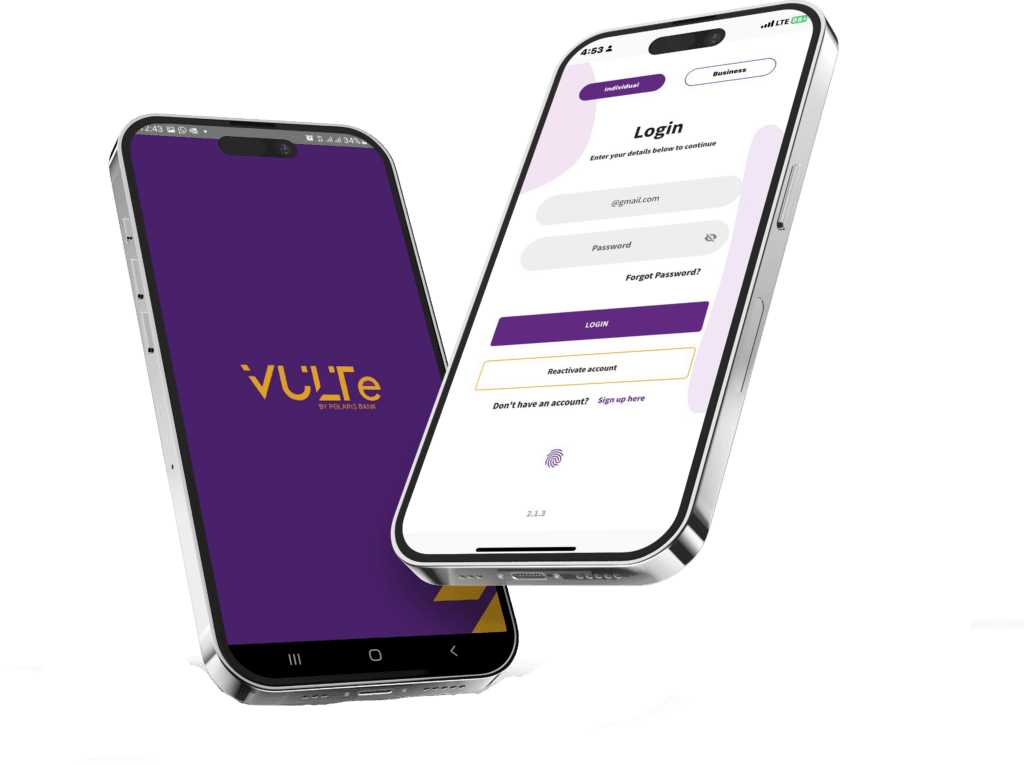
The app itself – rebranded as VULTe – is a reasonably functional digital banking product for a tier-2 Nigerian commercial bank. Transfers clear. Bills get paid. The interface has improved since its 2019 overhaul. But the Polaris Bank mobile app story is not really a story about an app. It is a story about what happens when you build a digital banking product on top of a financial institution that has been under CBN-supervised management since 2018, sold to new investors in 2022, and is still working through the reputational and operational consequences of that history.
For a salaried employee who receives their IPPIS payment into a Polaris account and uses the app to check balances and pay DSTV, none of this matters much. For a small business owner considering using Polaris as their primary business account, or a freelancer thinking about setting up a VULTe savings plan, it matters considerably more than any feature comparison will tell you.
This review tells you both stories.
Quick Verdict: Polaris Bank Mobile App Review 2026
Legitimacy: Fully legitimate – Polaris Bank holds a valid CBN commercial banking licence and is NDIC-insured; it has operated continuously since its 2018 restructuring from Skye Bank.
Safety: Funds are CBN-regulated and NDIC-insured within applicable limits; the app uses biometric authentication and transaction PINs, but social engineering fraud remains the primary real-world risk.
Best for: Civil servants with existing Polaris salary accounts; students at institutions with Polaris banking relationships; retail users who need basic transfers, airtime, and bill payments without switching banks.
Biggest risk: Customer support resolution times lag behind tier-1 banks and fintech competitors – disputed transactions and frozen accounts take longer to resolve than industry standard.
A functional but unremarkable digital banking app from a bank still consolidating its identity; adequate for everyday banking, insufficient as a primary financial tool for active business users.
What You Need to Know First
- Founded: Polaris Bank launched in September 2018, succeeding Skye Bank after CBN intervention
- Parent company and ownership: Acquired by Strategic Capital Investment Limited (SCIL) in 2022 from the Asset Management Corporation of Nigeria (AMCON); SCIL is the current majority owner
- Headquarters: 3 Akin Adesola Street, Victoria Island, Lagos
- Operational in: Nigeria (all 36 states and FCT)
- Regulated by: Central Bank of Nigeria (CBN) – full commercial banking licence; deposits insured by Nigeria Deposit Insurance Corporation (NDIC) up to ₦5 million per depositor
- Core services: Retail banking, SME banking, corporate banking, digital banking via VULTe app and USSD
- Estimated user base: Industry estimates suggest 4–5 million active customers; Polaris does not publish active user figures publicly
- App store rating: Google Play: 3.2/5 (based on 50,000+ reviews as of June 2026); App Store: 3.4/5
- App last updated: May 2026 (Android); April 2026 (iOS)
- Notable investors/backing: SCIL (majority); AMCON retains minority interest
- Current fee structure: Interbank transfers attract CBN-standard fees (₦10.75 for transfers up to ₦5,000; ₦25 for ₦5,001–₦50,000; ₦50 for above ₦50,000) plus the ₦50 stamp duty on all transfers of ₦10,000 and above under the Nigeria Tax Act 2025
- Customer support contacts: 07000POLARIS (07000765274); support@polarisbanklimited.com; live chat via VULTe app; branches nationwide
- Recent regulatory action: No published CBN sanction specifically against Polaris Bank since its 2022 privatisation; the bank exited AMCON receivership cleanly
- Notable 2026 development: VULTe app received a UI overhaul in Q1 2026 with improved transaction history and a redesigned dashboard; daily transfer limits were increased for verified customers
What Polaris Bank Actually Is
To understand the Polaris Bank mobile app, you need to understand what Polaris Bank actually is – which is something its website carefully avoids explaining plainly.
Polaris Bank is a reconstituted commercial bank. In 2018, the CBN revoked Skye Bank’s licence after the bank became unable to meet its obligations, particularly following its controversial acquisition of Mainstreet Bank in 2014. The CBN created Polaris Bank as a bridge institution, transferring Skye Bank’s assets and liabilities, and placed it under AMCON management. AMCON ran the bank for four years, stabilising its balance sheet and preparing it for privatisation. In 2022, SCIL – a Nigerian investment company – acquired a majority stake and took operational control.
This history matters for three practical reasons. First, Polaris inherited Skye Bank’s branch network, customer base, and legacy IT infrastructure – some of which still creates friction in the digital banking experience. Second, the bank spent its first four years under government-supervised management focused on balance sheet repair rather than product innovation, which explains why the VULTe app lagged behind competitors during that period. Third, the 2022 transition to private ownership marks the real beginning of Polaris Bank as a growth-oriented institution – meaning users who formed opinions about the bank before 2022 may be working with outdated information.
The VULTe app is Polaris Bank’s primary digital banking product, available on Android, iOS, and through a web portal. It is not a standalone fintech application – it is a mobile front-end to a full commercial bank account, which means it carries both the advantages and limitations of that structure. Users get NDIC deposit insurance, access to branch services, cheque books, and the full CBN regulatory framework. They also get the slower pace of digital innovation and customer service infrastructure that characterises mid-tier commercial banks relative to fintech-native competitors.
Polaris makes money the way all commercial banks do: net interest margin on loans and deposits, transaction fees, foreign exchange spreads, and advisory fees for corporate clients. The retail mobile banking product is primarily a customer retention and acquisition tool, not a direct revenue driver in isolation.
Why Nigerians Use the Polaris Bank Mobile App
Civil servants and IPPIS salary recipients represent the largest and most loyal segment of Polaris Bank mobile app users. Many state and federal government employees have Polaris accounts because of institutional payroll arrangements that predate their own banking preferences. For this group, the app is primarily a payroll management and bill payment tool – they receive salary, pay utilities, transfer money to family, and check balances. The app adequately serves this use case, and switching to a different bank would require a payroll update process that most civil servants prefer to avoid.
Students at universities with Polaris banking relationships use the app primarily for school fees payment and pocket money management. Polaris has institutional banking relationships with several Nigerian universities, making it the default banking option for some student populations. For this group, the app’s basic transfer and bill payment functionality is sufficient, and the lack of advanced features is rarely a practical limitation.
Legacy Skye Bank customers who converted to Polaris accounts in 2018 and have maintained the relationship represent a significant portion of the customer base. These users have years of transaction history, existing direct debit mandates, and established credit relationships with the bank. Migrating would require rebuilding that history elsewhere, which creates genuine switching costs beyond mere inconvenience.
Small retailers and market traders who operate in areas where Polaris has strong branch presence – particularly in South-West Nigeria, where Skye Bank historically had deep roots – use the app for business account management, supplier payments, and cash flow tracking. For these users, the branch proximity and the ability to handle cash transactions alongside digital banking matters more than app sophistication.
Customers accessing Polaris loan products use the mobile app as part of their lending relationship management – checking loan balances, making repayments, and accessing further credit facilities. The app’s integration with Polaris’s lending infrastructure makes it the practical choice for existing borrowers.
The Honest Breakdown
Interbank Money Transfers What it does: Enables transfers to any Nigerian bank account via the NIP (NIP Instant Payment) infrastructure, processed through NIBSS. What it means in practice: Transfers of up to ₦1 million per transaction are available for fully verified accounts; daily limits vary by account tier but typically range from ₦1 million to ₦5 million for personal accounts. Transfers generally clear within seconds under normal network conditions. Under the Nigeria Tax Act 2025, a ₦50 stamp duty applies to all transfers of ₦10,000 and above – this is a government charge, not a Polaris fee, but it appears on your statement and surprises users who do not know about it. What to watch out for: Transfers occasionally hang in a “processing” state without either completing or reversing, particularly during high-volume periods at the end of the month. The reversal timeline when a transfer fails can take 24–72 hours, which creates real cash flow problems for users who rely on time-sensitive payments.
Bill Payments What it does: Supports electricity (all DISCOs), cable TV (DStv, GOtv, Startimes), airtime and data for all major networks, and water bills for select states. What it means in practice: Bill payments typically complete within 60 seconds for electricity and cable TV. Airtime purchases are near-instant. What to watch out for: Token delivery for electricity payments occasionally delays by up to 30 minutes during DISCO system congestion periods – a limitation of the DISCO infrastructure rather than the Polaris app, but one that the app does not adequately communicate to users waiting for their token.
VULTe Savings What it does: An in-app savings product that allows users to set savings targets, lock funds for defined periods, and earn interest. What it means in practice: Interest rates on VULTe savings products as of June 2026 are in the range of 8–12% per annum, which is below the current inflation rate and significantly below what dedicated investment platforms like Piggyvest, Cowrywise, or Risevest offer. What to watch out for: The savings product is a convenience feature, not a competitive investment product. Users seeking real returns on naira savings will find better rates elsewhere. The product makes sense for short-term financial discipline, not wealth building.
Debit Card What it does: Polaris issues Verve-network debit cards linked to the VULTe account, with Mastercard available for certain account tiers. What it means in practice: Verve cards work across Nigeria’s ATM and POS network reliably. Mastercard-linked accounts can make international online payments. What to watch out for: Standard Polaris accounts receive Verve cards by default. Verve is not accepted by most international platforms – Shopify, Amazon, PayPal, and the majority of global SaaS tools require Mastercard or Visa. Users who need international payment capability must specifically request a Mastercard-linked account and meet the requirements for that tier.
Security Features What it does: The VULTe app uses biometric login (fingerprint and face ID), a six-digit transaction PIN, and SMS OTP for transaction verification. What it means in practice: Standard security architecture that meets CBN minimum requirements. Biometric login works consistently on modern Android and iOS devices. What to watch out for: The security architecture protects against unauthorised app access but does not protect against social engineering – the most common fraud vector in Nigerian banking. A fraudster who convinces a user to share their OTP over the phone bypasses every technical security measure. There is no equivalent to OPay’s NightGuard feature or real-time behavioural fraud detection that some fintech players have implemented.
USSD Banking What it does: *737# provides account access, transfers, airtime purchase, and balance enquiry without internet connectivity. What it means in practice: Critical functionality for users in areas with intermittent internet access or during network congestion periods. What to watch out for: USSD sessions occasionally drop mid-transaction during network congestion, leaving users uncertain whether a transaction completed. Always verify via SMS alert or app balance check before attempting a duplicate transaction.
What Polaris Bank Does Not Tell You
The Skye Bank Legacy Still Lives in the Technology Stack
Polaris Bank inherited Skye Bank’s core banking infrastructure in 2018 – including server architecture, database systems, and integration layers that were already aging at the time of the takeover. The visible improvements in the VULTe app’s interface since 2022 are real, but they sit on top of a backend that has not been fully modernised. This is the structural reason why Polaris’s digital banking occasionally experiences the kinds of transaction delays and system downtime that newer fintech players – built on cloud-native infrastructure from scratch – rarely encounter. When users report that their transfers “hang” or their balance takes time to update after a transaction, this is almost always a backend infrastructure issue rather than an app-level bug. Polaris is addressing this through ongoing IT investment, but the full modernisation of a legacy core banking system is a multi-year undertaking, not a quick fix.
Your Effective Transfer Cost Is Higher Than the Published Fee
A pattern that emerges consistently from user complaints is surprise at transfer costs. Here is the complete picture most users do not calculate before their first month of active use: a ₦50,000 transfer from a Polaris account to another bank costs ₦25 (CBN interbank fee) plus ₦50 (Nigeria Tax Act 2025 stamp duty) – a total of ₦75 per transfer. Users who make 20 interbank transfers per month are paying ₦1,500 in transfer costs alone. At 40 transfers, that is ₦3,000 monthly. OPay-to-OPay and PalmPay-to-PalmPay wallet transfers between users of the same platform often carry lower or zero platform fees, which is why high-frequency transfer users increasingly maintain a fintech wallet alongside their bank account.
Account Restrictions During Compliance Reviews Are Structurally Different From Fintech Freezes
Users sometimes receive temporary transaction restrictions on their Polaris accounts following CBN compliance directives – the same directives that affect all Nigerian commercial banks. What most users do not realize until it affects them is that a bank-level compliance restriction and a fintech-level account freeze are structurally different situations with different resolution paths. A Polaris account restriction triggered by an NIN-BVN linkage issue or a KYC documentation gap is resolved through branch visit and document submission – not through a WhatsApp chat or an in-app form. Users who have become accustomed to resolving fintech account issues digitally find the branch-requirement process frustrating. The structural reason is that CBN compliance frameworks for commercial banks require physical document verification for certain issues, a requirement that digital-only resolution cannot satisfy.
The Savings Rate Is Not Competing With Inflation
The VULTe savings product is marketed with enough visual appeal that users sometimes assume it is a competitive investment product. It is not. At 8–12% per annum, it does not approach Nigeria’s current inflation environment, and it significantly underperforms dedicated savings and investment platforms. A user who deposits ₦500,000 in a VULTe savings plan for 12 months at 10% earns ₦50,000 in interest – but if inflation runs at 20%+, their purchasing power has declined in real terms despite the nominal gain. The VULTe savings product serves one legitimate purpose: enforcing financial discipline by locking funds away from impulse spending. As an investment vehicle, it is the wrong tool.
Customer Support Escalation Has a Defined but Underpublicised Path
Users consistently report that front-line customer support via the app’s chat function and the 07000POLARIS line resolves simple queries but struggles with complex disputes – disputed transactions, account restrictions, and failed transfer reversals that have not completed within the standard 24-hour window. What most users do not know is that Polaris Bank disputes that remain unresolved after 10 business days can be formally escalated to the CBN Consumer Protection Department at consumerprotection@cbn.gov.ng. Filing a formal CBN complaint typically accelerates bank-level resolution significantly – banks are required to respond to CBN-forwarded complaints within defined timeframes. This escalation path is not mentioned in Polaris’s in-app support flow.
User Sentiment Analysis
What users consistently praise: The VULTe app’s interface redesign in Q1 2026 has received positive responses — users specifically cite improved navigation and a cleaner transaction history display. Airtime and data purchase reliability is consistently rated positively across Play Store reviews. Branch accessibility – particularly in South-West states – is cited as a practical advantage by users who occasionally need in-person banking. The USSD functionality on *737# receives positive mentions from users in areas with unstable internet connectivity.
What users consistently criticize: Transaction delays and “pending” transfer status without resolution or clear communication top the complaint list in Play Store reviews. Customer support response times – particularly for non-standard issues – are the most frequent source of frustration. ATM card delivery timelines after account opening are cited as slow relative to digital-native competitors. The savings interest rate is mentioned negatively in comparative reviews where users have moved funds to higher-yield platforms.
When problems most often occur: End-of-month periods – particularly the 27th to 2nd of the following month – see elevated transaction failure rates, consistent with the industry-wide pattern of NIBSS infrastructure congestion during salary payment cycles. Festive periods (December and Eid) create similar congestion. Post-app-update periods have historically seen a 48–72 hour window of elevated bugs before patch corrections.
Sentiment trend: Slowly improving since the Q1 2026 app update, but the baseline Play Store rating of 3.2/5 reflects a legacy of unresolved complaints that new features have not yet overcome. The trajectory is positive but the gap to tier-1 competitors remains meaningful.
Legitimacy and Safety
Is Polaris Bank legitimate? Yes, without qualification. Polaris Bank holds a full commercial banking licence issued by the Central Bank of Nigeria and operates under continuous CBN supervision. It has been operational since September 2018 and serves millions of customers across Nigeria. Its deposits are insured by the NDIC up to ₦5 million per depositor. The 2022 privatisation to SCIL was conducted under CBN oversight and represents a clean exit from AMCON receivership – not a restructuring under financial distress.
Is Polaris Bank mobile app safe to use in Nigeria? For standard retail banking use – transfers, bill payments, savings – yes. Funds sit in a CBN-regulated, NDIC-insured account. The app uses biometric authentication and PIN-based transaction authorization that meets CBN minimum security standards. The primary safety risk is not technical: it is social engineering fraud, where fraudsters impersonate bank staff and convince users to share OTPs or PINs. No security architecture protects against a user who voluntarily provides their authentication credentials to a fraudster. Never share your OTP, PIN, or card details with anyone claiming to call from Polaris Bank.
What is the real risk? The operational risk most likely to affect a real Polaris mobile app user is not fraud but service disruption: a transfer that hangs in processing, an account restriction triggered by a compliance flag, or a customer support interaction that takes days to resolve a straightforward issue. These are inconvenience risks for most users – but they become material risks for business owners who depend on time-sensitive transactions.
What users misunderstand about safety: Many users conflate NDIC insurance with protection against all financial losses. NDIC insurance protects deposits up to ₦5 million in the event of bank failure – it does not cover fraud losses where a user was deceived into authorizing a transaction, nor does it cover disputes arising from user error. Protecting against the most common real-world risks requires behavioral vigilance, not just regulatory coverage.
Competitor Comparison
| Feature | Polaris Bank (VULTe) | GTBank | Kuda Bank | OPay |
|---|---|---|---|---|
| CBN Licence Type | Commercial Bank | Commercial Bank | Microfinance Bank | Mobile Money Operator |
| NDIC Insurance | Yes (up to ₦5M) | Yes (up to ₦5M) | Yes (up to ₦2M) | Yes (mobile money limits) |
| Estimated Users | 4–5M customers | 20M+ customers | 4M+ users | 50M+ users |
| Interbank Transfer Fee | ₦25–₦50 + ₦50 stamp duty | ₦25–₦50 + ₦50 stamp duty | ₦25–₦50 + ₦50 stamp duty | ₦25–₦50 + ₦50 stamp duty |
| Wallet-to-Wallet Fee | N/A (bank transfers only) | N/A | Free (Kuda-to-Kuda) | Free (OPay-to-OPay) |
| Debit Card Network | Verve (Mastercard available) | Mastercard/Visa/Verve | Verve | Verve |
| International Payments | Mastercard tier only | Yes (Mastercard/Visa) | Limited | No |
| Savings Rate (p.a.) | 8–12% | 4–10% | 15% (Kuda fixed savings) | 15–18% (OPay savings) |
| Agent/POS Network | Limited | Moderate | None | 563,000+ agents |
| Customer Support Quality | Below average (3.2/5) | Average (3.5/5) | Above average (4.0/5) | Average (3.3/5) |
| App Store Rating | 3.2/5 | 3.6/5 | 4.1/5 | 3.4/5 |
| Ideal User | Legacy salary account holder | Urban professional | Digital-native young adult | High-frequency transfer user |
Who should choose Polaris over GTBank: A customer whose employer’s payroll runs through Polaris, or a business owner with an existing Polaris credit facility. Switching banks for digital banking features alone rarely justifies the operational disruption of moving salary mandates, direct debits, and credit relationships – and Polaris’s core banking functions match GTBank closely enough that feature parity is not a compelling migration reason in either direction.
Who would be better served by Kuda or OPay: A user whose primary banking need is digital-first and who has no legacy relationship with Polaris. Kuda’s 15% fixed savings rate significantly outperforms VULTe savings for users building a savings habit. OPay’s 563,000+ agent network makes it superior for users who frequently need cash-in or cash-out services, and its wallet-to-wallet transfer infrastructure is more cost-efficient for high-frequency domestic transfers.
Where Polaris has no meaningful competition: For customers of institutions with Polaris payroll relationships – particularly certain state governments and federal agencies – VULTe is the only digital banking interface that integrates natively with their salary account. No fintech competitor can replicate this institutional payroll integration, and it represents Polaris’s most durable structural advantage in its existing customer base.
Who Should Use It / Who Should Avoid It
Use the Polaris Bank mobile app if you are:
- A civil servant or government employee whose salary is paid into a Polaris account – the app gives you full digital control of an account you already hold
- A student at a university with a Polaris institutional banking relationship who needs a basic account for fees and allowances
- An existing Skye Bank or Polaris customer with an active loan facility who needs to manage repayments digitally
- A retail user in South-West Nigeria who values branch proximity alongside digital banking and already has an established Polaris relationship
- A business owner whose trade finance or overdraft facility is with Polaris and who needs digital access to that credit relationship
- A user who prioritises NDIC-insured deposit safety over feature sophistication for their primary savings account
Avoid the Polaris Bank mobile app if you:
- Need reliable international online payment capability as a standard feature – Verve is the default card and does not work on most global platforms
- Process high-frequency daily transfers and need consistent zero-failure performance – Polaris’s legacy infrastructure creates more transaction friction than fintech-native alternatives
- Are seeking competitive returns on naira savings – VULTe’s 8–12% rate is outperformed by multiple dedicated savings platforms
- Need rapid customer support resolution for complex disputes – Polaris’s support infrastructure does not match the response speed of fintech competitors
- Are a digital-native user with no existing Polaris relationship who is choosing a primary bank from scratch – Kuda, GTBank, or Access Bank offer stronger digital propositions for new customers without legacy ties
Realistic Expectations
What usually goes right: For the majority of Polaris mobile app users on a standard day, the experience is unremarkable in the best sense – transfers clear within seconds, bills get paid, balance enquiries return instantly, and airtime purchases complete without incident. The Q1 2026 app update has meaningfully improved navigation. For a civil servant checking salary credit, paying PHCN, and making two or three transfers per month, the app performs adequately and without drama.
What usually goes wrong and when: Transaction delays most commonly occur between the 27th and 2nd of each month during the salary payment cycle, when NIBSS infrastructure handles peak load. Transfers initiated during this window have a meaningfully higher “pending” rate than at other times of the month. App performance also degrades briefly in the 48 hours following major app updates, before patch fixes address new bugs. Account restriction notices most commonly follow large unexpected inflows – a lump sum receipt that is inconsistent with account history – and require branch-based KYC resolution.
What most users underestimate: The branch dependency for non-standard issues. Users who have grown accustomed to resolving all banking issues through a chat interface or a phone call discover, at the moment they need it most, that certain Polaris issues require physical branch attendance — ID verification for account restrictions, signature verification for certain transactions, and physical card collection for new accounts. Building this expectation in advance prevents the frustration of discovering it during a time-sensitive situation.
How Polaris handles disputes: For standard failed transfer reversals, the process begins with a complaint logged through the app’s support chat or the 07000POLARIS line. Reversals are supposed to complete within 24 hours under CBN guidelines; Polaris’s publicly reported track record suggests most standard reversals complete within 48–72 hours. For complex disputes that exceed 10 business days without resolution, escalation to the CBN Consumer Protection Department at consumerprotection@cbn.gov.ng – with your complaint reference number from Polaris – typically accelerates response within 5–7 additional business days.
Frequently asked questions
Which mobile app does Polaris Bank use?
Polaris Bank’s official mobile banking app is called VULTe (pronounced “vault”). It is available on Google Play Store for Android devices and the Apple App Store for iPhone users. The app was rebranded from the earlier Polaris mobile banking app and received a significant UI overhaul in Q1 2026. The USSD alternative is *737#, which works without internet connectivity for basic transactions including transfers, airtime purchases, and balance enquiries.
How do I activate my Polaris Bank mobile app?
To activate the Polaris Bank mobile app (VULTe), download it from the Google Play Store or Apple App Store, then select “Get Started” and enter your registered phone number and account number. You will receive an OTP on your registered phone number to verify your identity. Create a six-digit PIN and set up biometric authentication. For first-time activation, your phone number must match the number registered with your Polaris Bank account – if they differ, you will need to visit a branch to update your contact details before completing app registration.
What is the code for Polaris mobile banking?
The USSD code for Polaris Bank mobile banking is *737#. Dial this from the phone number registered to your Polaris account. Through *737#, you can transfer money to any Nigerian bank, buy airtime for any network, check your account balance, and pay bills. Transaction limits on USSD are lower than app-based transactions – typically ₦100,000 per transaction for transfers – making it suitable for routine payments rather than large transfers.
How to register on the Polaris app?
Registration on the VULTe app requires: an active Polaris Bank account, the phone number registered on that account, and a valid BVN linked to the account. Download VULTe from the Play Store or App Store, tap “Register,” enter your account number, and follow the OTP verification process. You will be prompted to set a six-digit transaction PIN and enable biometric login. If your BVN is not linked to your account, visit any Polaris branch with a valid government-issued ID to complete the linkage before attempting app registration.
Is there a daily transfer limit on the Polaris Bank app?
Yes. Daily transfer limits on VULTe depend on account tier and KYC completion level. Fully verified accounts (Tier 3 KYC with BVN, NIN, and supporting ID) typically have daily limits of ₦1 million to ₦5 million for personal accounts. Lower-tier accounts face reduced limits. Business accounts may have higher limits subject to relationship manager approval. Limits were revised upward for verified customers following a Polaris policy update in early 2026 – users on older app versions may need to update to access revised limits.
How does Polaris Bank app compare to GTBank app?
For everyday retail banking, the two apps offer broadly similar core functionality – transfers, bills, airtime, savings. GTBank’s app carries a higher Play Store rating (3.6/5 vs Polaris’s 3.2/5) and GTBank’s customer base is significantly larger, which translates to more widely available support resources. GTBank’s debit card options include Mastercard and Visa as standard, giving more international payment flexibility than Polaris’s Verve-default model. For existing Polaris customers, the functionality gap does not justify migration. For new customers choosing without a legacy relationship, GTBank’s brand trust and card network flexibility give it a marginal edge.
Polaris Bank Mobile App: The Brands.Ng Verdict
Polaris Bank’s VULTe is the digital face of a bank that is still finishing the work of becoming itself – a full commercial bank that emerged from government receivership four years ago, with the legacy infrastructure of a failed institution and the genuine ambition of a rebuilding one.
What it does genuinely well is the basics. Transfers clear. Bills get paid. The 2026 app update is a real improvement over what existed in 2023. For the civil servant whose salary lands in a Polaris account every 27th of the month, the app provides adequate digital access to an account they already hold, and there is no compelling reason to migrate.
Its most significant weakness is not any single feature – it is the customer support infrastructure and the legacy technology stack that creates intermittent friction precisely when users need reliability most. A transfer that hangs during an end-of-month payment creates a problem that a 3.2-star-rated support experience then struggles to resolve quickly. The structural reason is plain: rebuilding a bank’s operational support infrastructure takes longer than redesigning an app’s interface.
The Polaris Bank mobile app serves its existing customers adequately and serves new customers looking for a full commercial bank relationship with branch access and NDIC deposit insurance at the full ₦5 million threshold. It serves anyone seeking a primary digital banking account with competitive savings rates, zero-friction customer support, or international payment capability significantly less well.
Use it if you already bank with Polaris and need digital access. Build your financial toolkit around it only if you supplement it with a higher-yield savings platform and a Mastercard-linked account for international transactions.
Polaris Bank is a bank that survived its worst chapter – the question its mobile app must answer in 2026 and 2027 is whether it can build something genuinely worth choosing, rather than something adequate enough to retain.
Editorial Note: This review reflects publicly available information and user-reported experiences as of June 2026. Brands.Ng does not receive payment for editorial coverage. Polaris Bank was given the opportunity to respond to findings prior to publication. No response was received at time of publishing.
Stay ahead of the businesses shaping Nigeria.
Get important company developments, analysis, research and business intelligence from Brands.Ng directly on WhatsApp.