Last Updated: June 2026 Reviewed by: Brands.Ng Editorial Team
The Speed Premium Has a Price – and It Is Not Always Predictable
There is a specific kind of Lagos business problem that Kwik Delivery was built to solve. A fashion vendor in Yaba receives twelve orders by 10am on a Saturday. Her customers want their packages the same day. She cannot negotiate with Bolt drivers, she has no account with GIG Logistics, and calling individual riders is a gamble on reliability. She needs a platform that deploys a professional courier to her door within the hour, handles real-time tracking so she can tell customers exactly where their package is, and carries insurance on the shipment in case something goes wrong.
That is precisely what Kwik Delivery offers – and understanding that the platform was designed for this exact use case, and not for interstate logistics, nationwide coverage, or the kind of scale that platforms like Sendbox or GIG serve, is the most important context for any Kwik Delivery review that aims to be genuinely useful.
Founded in 2018 by Romain Poirot-Lellig and Olivier Decrock, Kwik is an on-demand, urban last-mile delivery service available in Nigeria, operating in Lagos, Abuja, and Ibadan. It has raised $4.03 million in total funding across four rounds, with its Series A led by XBTO Ventures. It has onboarded more than 100,000 merchants. More than 75% are weekly active users – a retention metric that signals genuine commercial utility, not just download volume.
This review tells you exactly what Kwik does well, where it fails, and whether it belongs in your logistics stack in 2026.
Quick Verdict: Kwik Delivery Nigeria Review
Legitimacy: Fully legitimate – Kwik is a registered Nigerian logistics company (incorporated as Africa Delivery Technologies), founded in 2018, Series A funded at $4.03 million total, operating across Lagos, Abuja, and Ibadan with over 100,000 active merchants.
Best for: Lagos-based small businesses, Instagram vendors, and e-commerce merchants who need same-day, intra-city delivery within 2 hours with real-time tracking and goods-in-transit insurance up to ₦500,000 via Allianz.
Biggest risk: Rider availability during peak hours and in low-density areas creates acceptance delays that can undermine time-sensitive deliveries – the platform’s most significant operational vulnerability.
The most purpose-built same-day urban delivery platform for Lagos merchants; excellent when conditions align, unreliable when they do not.
What You Need to Know First
- Founded: 2018, Lagos, Nigeria
- Founders: Romain Poirot-Lellig (CEO) and Olivier Decrock
- Company registration: Africa Delivery Technologies SAS
- Total funding raised: $4.03 million over 4 rounds (Series A: March 2022, led by XBTO Ventures)
- Investors: XBTO Ventures, Humla Ventures, Nabuboto, Yves Guillemot (Ubisoft CEO), Leonard Stiegeler (Pulse Africa founder)
- Cities of operation: Lagos, Abuja, Ibadan
- Delivery commitment: 2 hours from pickup in Lagos; 1 hour in Abuja and Ibadan
- Courier network: Independent delivery agents called Kwiksters
- Max package weight: 25kg per Kwik Box
- Goods in Transit insurance: Up to ₦500,000 via Allianz (included on all Kwikster deliveries)
- Operating hours: Monday to Saturday, 8am to 5pm
- Platform: iOS app, Android app, web platform at kwik.delivery; Shopify integration available
- Payment options: Debit and credit cards, Paga wallet, MTN MoMo, cash on pickup, cash on delivery
What Kwik Delivery Actually Is – Beyond the App Description
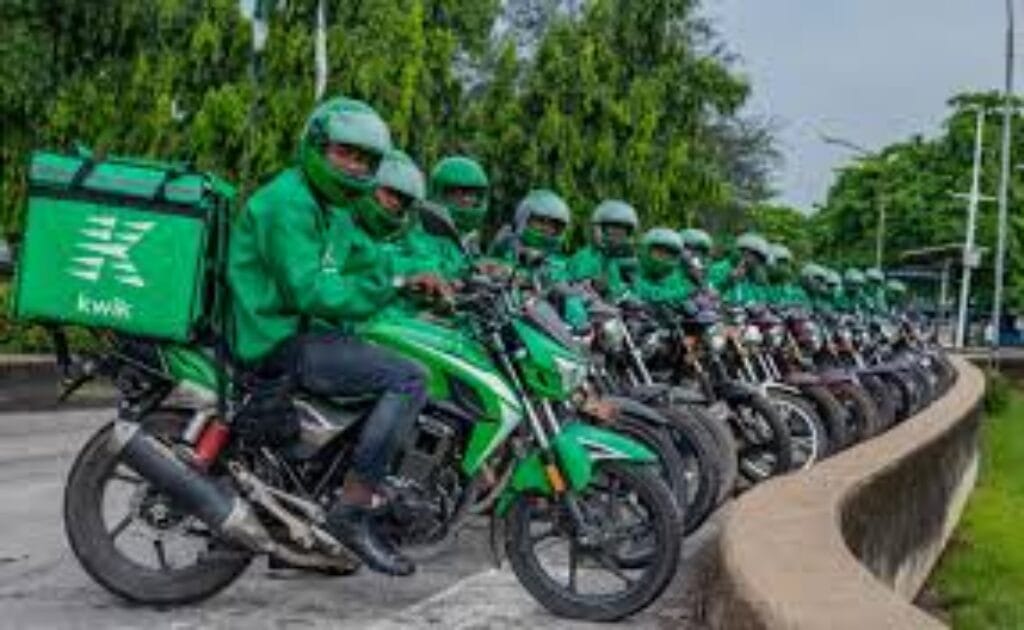
Kwik operates what its founder calls a “crowdsourced delivery” model – Kwik uses its online platform for placing delivery requests to independent delivery partners. The Kwiksters – Kwik’s network of independent courier riders – accept or decline delivery requests through the platform, similar to how Uber drivers accept or decline ride requests. This gig economy architecture is both the source of Kwik’s speed advantage and the structural explanation for its most common failure mode.
When Kwikster density in a given area is high and demand is moderate, the model produces genuinely fast delivery. A merchant in Lekki Phase 1 can have a Kwikster at her door in 20 minutes, tracking visible, insurance active. That experience is what the platform was designed to deliver and what its most satisfied users describe.
According to founder and CEO Romain Poirot-Lellig, his company wants to “bring the informal economy into the formal economy,” focusing on last-mile delivery, e-commerce (warehousing and fulfilment) and financial services. This ambition — to build Kwik into a broader platform encompassing payments and e-commerce tools alongside delivery – explains the $2 million Series A and the direction the company has taken since 2022.
Kwik also provides insulated cargo boxes that can keep frozen goods for up to 4 hours, accommodating various business needs. This cold chain capability – highly unusual for an on-demand bike delivery service – is what enabled Kwik to serve clients like Bature Brewery for cold beverage delivery, and distinguishes it from generic rider-hailing services that cannot handle perishables or temperature-sensitive goods.
The Shopify integration is worth noting specifically. The Kwik Shopify app enables seamless order delivery within covered areas, automatically calculates delivery fees based on the merchant’s SLA with Kwik, and offers a 2-hour lead time in Lagos, plus interstate and last-mile delivery options, with real-time geolocation tracking of dispatchers for improved transparency and efficiency. For merchants running e-commerce stores on Shopify, this integration removes the manual booking step entirely – Kwik delivery is triggered automatically at checkout.
Why Lagos Merchants Use Kwik – The Specific Reasons
Same-day delivery as a competitive requirement, not a luxury. Lagos e-commerce has been reshaped by customer expectations driven by Jumia and social commerce norms. A significant proportion of Lagos consumers now expect same-day delivery as the baseline for purchases within the city. For a small business competing against larger platforms, offering same-day delivery is a retention tool – and Kwik’s 2-hour commitment from pickup in Lagos, when fulfilled, enables merchants to make that promise credibly.
Insurance coverage that manual rider arrangements cannot provide. Most Lagos merchants who use personal rider contacts – “my guy who does deliveries” – have no insurance on packages in transit. A lost or damaged package is an out-of-pocket loss and a damaged customer relationship. Shipments delivered by Kwiksters benefit from Goods in Transit insurance provided by Allianz for a value of up to ₦500,000 or equivalent. For fashion, electronics, and high-value product merchants, this insurance coverage represents genuine commercial protection that informal rider arrangements cannot replicate.
Food delivery and cold chain merchants with specific temperature requirements. Kwik’s insulated Kwik Boxes – capable of maintaining temperature for up to four hours – make it the only on-demand bike delivery platform in Lagos that can handle food businesses, cold beverages, pharmaceutical deliveries, and perishable goods reliably. Bakeries, meal prep businesses, and health supplement vendors use Kwik specifically for this capability.
Corporate businesses needing batch delivery management. Kwik offers powerful corporate features that allow clients to create single or batch orders, either scheduled or on-the-fly, providing flexibility and convenience. For a corporate client distributing promotional materials, documents, or product samples across multiple Lagos addresses in a single day, batch order management through a single dashboard is more efficient than any manual coordination alternative.
The Honest Breakdown – Kwik’s Key Features With Real Meaning
On-Demand Booking
What it does: Merchants and individuals request a Kwikster through the app, which finds the nearest available rider and dispatches them to the pickup location.
What it means in practice: The booking process is genuinely fast – a merchant can have a delivery booked in under two minutes. The critical variable is how quickly a Kwikster accepts the request. In high-density commercial areas of Lagos (Lekki Phase 1, Yaba, Ikeja GRA, Victoria Island), acceptance times are typically short. In less commercially active neighborhoods, acceptance times lengthen unpredictably.
What to watch out for: Rider cancellations after acceptance are the most frequently reported friction point across Kwik’s public reviews. A Kwikster who accepts a delivery request and then cancels – forcing the merchant to rebook and wait for a new acceptance – is the experience that generates the strongest negative feedback. This is a structural feature of gig delivery platforms globally, not a Kwik-specific failure, but it is a real operational risk for time-sensitive deliveries.
2-Hour Delivery Commitment
What it does: Kwik commits to deliver within 2 hours from pickup in Lagos, 1 hour in Abuja, and 1 hour in Ibadan.
What it means in practice: This commitment is honoured with reasonable consistency in central Lagos during off-peak hours. During peak traffic periods – specifically Monday to Friday between 7am and 9am and 4pm and 7pm – Lagos road conditions can make the 2-hour commitment difficult to maintain for cross-island or island-to-mainland deliveries.
What to watch out for: The 2-hour commitment applies from pickup – not from booking. If Kwikster acceptance takes 30 minutes, pickup takes 20 minutes after that, and delivery takes 90 minutes, the total elapsed time from booking exceeds the commitment. Merchants who set customer expectations based on “2 hours from now” rather than “2 hours from pickup” create customer experience problems when those two figures diverge.
Real-Time Tracking
What it does: Once a shipment is picked up, customers receive a link allowing them to track the shipment in real time. The live map shows the Kwikster’s current location.
What it means in practice: This is one of Kwik’s most commercially significant features for customer experience management. A merchant who can send a customer a live tracking link – rather than answering “where is my order?” queries – reduces support overhead and manages customer anxiety at the most stressful point of the purchase journey. The tracking link is shareable, meaning merchants can send it directly to recipients without requiring them to have the Kwik app.
What to watch out for: Tracking accuracy can lag slightly during peak hours when GPS signal processing may be slower. The gap is typically minor but worth knowing if precise location monitoring is critical.
Kwik Box (Insulated Cargo Container)
What it does: Kwik boxes are designed to hold 25kg maximum, with a maximum size of 36x36x42cm, and can hold frozen goods for up to 4 hours.
What it means in practice: This is the feature that separates Kwik most clearly from generic bike delivery alternatives. The ability to maintain temperature for four hours enables delivery use cases – food businesses, pharmaceutical products, cold beverages, fresh produce – that are completely inaccessible to uninsulated bike couriers.
What to watch out for: The 25kg weight limit and 36x36x42cm size constraint means Kwik is not the right solution for large, bulky, or oversized items. Furniture, large electronics, or items requiring van or truck transport need a different logistics provider.
Shopify and API Integration
What it does: Merchants with Shopify stores can integrate Kwik directly, automating delivery booking at the point of order fulfilment.
What it means in practice: For a Shopify merchant who was previously manually booking each Kwik delivery after receiving an order, the integration eliminates an operational step entirely. Delivery fee calculation is automatic based on the merchant’s agreed SLA with Kwik.
What to watch out for: The integration only works for merchants within Kwik’s operational cities – Lagos, Abuja, Ibadan. Shopify merchants with customers outside these cities need a parallel fulfilment arrangement for out-of-coverage orders.
The Real Tradeoffs – What Kwik Does Not Tell You
Rider density determines your actual experience more than the platform’s features.
Kwik’s delivery quality is a function of Kwikster density in your specific neighborhood at the time you book. A merchant in Lekki Phase 1 at 10am on a Tuesday has a fundamentally different experience from a merchant in Ikorodu at 6pm on a Friday. The platform’s features – tracking, insurance, fast booking – are consistent. The delivery time is not, because it depends on how many available Kwiksters are physically near you at any given moment.
This is not a failure of the platform. It is a structural characteristic of gig economy logistics that no operator has solved completely. Understanding it means setting realistic expectations based on your specific location and typical booking times, not based on the platform’s average performance.
Pricing is dynamic and not always predictable at booking.
Apple App Store reviews note that charges are expensive, with some users preferring to pay more than have orders waiting. Kwik’s pricing varies based on distance, demand levels, and the specific SLA negotiated for corporate accounts. Merchants who price delivery charges to customers based on assumed Kwik costs can encounter discrepancies when actual charges come in higher than anticipated. Building a small buffer into the delivery charge you quote customers – or absorbing the variable cost as a fixed line item in your business model – avoids the friction of explaining unexpected delivery costs to customers.
The platform’s operating hours create a hard constraint on evening delivery.
Kwik operates Monday to Saturday from 8am to 5pm. This is a significant operational constraint that the platform’s marketing does not emphasise prominently. For merchants whose customers make purchasing decisions in the evening – which is the peak Instagram commerce window for many Nigerian product categories – same-day delivery through Kwik is only available if orders arrive early enough in the day for pickup and delivery before 5pm. Evening orders are next-day at the earliest. Merchants who promise same-day evening delivery without accounting for this constraint create customer service problems.
Insurance has a coverage ceiling that matters for high-value goods.
The ₦500,000 Allianz insurance on Kwikster deliveries is meaningful for most package categories. For high-value electronics, luxury goods, or commercial samples worth more than ₦500,000, it is insufficient. Merchants shipping goods above this value need to assess whether additional insurance or a different logistics channel is appropriate.
User Sentiment Analysis
What merchants consistently praise: Speed and reliability for standard intra-city deliveries in active Lagos neighborhoods generate the strongest positive feedback. Multiple app store reviewers confirm that deliveries within central Lagos can be completed quickly, with some users noting that all deliveries have been delivered on time without reason to complain. The real-time tracking link is specifically praised as a customer experience improvement – merchants report that the ability to share a live tracking link with customers significantly reduces delivery-related support queries. The cold chain capability receives positive mention from food and perishable goods businesses for whom it enables delivery categories previously inaccessible.
What merchants consistently criticize: Recurring complaints include sudden price increases during peak periods and riders accepting jobs and later cancelling. The acceptance-then-cancellation pattern generates the strongest negative sentiment because it combines timeline disruption with the frustration of having already communicated a delivery promise to a customer. One App Store reviewer described waiting over 30 minutes for rider acceptance during peak hours in Lekki with no rider ultimately accepting – forcing a switch to an alternative platform. Support response during these failure events is described as variable: some users report fast resolution, others describe difficult escalation experiences.
When problems most often occur: Peak traffic hours (morning and evening rush periods), low-density residential areas outside commercial zones, Saturday afternoons when Kwikster availability decreases, and rainy days when riders choose to reduce activity all produce elevated acceptance delays and cancellation rates. Deliveries during these conditions require contingency planning.
Sentiment trend: Based on publicly observable patterns across the App Store, Nairaland, and Nigerian logistics forums, Kwik’s merchant sentiment has stabilised at a cautiously positive baseline – users who understand the platform’s urban, same-day positioning and book accordingly report consistently good experiences. Users who approach it expecting nationwide coverage, fixed pricing, or guaranteed delivery regardless of rider availability report frustration. The sentiment gap reflects a mismatch between platform expectation and platform design, not necessarily a failure of service delivery within its intended scope.
Legitimacy and Safety Analysis
Is Kwik Delivery legitimate? Yes, unambiguously. Kwik has raised a total funding of $4.03 million over 4 rounds from 6 investors, with its latest funding round being a Series A in March 2022. The company is incorporated as Africa Delivery Technologies SAS, has operated continuously since 2018, and serves over 100,000 active merchants with over 75% weekly active user retention. A platform with this investor profile, operational tenure, and merchant base is not a fraudulent operation.
Is it safe to use? Yes, for standard commercial deliveries. The Allianz goods-in-transit insurance provides meaningful protection for packages valued below ₦500,000. The platform’s payment infrastructure supports standard Nigerian payment methods. There are no documented security incidents or data breach concerns in Kwik’s public history.
What is the real risk? Operational risk – specifically the dependency on gig economy rider availability and the resulting variability in acceptance times and cancellation rates. The risk is not fraud or platform safety. It is the risk of a time-sensitive delivery failing to complete on schedule due to rider availability gaps.
What merchants misunderstand about Kwik’s insurance: Many merchants assume Kwik’s insurance covers any value of goods automatically. The Allianz coverage ceiling is ₦500,000. Merchants who routinely ship goods above this value without additional coverage have an uninsured gap they may not discover until a loss event occurs.
Some frequently asked questions on Kwik Delivery
Does Kwik Do Interstate Delivery?
This is the most commercially significant question for Nigerian merchants evaluating Kwik, and the honest answer requires distinguishing between what the platform’s Shopify listing describes and what its core operational design supports.
The Kwik Shopify app listing describes interstate and last-mile delivery options as features of the platform. However, Kwik’s primary operational design and the core service that its 100,000+ active merchants rely on is intra-city, on-demand same-day delivery within Lagos, Abuja, and Ibadan.
Kwik currently operates in Lagos, Abuja, and Ibadan in Nigeria, and is looking to expand to other cities in the country and continent in the near future.
What this means practically: Kwik can handle deliveries within each of the three cities it operates in. Cross-city deliveries – Lagos to Abuja, Lagos to Ibadan, Abuja to Ibadan – may be available depending on current service arrangements but are not the platform’s primary value proposition. For nationwide multi-state delivery – Lagos to Kano, Lagos to Enugu, Lagos to Port Harcourt – platforms built specifically for nationwide fulfilment are the more appropriate tool.
For merchants who need interstate delivery:
- GIG Logistics (GIGL): Nigeria’s most structured nationwide carrier with fixed pricing and state-wide coverage
- Sendbox: Aggregates multiple courier partners including interstate options through a single merchant dashboard
- DHL Nigeria: For high-value, time-sensitive interstate or international shipments requiring maximum reliability
Kwik’s competitive advantage is speed and professionalism within urban boundaries – not the breadth of nationwide coverage. Using it as an interstate solution when better-designed alternatives exist is a mismatch of tool to task.
What Is the Best Delivery Company in Ghana?
This question appears frequently alongside Nigerian logistics searches because Nigerian merchants regularly ship to Ghanaian customers, and Ghanaian businesses search for Nigerian logistics benchmarks when evaluating their own options.
Kwik does not currently operate in Ghana. The following are the most established delivery options for businesses operating within or shipping to Ghana in 2026:
SkyNet Express is one of Ghana’s most established domestic courier services, incorporated in 2007 as a wholly Ghanaian-owned company. It operates across all 16 regions of Ghana with a network of 12 branches, offering same-day, next-day, and international delivery services with real-time tracking and digital proof of delivery.
ShaQ Express is Ghana’s most purpose-built last-mile logistics platform for the current era, operating across nine regions of Ghana with API integration for e-commerce platforms. It offers real-time tracking, digital proof of delivery via signature, photo, or OTP, and is designed specifically for businesses moving high-volume parcels.
GhanaPost is the national postal operator and provides the most extensive geographic coverage across Ghana including rural and peri-urban areas that private couriers do not always reach. It is the most accessible option for businesses shipping to non-urban Ghanaian destinations.
DHL Ghana is the most reliable option for international inbound and outbound shipments – Nigerian businesses shipping to Ghanaian customers, or Ghanaian businesses importing from international markets. DHL’s global infrastructure makes it the default choice for high-value, time-sensitive cross-border parcels.
OAK Delivery Services is highly rated for local Accra deliveries, particularly for packages, gifts, and food, with professional riders noted for reliability and speed.
For Nigerian businesses with Ghanaian customers: the most practical approach is to partner with a Ghanaian last-mile provider for the final leg – using DHL or a cross-border freight service for the Nigeria-Ghana transport and a local Ghanaian operator for doorstep delivery within Ghana.
Which App Is Best for Delivering in Nigeria?
No single delivery app is best for every Nigerian use case. The right answer depends on what you are shipping, where you are shipping it, and what you are optimising for – speed, cost, nationwide coverage, or insurance protection.
For same-day intra-city delivery in Lagos, Abuja, or Ibadan: Kwik Delivery is the strongest purpose-built option. Its 2-hour commitment from pickup, real-time tracking, Allianz insurance, and cold chain capability make it the most professional on-demand bike delivery service in its operating cities.
For nationwide multi-state delivery: GIG Logistics (GIGL) offers the most structured, fixed-pricing nationwide carrier network. It is the most reliable choice for merchants who regularly ship to customers outside the major commercial cities.
For e-commerce merchants managing multiple courier relationships: Sendbox aggregates multiple courier partners – including interstate options – through a single merchant dashboard, with built-in escrow payment protection for social commerce transactions. Best for Instagram and WhatsApp vendors processing 20 or more orders weekly.
For international shipping: DHL Nigeria provides the most reliable international delivery infrastructure for Nigerian merchants shipping to diaspora customers or international buyers in the UK, EU, US, and beyond.
For food delivery to consumers: Chowdeck and Glovo are the dominant consumer food delivery platforms in Lagos. These are not merchant logistics tools – they are consumer-facing platforms where restaurants and food vendors list their menus.
The practical answer for most Nigerian small business owners is not one app but a portfolio of two or three: Kwik for urgent same-day Lagos deliveries, GIG or Sendbox for nationwide fulfilment, and DHL for international orders. This stack gives you speed where speed matters, coverage where coverage matters, and reliability where it matters most.
Competitor Comparison: Kwik vs Nigerian Logistics Alternatives
| Feature | Kwik Delivery | Sendbox | GIG Logistics | DHL Nigeria |
|---|---|---|---|---|
| Model | On-demand gig (Kwiksters) | Aggregator (middleware) | Direct carrier | Direct carrier |
| City coverage | Lagos, Abuja, Ibadan only | All 36 states | Nationwide | Major cities + international |
| Interstate delivery | Limited | Yes (via courier partners) | Yes | Yes |
| Delivery speed | 2hrs Lagos / 1hr Abuja & Ibadan | 2–3 working days | 1–3 working days | 3–7 days (international) |
| Package insurance | ₦500k via Allianz (included) | Limited | Standard carrier insurance | Yes (premium) |
| Cold chain capability | Yes (4hrs insulation) | No | No | Yes (specialist) |
| Real-time tracking | Yes (live map link) | Yes | Yes | Yes |
| Corporate batch orders | Yes | Yes | Yes | Yes |
| Shopify integration | Yes | No native integration | No | Yes |
| Operating hours | Mon–Sat, 8am–5pm | Extended | Extended | 24/7 support |
| Pricing model | Dynamic (distance + demand) | Aggregated quote | Fixed zones | Weight-based |
| Best for | Same-day urban Lagos merchants | Multi-order social commerce | Nationwide structured shipping | International + high value |
Who should choose Kwik over Sendbox: Merchants whose primary delivery need is same-day intra-city delivery in Lagos, Abuja, or Ibadan – particularly food businesses, fashion vendors, and merchants whose customers expect delivery within hours rather than days. Kwik’s 2-hour commitment and cold chain capability serve these use cases better than Sendbox’s aggregation model which is optimised for 2–3 day nationwide fulfilment.
Who should choose GIG Logistics over Kwik: Merchants who ship regularly to customers in Nigerian states outside Lagos, Abuja, and Ibadan. GIG’s nationwide fixed-pricing structure and structured carrier network provide more predictable delivery outcomes for multi-state fulfilment than any on-demand platform currently offers.
The one area where Kwik has no strong competitor: Same-day bike delivery with insulated cold chain capability and included Allianz goods-in-transit insurance, bookable via a mobile app with live tracking, within Lagos – this specific combination has no direct equivalent in the Nigerian on-demand delivery market. Individual platforms may match one or two features; none currently combines all of them.
Who Should Use Kwik Delivery – and Who Should Not
Use Kwik if you are:
- A Lagos, Abuja, or Ibadan merchant who regularly needs same-day intra-city delivery and can book deliveries before 3pm to ensure completion within operating hours
- A food business, bakery, or perishable goods vendor who needs cold chain delivery capability on a motorbike platform
- An e-commerce merchant on Shopify who wants automated delivery booking integrated directly into your order fulfilment workflow
- A corporate business managing batch document or product deliveries across multiple Lagos addresses on the same day
- A merchant for whom package insurance on deliveries up to ₦500,000 provides meaningful commercial protection over uninsured informal rider arrangements
Avoid Kwik if you:
- Need reliable delivery outside Lagos, Abuja, or Ibadan – Kwik’s coverage does not extend to most Nigerian states
- Regularly ship packages after 5pm or on Sundays – Kwik’s operating hours make same-day delivery unavailable for evening or Sunday orders
- Are shipping high-value goods worth more than ₦500,000 and need insurance coverage matching full replacement value
- Need fixed, predictable pricing for every delivery – Kwik’s dynamic pricing can produce cost variations that are difficult to quote to customers in advance
- Require guaranteed delivery regardless of rider availability – the gig economy model means Kwik cannot guarantee acceptance times in all locations at all times
Realistic Expectations for Kwik Delivery Users in 2026
What usually goes right: In high-density commercial areas of Lagos – Lekki Phase 1, Victoria Island, Yaba, Surulere, Ikeja – during business hours on weekdays, Kwik delivers what it promises. Kwikster acceptance is fast, tracking works, deliveries complete within the 2-hour commitment, and the combination of speed, tracking, and insurance makes it genuinely superior to informal rider arrangements for merchants at any meaningful order volume.
What usually goes wrong – and when: Rider cancellations after acceptance, extended acceptance wait times in low-density areas, and traffic delays during peak Lagos commute hours are the three most consistent friction points. These problems concentrate during evening rush hour, in areas outside the commercial core, and on high-demand days like payday weekends and major sale events.
What most merchants underestimate: The 5pm cutoff. Many Lagos merchants take their largest volume of orders between 6pm and 10pm – the evening social media browsing window. These orders cannot be fulfilled same-day through Kwik. Merchants who promise same-day delivery to customers who order in the evening need a different logistics arrangement or need to be explicit in their marketing that same-day delivery requires ordering before 3pm.
How Kwik handles disputes: Dispute resolution begins through the in-app support function or by contacting Kwik directly. For insured delivery claims under Allianz coverage, the process involves documenting the loss or damage with photos and transaction references. Based on publicly observable patterns, straightforward loss claims on insured shipments are resolved through the insurance mechanism rather than platform goodwill – which means documentation quality at the time of shipping (photos of package contents, declared value accuracy) directly affects resolution speed.
Kwik Delivery Nigeria: The Brands.Ng Assessment
Kwik Delivery is the most professionally engineered on-demand same-day delivery platform for urban Nigerian merchants – a genuinely well-built tool for the specific problem it was designed to solve, operating in three cities with a 2-hour delivery commitment, goods-in-transit insurance, live tracking, and cold chain capability that no informal rider arrangement can replicate.
What it does genuinely well is urban speed with accountability. A Kwikster-delivered package is tracked, insured, and professionally handled in a way that a WhatsApp rider arrangement typically is not. For merchants scaling from informal logistics to structured delivery, Kwik is the most natural upgrade.
Its most significant limitation is geographic scope. Lagos, Abuja, and Ibadan constitute a powerful but small fraction of Nigeria’s commercial geography. Merchants with customers across multiple states need a second logistics tool alongside Kwik – not instead of it.
Use Kwik for what it was built for: fast, professional, insured same-day delivery within Nigeria’s major commercial cities during business hours. Build your logistics stack around it with a nationwide carrier for interstate fulfilment. That combination serves most Nigerian small business owners better than any single platform alone.
Kwik does not try to be GIG Logistics or Sendbox. In the cities it operates, during the hours it works, for the deliveries it was designed to handle, it is the best same-day option available in Nigeria today.
Editorial Note: This review reflects publicly available information, verified funding data, platform documentation, and merchant-reported experiences as of June 2026. Brands.Ng does not receive payment for editorial coverage. Kwik Delivery was given the opportunity to respond to findings prior to publication. No response was received at the time of publishing.
Stay ahead of the businesses shaping Nigeria.
Get important company developments, analysis, research and business intelligence from Brands.Ng directly on WhatsApp.