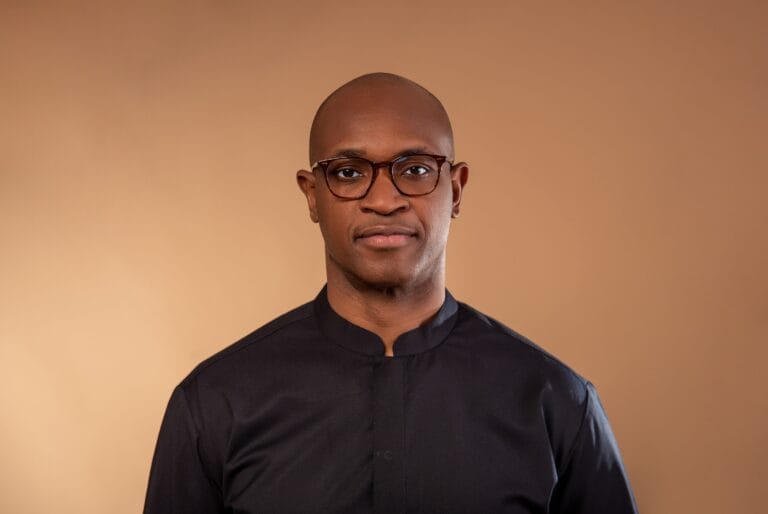
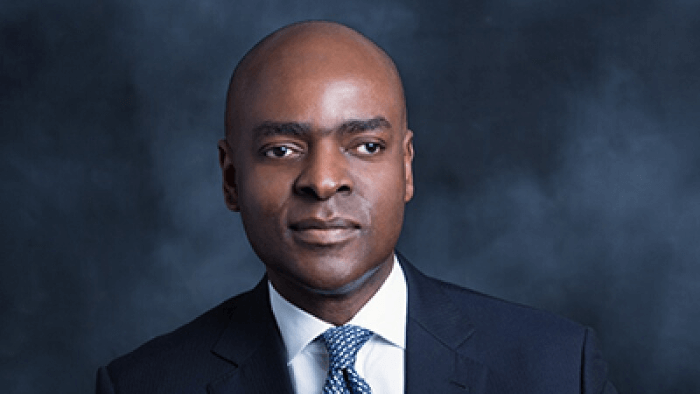
How Bolaji Balogun moved from Econet Wireless and Nigeria’s banking crisis to building Chapel Hill Denham into a diversified investment-banking and infrastructure-finance platform
Bolaji Balogun belongs to a relatively small group of Nigerian business builders whose careers have crossed banking, telecommunications, capital markets and infrastructure finance. His influence is not based only on founding Chapel Hill in 2005. It is also reflected in his role in the financing of Econet Wireless Nigeria, the restructuring of Nigeria’s banking sector after the 2008 financial crisis, the development of listed infrastructure investment vehicles and the expansion of green finance.
Publicly available records show a career built around mobilising capital for businesses and institutions operating in markets where financing is difficult, regulation is consequential and long-term investment is scarce. Through Chapel Hill Denham, Balogun has helped create an investment platform spanning advisory, securities trading, investment management and infrastructure debt.
This is an independently researched profile based on company disclosures, regulatory and exchange filings, institutional publications, interviews and reputable business reporting. It does not claim access to private information or undocumented personal motivations.
The Builder at a Glance
| Field | Verified information |
|---|---|
| Name | Bolaji Balogun, also identified in some corporate records as Mobolaji Balogun |
| Known for | Founding Chapel Hill; investment banking; capital raising; infrastructure finance; participation in the creation and funding of AMCON; co-founding Econet Wireless Nigeria |
| Founder/co-founder | Founder of Chapel Hill Advisory Partners Limited in 2005; co-founder and director of Econet Wireless Nigeria |
| Current role | Chief Executive Officer of Chapel Hill Denham; Chief Investment Officer and Managing Director of the Nigeria Infrastructure Debt Fund, according to its 2024 audited financial statements |
| Other current roles | Chairman of Endeavor Nigeria; Chairman and independent non-executive director of Unilever Nigeria; director of Trustfund Pensions; co-chair of the Private Sector Advisory Group on the Sustainable Development Goals |
| Major institutions | Chapel Hill Denham, Econet Wireless Nigeria, Nigeria Infrastructure Debt Fund, Endeavor Nigeria, Unilever Nigeria |
| Core industries | Investment banking, securities trading, asset management, infrastructure debt, telecommunications, energy and capital markets |
| Founded | Chapel Hill Advisory Partners Limited: April 2005; Chapel Hill Denham combination: March 2008 |
| Headquarters | Lagos, Nigeria |
| Education | Economics, London School of Economics; Charterhouse, Godalming; Igbobi College, Lagos |
| Major achievements | Led capital raising and the US$285 million GSM licence bid for Econet Wireless Nigeria; helped advise on the creation and funding of AMCON; built Chapel Hill Denham into a diversified financial-services group; helped establish and scale NIDF; advised on Nigerian sovereign green bonds and Eurobond transactions |
Chapel Hill Denham describes Balogun as having more than 30 years of experience across investment banking, investment management and mobile telecommunications. His education and current board roles are also documented in Unilever Nigeria’s corporate filing and Chapel Hill Denham’s management biography.
The Story Behind the Builder
Balogun’s career has followed the movement of capital through some of Nigeria’s most important economic transitions.
He began in traditional financial services, moved into the early Nigerian mobile-telecommunications market, returned to investment banking, and then built a firm that combined advisory work with asset management and principal investment. This sequence matters because each stage exposed him to a different part of the business system.
Banking provided experience in transactions and securities. Telecommunications provided exposure to large-scale infrastructure, regulatory licensing and consumer-market expansion. The return to investment banking placed those capabilities at the centre of Chapel Hill’s business model.
The result was not a conventional financial advisory boutique. Chapel Hill Denham developed into a platform involved in public-sector transactions, mergers and acquisitions, debt and equity capital markets, securities trading, infrastructure lending and investment management.
Before the Business
Education and early formation
Public records identify Balogun as an Economics graduate of the London School of Economics, University of London. He was educated at Charterhouse in the United Kingdom and Igbobi College in Lagos. A 2024 Unilever Nigeria filing confirms those details.
Information about his childhood and early personal life is limited in authoritative public sources. It would therefore be inappropriate to construct an embellished childhood-entrepreneur narrative around him.
Balogun is the son of Olasubomi Balogun, the Nigerian banker associated with City Securities and the founding of First City Monument Bank. Several profiles have noted the family connection. However, Balogun’s own public account presents his departure from the family banking environment as a professional decision made while the business was transitioning from a merchant bank into a universal commercial bank.
FCMB and investment banking
Balogun spent more than a decade with the FCMB group, working in investment banking and securities trading. Chapel Hill Denham’s official biography says he left in January 2001 to join Econet Wireless Nigeria.
That early period appears to have given him experience in transaction structuring, securities markets and institutional relationships. These capabilities later became central to Chapel Hill’s advisory model.
The Problem He Set Out to Solve
Nigeria’s business environment has repeatedly faced the same structural problem: promising companies and economically important projects often lack access to appropriately structured, long-term capital.
The problem has several dimensions:
- Nigerian businesses require capital in naira and foreign currency, but domestic savings and institutional investment are often fragmented.
- Infrastructure assets typically require long tenors, while many local financing sources prefer shorter maturities.
- Public-sector transactions need advisers who understand both government requirements and private-investor expectations.
- Regulatory complexity raises the cost of raising capital.
- Financial markets need more investable products that connect institutional savings with productive assets.
Balogun’s business career has been concentrated around this financing gap. Chapel Hill Denham advises issuers and governments, arranges securities transactions, manages funds and provides debt financing to infrastructure businesses. NIDF’s stated objective is to provide investors with regular and stable income by making primarily debt investments in Nigerian infrastructure projects.
This is not merely an advisory proposition. It is an attempt to create a financial bridge between investors seeking yield and businesses providing essential services.
Building Chapel Hill
Founding Chapel Hill
Chapel Hill Advisory Partners Limited was founded in April 2005 as an issuing house and financial advisory firm registered with the Securities and Exchange Commission. The firm was established after Balogun left telecommunications and returned to investment banking.
The early business was built around advisory and capital-markets work rather than deposit-taking. That distinction was strategically important. A regulated issuing house could participate in fund raising, restructuring and corporate transactions without attempting to replicate the balance sheet of a commercial bank.
The Denham combination
In March 2008, Chapel Hill entered into a business combination with Denham Management Limited. Denham had been founded in 1994 by Wale Edun and operated in asset management and securities trading. The transaction created Chapel Hill Denham and broadened the business beyond advisory.
The combination immediately changed the firm’s operating profile. Euromoney reported that the merger tripled the number of employees and diversified the client base from primarily institutional clients towards retail customers. Balogun described the integration as an important early challenge.
The merger gave Chapel Hill Denham several capabilities:
- Investment banking and financial advisory.
- Securities trading.
- Asset management.
- Access to institutional and retail investors.
- A wider platform for developing investment products.
The company’s later expansion into infrastructure debt and listed funds can be understood partly as an extension of this combined platform.
The 2008 banking crisis
One of Chapel Hill Denham’s most consequential assignments came during Nigeria’s banking crisis.
Euromoney reported that Balogun and his team, working alongside Deutsche Bank, advised the Central Bank of Nigeria on the rescue and recapitalisation of failing banks. Chapel Hill Denham also worked on the process that led to the formation and funding of the Asset Management Corporation of Nigeria.
The firm’s role was part of a much wider intervention involving the CBN, the Nigerian Deposit Insurance Corporation, the federal government and other advisers. The AMCON legislation was passed by the Senate in May 2010 and signed into law in July 2010.
Chapel Hill Denham’s own account, reported by BusinessDay, says the firm advised the CBN and NDIC on work leading to AMCON’s creation, helped raise ₦5.6 trillion for AMCON and advised on a later refinancing of AMCON obligations.
The scale of the intervention should be treated carefully. Balogun told Euromoney that the restructuring protected depositors from losing ₦4.5 trillion in savings. That is his reported assessment of the outcome, not an independently established measure of Chapel Hill Denham’s direct contribution.
Academic analysis presents a more complex picture. A Yale-published study of AMCON noted that the corporation later accumulated a negative equity position of approximately ₦3.6 trillion by the end of 2014 and attracted criticism relating to governance, transparency and its relationship with the CBN.
The fair conclusion is that Chapel Hill Denham participated in a major financial-stability intervention, but that the long-term performance and burden of AMCON remain subjects of institutional and academic scrutiny.
Public-sector capital markets
After the banking crisis, Chapel Hill Denham expanded its public-sector advisory activity.
BusinessDay reported that the firm advised on Nigeria’s sovereign green-bond debut and follow-on issuance, participated in the government’s 2021 US$5.25 billion Eurobond issuance and acted as sponsor for the Debt Management Office’s listing of federal government bonds on FMDQ.
The Debt Management Office identifies Nigeria’s first sovereign green bond as a ₦10.69 billion issue dated December 2017, with a second issue of ₦15 billion in 2019.
On 20 June 2025, Chapel Hill Denham announced that it had acted as financial adviser and issuing house on the federal government’s ₦50 billion Series III sovereign green bond. The offer attracted ₦91.42 billion in subscriptions, representing an oversubscription of 183 percent. Investors were allotted ₦47.355 billion at a coupon rate of 18.95 percent.
The transaction connected Balogun’s company to one of Nigeria’s most significant experiments in sustainable finance: using capital markets to fund projects linked to climate and development objectives.
Infrastructure debt
Chapel Hill Denham’s most distinctive strategic expansion has been infrastructure debt.
The Nigeria Infrastructure Debt Fund was established as a unit trust on 7 February 2017 and commenced operations on 28 June 2017. Its initial units were listed on the FMDQ OTC Exchange on 17 July 2017. The fund was listed on the Nigerian Exchange on 5 October 2023.
The NGX listing gave investors a publicly traded route into an infrastructure-focused debt fund. Chapel Hill Denham stated that 853,817,592 units were listed at ₦108.39 per unit, adding approximately ₦92.54 billion to NGX market capitalisation.
NIDF’s investment approach is based on loans to infrastructure projects and businesses with essential economic or social services, predictable cash flows and long-lived assets. Its 2024 portfolio included digital infrastructure, power, telecom towers, gas processing, renewables, pipeline networks, student accommodation and marine infrastructure.
This was a significant change from the firm’s original advisory identity. It positioned Chapel Hill Denham not only as an adviser arranging capital for others, but also as an investment manager directing capital into assets that generate contractual debt returns.
Selected transactions
The company’s public disclosures show an expanding infrastructure-finance portfolio.
In December 2023, Falcon Corporation secured a ₦19.41 billion facility from NIDF. Chapel Hill Denham Advisory and Vetiva Capital Management acted as financial advisers. The stated purpose included supporting integrated LPG infrastructure in Rivers State.
In April 2024, d.light and Chapel Hill Denham announced a ₦10 billion securitised financing facility. The financing was provided by NIDF to support the expansion of d.light’s pay-as-you-go solar products for low-income households. African Frontier Capital structured and sponsored the transaction and acted as master and backup servicer.
These transactions illustrate the breadth of the platform. Infrastructure finance is not limited to roads, ports or power plants. It can include digital access, distributed energy, gas infrastructure and consumer receivables backed by essential products.
The Business Model
Chapel Hill Denham operates across related but distinct financial businesses.
Investment banking
The advisory arm works with corporations, financial institutions and governments on transactions including:
- Debt and equity capital raising.
- Mergers and acquisitions.
- Financial restructuring.
- Public-sector financing.
- Issuing-house mandates.
- Strategic and transaction advice.
The company states that Chapel Hill Denham Advisory is registered and regulated by Nigeria’s Securities and Exchange Commission as an issuing house.
Revenue in this business is generally generated through transaction fees, advisory fees, arranging fees and issuing-house commissions. The precise fee structure of individual mandates is not publicly disclosed.
Securities trading
Chapel Hill Denham Securities operates as a broker-dealer on the Nigerian Exchange and is licensed by the SEC.
This business serves investors and issuers through the buying and selling of securities, market execution, distribution and related capital-market services. Its value to the wider group is strategic as well as financial because it provides market access and investor relationships.
Asset management
The asset-management business pools money from investors into funds and investment products. NIDF is the clearest public example.
The fund manager originates and evaluates infrastructure loans, structures transactions, monitors borrowers, manages portfolio risk and distributes income to unitholders. Returns are primarily generated from interest income on loans, fair-value movements and other investment income.
The model depends on several conditions:
- Borrowers must generate sufficiently predictable cash flows.
- Loans must be structured with appropriate security and covenants.
- Investors must accept the risks associated with naira assets and Nigerian infrastructure.
- The fund must maintain regulatory, valuation and reporting discipline.
- The manager must continuously originate new opportunities as loans mature or capital is raised.
Geographic reach
The centre of gravity is Nigeria, but the group has developed an African orientation. Chapel Hill Denham maintains a Ghana operation and its senior team includes professionals with experience across African and emerging markets.
The company’s core investment thesis remains closely tied to Nigerian assets, regulatory institutions and capital-market development.
The Builder’s Strategy
1. Move from advice to ownership of investment platforms
Publicly available evidence suggests that Balogun did not leave Chapel Hill as a narrow advisory firm. The 2008 combination with Denham added asset management and securities trading, while NIDF later added a scalable infrastructure-investment product.
This approach reduces dependence on one-off advisory mandates. Advisory fees may fluctuate with deal volumes, while asset-management products can generate recurring management income and create longer-term relationships with investors.
2. Build around regulated market infrastructure
Chapel Hill’s businesses are located inside Nigeria’s regulated capital-market system. Its advisory and securities businesses are SEC-regulated, while NIDF operates under the Investments and Securities Act, SEC rules and a trust deed.
This is strategically significant. In financial services, trust and regulatory compliance are not peripheral matters. They are part of the product.
3. Focus on difficult transactions
The firm’s record includes banking-sector restructuring, sovereign bonds, bank recapitalisation, infrastructure loans and securitised finance. These are transactions where the technical, regulatory and political requirements are substantial.
The evidence suggests a strategy of competing for complexity rather than volume alone. That interpretation is supported by the range of assignments publicly attributed to the firm, although Chapel Hill does not publish a complete league-table history or full transaction database.
4. Link financial returns to development needs
NIDF’s portfolio shows an emphasis on infrastructure sectors that provide power, telecommunications, energy, digital services, accommodation and transport-related facilities. The 2024 fund report describes the objective as providing regular and stable income through primarily debt investments in infrastructure projects located in Nigeria.
This does not mean that development objectives replace commercial discipline. The fund’s stated criteria include predictable cash flows and investable assets. The strategy is therefore a commercial attempt to finance development, not a philanthropic programme.
5. Use partnerships to extend execution capacity
The public record shows Chapel Hill working with international banks, local investment firms, trustees, custodians, development-oriented companies and public institutions.
Examples include:
- Deutsche Bank during the banking-sector intervention.
- Vetiva Capital Management on the Falcon financing.
- African Frontier Capital on the d.light securitisation.
- The Debt Management Office on sovereign green bonds.
- The Nigerian Exchange on NIDF’s listing.
Such partnerships allow the firm to combine local relationships with specialist structuring, distribution and execution capabilities.
Major Challenges and Turning Points
Integration risk after the merger
The 2008 merger increased Chapel Hill Denham’s workforce and diversified its client base. Euromoney reported that the integration initially required managing a larger organisation and serving more retail customers than Chapel Hill had previously done.
This was an operational challenge rather than a public crisis. It nevertheless represented an important test of whether the combined business could preserve its advisory culture while adding asset management and securities trading.
The banking crisis and AMCON’s legacy
Chapel Hill’s involvement in the banking crisis placed the company close to one of Nigeria’s most consequential financial interventions.
The intervention stabilised the banking system and helped establish AMCON, but AMCON later faced serious balance-sheet and governance concerns. Academic research recorded a negative equity position of approximately ₦3.6 trillion by 2014 and raised questions about transparency and institutional design.
There is no evidence in the sources reviewed that Balogun or Chapel Hill Denham was accused of wrongdoing in connection with the intervention. However, an independent profile should acknowledge that the broader programme had significant costs and unresolved policy debates.
Macroeconomic and currency risk
Chapel Hill Denham’s business operates in an environment affected by inflation, foreign-exchange volatility, interest-rate changes, public-sector borrowing pressures and regulatory shifts.
These conditions influence:
- The cost of debt.
- The valuation of infrastructure loans.
- Investor demand for naira securities.
- The ability of borrowers to service debt.
- The attractiveness of local versus foreign-currency financing.
NIDF’s 2024 audited statements show that infrastructure loans were valued using expected contractual cash flows, obligor risk ratings, risk-free rates and risk premiums. The auditors identified fair-value measurement of infrastructure loans as a key audit matter.
That disclosure is important because infrastructure debt is not risk-free simply because it is secured or linked to essential services.
Concentration and valuation risk
As at 31 December 2024, NIDF’s infrastructure-loan portfolio stood at ₦93.37 billion. The portfolio was spread across sectors, but some individual exposures were substantial, including marine infrastructure, renewables, pipelines, gas processing and telecom infrastructure.
The fund report says borrowers met obligations in a timely manner during 2024. That is a reported performance outcome for the year, not a guarantee of future performance.
Beyond the Original Business
Balogun’s influence extends beyond Chapel Hill Denham.
Econet Wireless Nigeria
Balogun was a co-founder and director of Econet Wireless Nigeria. Chapel Hill Denham’s biography says he led the capital raising and licence-bid auction for the company’s US$285 million GSM licence and later served as chief business development and strategy officer before becoming chief marketing officer in October 2001.
The Nigerian Communications Commission’s early licensing process required successful bidders to pay US$285 million for a GSM licence. Contemporary reporting identifies Econet and MTN among the successful bidders.
Chapel Hill Denham states that Econet Wireless Nigeria was sold to Celtel for US$1.67 billion in 2005, describing the transaction as Nigeria’s largest successfully exited private investment. That characterization should be understood as the company’s own historical description, since a comprehensive independent league table of all Nigerian private exits is not publicly available in the sources reviewed.
Endeavor Nigeria
Endeavor Nigeria appointed Balogun chairman of its board on 30 January 2024, succeeding Atedo Peterside. He had previously served as vice chairman.
Endeavor’s work focuses on supporting high-impact entrepreneurs and strengthening entrepreneurial ecosystems. Balogun’s role places him within a broader effort to connect founders with capital, mentorship and networks.
Unilever Nigeria
Unilever Nigeria appointed Balogun an independent non-executive director and chairman of the board effective 16 May 2024.
The role is distinct from his executive position at Chapel Hill Denham. It places him in a governance position at one of Nigeria’s long-established consumer-goods companies rather than in day-to-day management.
Sustainable Development Goals
Chapel Hill Denham identifies Balogun as co-chair of the Private Sector Advisory Group on the Sustainable Development Goals. Public evidence also connects his work to green bonds, renewable-energy finance and infrastructure investment.
The connection between these activities and his financial career is visible in transactions such as the d.light securitisation and the sovereign green bond programme. However, it would be too broad to claim that every Chapel Hill Denham investment is an SDG project. The evidence supports a more precise conclusion: sustainable finance and development-oriented capital have become important areas of the platform.
Abia Global Economic Advisory Council
Chapel Hill Denham’s biography says Balogun was appointed co-chair of the Abia Global Economic Advisory Council in January 2024.
The available sources reviewed do not provide enough detail to assess the council’s programme, funding or measurable outcomes. It should therefore be treated as a current institutional role, not as evidence of completed economic transformation.
The Numbers Behind the Builder
The figures below are dated and should not be interpreted as current unless explicitly identified as such.
| Metric | Figure | Date and source |
|---|---|---|
| Chapel Hill founding | April 2005 | BusinessDay reporting and company history |
| Chapel Hill and Denham combination | March 2008 | BusinessDay reporting |
| Econet GSM licence | US$285 million | Chapel Hill Denham biography; contemporary industry reporting |
| Reported Econet/Celtel exit value | US$1.67 billion | Chapel Hill Denham biography |
| NIDF establishment | 7 February 2017 | NIDF 2024 audited financial statements |
| NIDF operations commenced | 28 June 2017 | NIDF 2024 audited financial statements |
| NIDF first FMDQ listing | 17 July 2017 | NIDF 2024 audited financial statements |
| NIDF NGX listing | 5 October 2023 | NGX and NIDF disclosures |
| NIDF units listed at NGX | 853,817,592 units at ₦108.39 each | 5 October 2023, Chapel Hill Denham |
| NIDF 2024 total income | ₦21.58 billion | Year ended 31 December 2024, audited statements |
| NIDF 2024 profit | ₦19.59 billion | Year ended 31 December 2024, audited statements |
| NIDF 2024 total assets | ₦120.74 billion | 31 December 2024, audited statements |
| NIDF 2024 net assets | ₦113.75 billion | 31 December 2024, audited statements |
| NIDF 2024 infrastructure-loan portfolio | ₦93.37 billion | 31 December 2024, audited statements |
| NIDF 2024 distributions | ₦19.09 per unit; ₦19.35 billion total declared | 2024 financial year |
| d.light securitised financing | ₦10 billion | 23 April 2024 announcement |
| Falcon Corporation facility | ₦19.41 billion | 4 December 2023 announcement |
| Sovereign green bond Series III | ₦50 billion issue; ₦91.42 billion subscriptions | 16 to 18 June 2025; announced 20 June 2025 |
| Green Bond III oversubscription | 183 percent | June 2025, Chapel Hill Denham and DMO materials |
| Green Bond III coupon | 18.95 percent per annum | June 2025 |
The 2024 NIDF figures are audited. The 2025 company disclosures cited above relate to individual transactions and should not be confused with audited consolidated results for Chapel Hill Denham.
Awards and Recognition
Chapel Hill Denham’s official awards page lists repeated Euromoney recognition, including Nigeria’s Best Investment Bank in 2023, 2024 and 2025, and Best Public Sector Bond House in 2024.
These awards are relevant because they reflect external recognition of transaction execution and market position. They are not, however, substitutes for audited financial performance or independent assessments of social impact.
The more substantive measure of the firm’s standing is the number and variety of public transactions in which it has been involved: bank recapitalisation, sovereign bonds, infrastructure debt, securitisation and listed funds.
Education and Thought Leadership
Formal education
- Economics, London School of Economics, University of London.
- Charterhouse, Godalming, Surrey, United Kingdom.
- Igbobi College, Lagos.
No books authored by Balogun were identified in the sources reviewed. His public thought leadership is primarily delivered through interviews, conference appearances, company announcements and participation in entrepreneurship and sustainable-development institutions.
Public views
In a 2014 Euromoney interview, Balogun argued that risk in Africa should be understood as capable of being translated into opportunity. The remark was made in the context of investment banking and emerging-market finance.
In a 2021 TechCabal interview, he discussed his role at Endeavor Nigeria and the development of the country’s entrepreneurial ecosystem.
He has also appeared in public forums discussing infrastructure finance, capital markets, entrepreneurship and Nigeria’s economic potential. Chapel Hill Denham’s public archive records an appearance on Arise News Business Week in which he spoke in his capacity as CEO and NIDF chief investment officer.
The Builder’s Playbook
Start with a capability, then widen the platform
Balogun began Chapel Hill as an issuing-house and advisory firm. The Denham combination added asset management and securities trading. NIDF later extended the model into infrastructure debt. The documented pattern is a progression from specialist capability to broader financial platform.
Enter markets where execution matters
The firm’s public record is concentrated in transactions that require structuring, regulatory coordination and investor distribution. The banking crisis, sovereign bonds and infrastructure financing all demanded more than basic brokerage services.
Make regulation part of the business model
Chapel Hill’s regulated status, fund structure, trustees, custodian, audit arrangements and exchange listings are not administrative details. They are central to how the company earns investor confidence and operates at scale.
Use long-term capital for long-lived assets
NIDF’s portfolio and investment criteria show an emphasis on assets with long useful lives and predictable cash flows. This is a practical response to Nigeria’s infrastructure-financing gap.
Maintain commercial discipline in development sectors
The fund invests in sectors with development relevance, but its model remains based on credit analysis, pricing, security, valuation and repayment. The lesson is not that impact replaces returns. It is that development needs can sometimes be financed through disciplined investment structures.
The Business Ecosystem
The following institutions and companies are central to Balogun’s documented career:
- Chapel Hill Advisory Partners Limited.
- Chapel Hill Denham Management Limited.
- Denham Management Limited.
- Nigeria Infrastructure Debt Fund.
- Econet Wireless Nigeria, now associated with Airtel Nigeria’s historical Nigerian operations.
- First City Monument Bank and the FCMB group.
- Asset Management Corporation of Nigeria.
- Central Bank of Nigeria.
- Nigeria Deposit Insurance Corporation.
- Debt Management Office.
- Nigerian Exchange.
- FMDQ OTC Exchange.
- Securities and Exchange Commission.
- Unilever Nigeria.
- Endeavor Nigeria.
- Trustfund Pensions.
- d.light.
- Falcon Corporation.
- African Frontier Capital.
- Deutsche Bank.
- Vetiva Capital Management.
Where They Are Today
As of 19 August 2026, the latest publicly available company biography identifies Balogun as Chief Executive Officer of Chapel Hill Denham. The same biography identifies him as chairman of Endeavor Nigeria and Unilever Nigeria, director of Trustfund Pensions, co-chair of the Private Sector Advisory Group on the SDGs and co-chair of the Abia Global Economic Advisory Council.
His executive position at Chapel Hill Denham remains connected to the Nigeria Infrastructure Debt Fund. In NIDF’s audited 2024 financial statements, Balogun signed as managing director and chief investment officer of the fund manager.
The group’s recent public activity includes:
- The 2025 ₦50 billion sovereign green-bond issuance.
- Ongoing development of NIDF’s infrastructure-loan portfolio.
- Continued capital raising and exchange activity for NIDF.
- Expansion of sustainable and energy-related financing.
- Advisory work on major corporate capital raises, including Access Holdings’ ₦351 billion rights issue announced in December 2024.
A 2026 BusinessDay report also stated that Chapel Hill Denham won several Euromoney awards, including Africa’s Best Investment Bank for Financial Institutions, Nigeria’s Best Investment Bank and Nigeria’s Best Investment Bank for Equity Capital Markets. Because the report post-dates the company’s older awards page, the 2026 awards should be treated as a separate current recognition and not merged with the historical list.
What Comes Next
Publicly announced future direction is clearest in NIDF’s 2024 audited report. The fund manager said it was sourcing and structuring additional infrastructure loans and tracking a project pipeline expected to materialise over the following 12 to 24 months.
The report also indicates that the long-term demand for naira-denominated infrastructure financing remains substantial. This is a statement of the fund manager’s outlook, not a guarantee that all identified projects will close.
Beyond that disclosed pipeline, the sources reviewed do not provide a sufficiently specific, authoritative announcement of a new company, acquisition or geographic expansion that should be presented as a confirmed future plan.
Brands.Ng Perspective
Bolaji Balogun’s significance lies in the institutions he helped build and the markets through which he moved capital.
His career began in investment banking, moved through the creation of a telecommunications operator and returned to financial services at a time when Nigeria needed stronger capital-market institutions. Chapel Hill’s role in the banking crisis placed it close to a national financial rescue whose consequences remain debated. Its later work in infrastructure debt and green finance reflects a different challenge: how to mobilise long-term capital for assets that businesses and households depend on.
The strongest evidence of Balogun’s business-building record is not a claim that he solved Nigeria’s financing problems. He did not. Nigeria still faces deep infrastructure, foreign-exchange, credit and regulatory constraints.
The more defensible conclusion is narrower and more important. Balogun helped build a Nigerian financial-services firm capable of operating across advisory, securities, asset management and infrastructure finance. He helped connect domestic and international capital to telecommunications, banking, public-sector borrowing, energy and infrastructure. That makes him a significant figure in the institutional history of Nigerian business.
His legacy will depend not only on the value of transactions completed, but also on whether the platforms associated with him continue to allocate capital responsibly, manage risk transparently and deepen the market beyond a small circle of sophisticated investors.
Frequently Asked Questions
Who is Bolaji Balogun?
Bolaji Balogun is a Nigerian investment banker and business builder, founder and CEO of Chapel Hill Denham. He has worked across investment banking, telecommunications, asset management and infrastructure finance.
When did Bolaji Balogun found Chapel Hill?
He founded Chapel Hill Advisory Partners Limited in 2005. The company combined with Denham Management in March 2008 to form Chapel Hill Denham.
What is Chapel Hill Denham known for?
The company is known for investment banking, capital-market transactions, securities trading, asset management and infrastructure finance.
What was Bolaji Balogun’s role at Econet Wireless Nigeria?
He was a co-founder and director, and led the capital raising and US$285 million GSM licence bid.
What is the Nigeria Infrastructure Debt Fund?
NIDF is an infrastructure debt fund managed by Chapel Hill Denham that provides primarily debt financing to Nigerian infrastructure projects and provides investors with income distributions.
Is Bolaji Balogun the chairman of Unilever Nigeria?
Unilever Nigeria appointed him independent non-executive chairman effective 16 May 2024. Current status should be checked against the latest company filing.
Is Bolaji Balogun chairman of Endeavor Nigeria?
Endeavor Nigeria appointed him board chairman on 30 January 2024, succeeding Atedo Peterside.
Sources & Further Reading
- Chapel Hill Denham. “Management Team Bios: Bolaji Balogun.” Current company biography, accessed for current roles and career history.
- Euromoney. “Africa’s rising stars: Bolaji Balogun, CEO of Chapel Hill Denham.” 8 May 2014.
- BusinessDay. “The rise and rise of Chapel Hill Denham management.” 4 April 2024.
- TechCabal. “What to expect from Endeavor Nigeria’s Catalysing Conversations summit.” 19 October 2021.
- Nigerian Exchange. “Unilever Nigeria Plc: Notification of Appointment of Directors.” 16 May 2024.
- Endeavor Nigeria. “Endeavor Nigeria Welcomes Bolaji Balogun as New Board Chairman as Atedo Peterside Retires.” 30 January 2024.
- Central Bank of Nigeria. “The Asset Management Corporation of Nigeria Establishment Bill 2010.” 5 May 2010.
- Nigerian Exchange. NIDF company profile and listing information.
- Chapel Hill Denham. “Nigeria Infrastructure Debt Fund Lists on Nigerian Exchange Limited.” Published by Chapel Hill Denham.
- Debt Management Office Nigeria. “Green Bond III Investor Presentation.” June 2025.
Stay ahead of the businesses shaping Nigeria.
Get important company developments, analysis, research and business intelligence from Brands.Ng directly on WhatsApp.