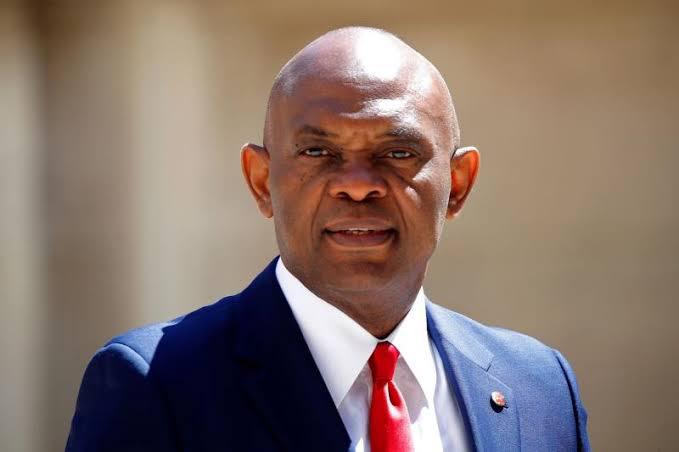
Tony Elumelu’s business career has two distinct chapters.
The first was his rise through Nigerian banking, from early financial-services roles to the rescue and transformation of Standard Trust Bank, followed by the 2005 merger with United Bank for Africa. Under his leadership, UBA moved from being primarily a Nigerian institution into a pan-African banking group.
The second began in 2010, when Elumelu left the executive leadership of UBA and founded Heirs Holdings. He did not simply retire into passive investing. He created a family-owned investment company that deployed capital across banking, power, oil and gas, hospitality, real estate, healthcare and technology.
That second act has become the more revealing part of his business story. Through Heirs Holdings, Transcorp and Heirs Energies, Elumelu has pursued long-term ownership of strategic assets. Through the Tony Elumelu Foundation, he has attempted to extend the same philosophy to thousands of African entrepreneurs.
The result is a business model built around what Elumelu calls “Africapitalism”: the belief that private-sector investment should generate both commercial returns and broader economic value.
Heirs Holdings reported that the value of its existing portfolio was ₦20.9 trillion, equivalent to US$15.08 billion, as at 31 March 2026. The figure is a company-reported portfolio valuation and should not be confused with Elumelu’s personal net worth.
The Builder at a Glance
| Field | Verified information |
|---|---|
| Name | Tony Onyemaechi Elumelu, CFR |
| Known for | Transforming Standard Trust Bank; leading the STB-UBA merger; expanding UBA across Africa; founding Heirs Holdings and the Tony Elumelu Foundation |
| Founder | Heirs Holdings; Tony Elumelu Foundation; founding investor and leader of the Standard Trust Bank turnaround |
| Current roles | Founder and chairman of Heirs Holdings; chairman of UBA Group and Transcorp during the relevant reporting period; founder and chairman of the Tony Elumelu Foundation |
| Major companies | Heirs Holdings, United Bank for Africa, Transcorp, Heirs Energies, Transcorp Power and Transcorp Hotels |
| Core industries | Banking, financial services, power, oil and gas, hospitality, real estate, healthcare, technology and entrepreneurship development |
| Year founded | Heirs Holdings and Tony Elumelu Foundation: 2010 |
| Headquarters | Lagos, Nigeria |
| Education | Economics, Ambrose Alli University; MSc Economics, University of Lagos; advanced management education at Harvard Business School and IMD Lausanne |
| Business philosophy | Africapitalism, long-term private investment that seeks commercial returns and economic and social value |
| Major achievements | Led the Standard Trust Bank-UBA merger; expanded UBA from a Nigerian bank into a pan-African group; acquired and repositioned Transcorp; acquired a 45 percent interest in OML 17; built a large African entrepreneurship programme |
UBA’s official biography identifies Elumelu as chairman of Heirs Holdings, UBA Group and Transcorp. It also records his role in the transformation of Standard Trust Bank and the 2005 merger with UBA.
The Story Behind the Builder
Tony Elumelu’s career is best understood as a sequence of turnarounds and platforms.
He first built credibility in banking by taking on a distressed institution. He then used a merger to obtain scale. After leaving UBA, he applied the same principles to a wider investment portfolio: acquire strategic assets, strengthen governance, improve operating performance and hold for the long term.
This is different from a business model based primarily on buying and selling companies. Heirs Holdings presents itself as an active owner. Its stated approach combines disciplined capital, sector expertise, governance and operational support.
The group’s portfolio shows a preference for sectors where ownership can affect the wider economy:
- Banks and financial services move capital.
- Power companies produce electricity.
- Oil and gas assets supply energy and public revenue.
- Hotels and real estate support tourism and business activity.
- Healthcare businesses address access and service gaps.
- Technology companies support digital commerce.
- Entrepreneurship programmes expand the pool of African businesses.
Elumelu’s second act is therefore not a retreat from banking. It is an attempt to apply banking’s central discipline, capital allocation, to a broader set of African industries.
Before the Business
Education and early career
Elumelu studied Economics at Ambrose Alli University, formerly Bendel State University, and later earned a Master of Science degree in Economics from the University of Lagos. His public biographies also identify advanced management education at Harvard Business School and IMD Lausanne.
His early career included work with Allstates Trust Bank, Linkage Assurance and Merchant Bank of Commerce. A Guardian profile says he became an executive director at Linkage Assurance and later worked in senior roles at Allstates Trust Bank before joining the effort to acquire and rebuild a distressed bank.
The early record should be handled with care because biographies differ on the precise chronology and titles. The broad pattern is more reliable: Elumelu developed experience in banking, insurance and financial intermediation before becoming a principal investor.
Banc-Grant and the first acquisition
In 1995, Elumelu and associates founded Banc-Grant, a firm involved in mergers, acquisitions and investment transactions. The business later became associated with the acquisition of Merchant Bank of Commerce.
This stage was important because it moved Elumelu from professional banking into ownership and transaction execution. He was no longer only advising on financial institutions. He was participating in their acquisition and restructuring.
The Problem He Set Out to Solve
Elumelu did not publicly frame his early banking career as a single social problem. The market context nevertheless reveals the opportunity.
Nigeria needed stronger indigenous financial institutions capable of:
- Mobilising domestic savings.
- Financing private businesses.
- Supporting trade and investment.
- Providing modern corporate banking.
- Operating across African markets.
- Competing with international financial institutions.
- Connecting African businesses to global capital.
The acquisition of a distressed bank offered one route into that problem. Rather than build a new bank from zero, Elumelu and his partners acquired an existing institution and attempted to rebuild it.
His later investment philosophy expanded the same idea. Heirs Holdings says Africa requires long-term private investment in strategic sectors, including finance, energy, power, technology, healthcare and hospitality.
The broader challenge was capital scarcity. African economies have resources, entrepreneurs and consumer markets, but often lack patient domestic capital, reliable infrastructure and institutions capable of executing at scale.
Building the Banking Platform
Turning around Standard Trust Bank
In 1997, a group led by Elumelu acquired the distressed Crystal Bank. The institution was renamed Standard Trust Bank, or STB. UBA’s own historical account says the acquisition began a turnaround that eventually led to the bank’s merger with UBA.
The acquisition carried substantial risk. A distressed bank brings inherited problems, damaged confidence, weak systems and regulatory scrutiny. The new owners had to repair the balance sheet while building a credible commercial institution.
Public sources describe STB as moving into Nigeria’s top tier of banks under Elumelu’s leadership. The World Bank says he turned the financially distressed bank into a top-five financial-services player in Nigeria.
The exact financial metrics behind the turnaround require deeper review of STB’s archived accounts. The strategic point is clearer: Elumelu used an acquisition to establish an operating base and then created value through restructuring and growth.
The 2005 merger with UBA
In January 2005, Standard Trust Bank and UBA announced a merger. The merger was completed in July 2005. UBA’s historical account describes it as the largest merger in Nigeria’s capital-market history at that time.
The combined institution kept the UBA name, benefiting from the older bank’s brand, history and network while adding STB’s management approach and growth strategy.
The merger was a turning point for several reasons:
- It created immediate scale.
- It combined an older national franchise with a younger, growth-oriented bank.
- It produced a stronger platform for regional expansion.
- It placed Elumelu at the centre of one of Nigeria’s largest banking combinations.
- It gave the new group an institutional identity beyond Standard Trust Bank.
Elumelu became group managing director and CEO of UBA. His tenure lasted until 2010, when he retired from executive leadership following the introduction of CBN tenure limits for bank CEOs.
Expanding UBA across Africa
Before Elumelu’s leadership, UBA was primarily a Nigerian banking institution. During his tenure, the group expanded into African markets and established operations in global financial centres.
The bank’s official profile says UBA now operates in 20 African countries as well as New York, London, Paris and Dubai. Elumelu’s personal biography says that during his less-than-ten-year tenure, UBA expanded to more than 20 African countries and developed offices in Paris, London and New York.
The geographical counts vary slightly across dates and definitions. Some sources refer to countries, while others include branches, subsidiaries, representative offices or international centres. The consistent fact is that UBA shifted from a single-country bank to a pan-African financial group during the period.
This expansion required more than opening offices. It involved:
- Regulatory approvals across countries.
- Local management.
- Cross-border risk systems.
- Treasury and settlement capability.
- Regional corporate relationships.
- Brand consistency.
- Adaptation to different legal and economic environments.
The strategic logic was straightforward: African businesses increasingly needed a bank that could support trade, investment and payments across borders.
The Second Act: Heirs Holdings
Founding the investment company
Elumelu retired as UBA group managing director and CEO in 2010. He founded Heirs Holdings in the same year. heirsholdings
The new company became a family-owned African investment holding company rather than a conventional operating company. It was designed to own interests in strategic businesses and work with management teams to improve their performance.
Heirs Holdings describes the model as long-term investment, active stewardship and purposeful growth. Its stated portfolio spans financial services, insurance, power, energy, technology, healthcare, real estate and hospitality, with investments operating across 24 countries.
The company’s structure allowed Elumelu to do three things at once:
- Maintain exposure to financial services through UBA and other businesses.
- Invest directly in assets outside banking.
- Build a family-owned platform capable of holding businesses across generations.
Transcorp
Heirs Holdings became a significant investor in Transnational Corporation of Nigeria, known as Transcorp, in 2011. The company’s 2011 annual report identified Elumelu as chairman and stated that he held more than 5 percent of the issued share capital, with a reported total holding of 22.16 percent at 31 December 2011.
Transcorp provided a vehicle for investment in large Nigerian businesses, particularly power, hospitality and energy.
The company’s portfolio includes:
- Transcorp Power.
- Transcorp Hotels.
- Transcorp Energy.
- Other energy and hospitality interests.
Transcorp’s 2025 results, reported by The Guardian, showed revenue of ₦544 billion, profit before tax of ₦179.5 billion and profit after tax of ₦135.9 billion. The figures are for Transcorp, not Heirs Holdings as a whole.
The group’s performance reflects a long turnaround process rather than a single transaction. Transcorp’s power and hospitality businesses have required capital expenditure, operational restructuring and management execution.
Transcorp Power
Power became central to Elumelu’s investment thesis.
Heirs Holdings says Transcorp Power has an installed capacity of 2,000 megawatts and supplies approximately 13 to 15 percent of Nigeria’s national grid, while its distribution reach extends to more than 1.8 million customers through the Abuja Electricity Distribution Company connection described on the group’s investment page.
These are company-reported figures and should be separated carefully between generation capacity, electricity supplied and distribution reach. Transcorp Power is a generation company; it does not itself own the entire distribution network.
Transcorp Power was listed as a separate company on the Nigerian Exchange in March 2024 at a market value of approximately ₦1.8 trillion, according to Premium Times.
The listing created a public-market valuation for a power-generation asset and gave investors a direct route into the business.
OML 17 and Heirs Energies
The most consequential post-UBA transaction was the acquisition of a 45 percent participating interest in OML 17.
On 15 January 2021, Heirs Holdings and Transcorp announced the acquisition from Shell Petroleum Development Company of Nigeria, Total E&P Nigeria and Eni through Heirs Oil and Gas. Heirs Holdings said the transaction had a financing component of US$1.1 billion and that Heirs Oil and Gas would become operator.
Other reporting has described the total transaction value as approximately US$1.2 billion. The difference likely reflects the distinction between the asset purchase price, financing component and related transaction costs. It should be reported explicitly rather than treated as a contradiction.
At acquisition, the asset was described as producing 27,000 barrels of oil equivalent per day, with estimated 2P reserves of 1.2 billion barrels of oil equivalent and additional exploration potential.
The asset was later operated through Heirs Energies. By January 2026, the company said it had increased oil production from below 25,000 barrels per day to more than 50,000 barrels per day and gas production from below 50 million standard cubic feet per day to more than 120 million standard cubic feet per day.
Heirs Holdings’ current investment page gives a slightly different current figure, saying OML 17 produces 53,000 barrels of oil per day and 100 million standard cubic feet of gas per day.
These figures should not be merged. They come from different company pages and dates. Production varies over time, and oil and gas measurements may cover different periods or assets. The responsible editorial formulation is that Heirs Energies has publicly reported a substantial increase in OML 17 production since acquisition, while exact current output differs across company disclosures.
Healthcare and hospitality
Heirs Holdings has expanded beyond heavy industry.
Its healthcare portfolio includes Avon HMO and Avon Medical Practice. The group says Avon HMO has impacted more than 250,000 lives, facilitated more than one million medical encounters through 2,500 hospitals and paid more than ₦35 billion in claims over 12 years. Avon Medical Practice reports a 50-bed hospital and seven clinics.
Its hospitality portfolio includes Transcorp Hotels, which operates Transcorp Hilton Abuja and other properties. Transcorp Hotels reported ₦97 billion in revenue for 2025, according to Punch.
These businesses show the breadth of the second act. Elumelu’s portfolio is not limited to extractive assets or financial institutions. It also targets sectors connected to household welfare, services, tourism and urban development.
The Business Model
Family-owned investment holding company
Heirs Holdings is not a bank and does not operate like a mutual fund. It is a family-owned investment company that takes long-term positions in businesses and works with portfolio companies.
Its model involves:
- Identifying strategic African assets.
- Providing capital.
- Taking ownership stakes.
- Supporting governance and management.
- Improving operational performance.
- Holding investments for long-term value creation.
- Realising value through public listings, dividends, growth or strategic exits where appropriate.
The group’s stated investment philosophy emphasises disciplined capital, active stewardship and purposeful growth.
Portfolio diversification
The portfolio spans industries with different revenue and risk profiles:
| Sector | Key businesses publicly associated with the group |
|---|---|
| Financial services | UBA, United Capital, Africa Prudential, Heirs Insurance |
| Power | Transcorp Power, Transafam Power |
| Energy | Heirs Energies, Tenoil, Transcorp Energy |
| Hospitality and real estate | Transcorp Hotels, Afriland Properties |
| Healthcare | Avon HMO, Avon Medical Practice |
| Technology | Heirs Technologies, Redtech |
Diversification can reduce dependence on one sector, but it also creates management complexity. Energy, banking, hotels and healthcare require different regulatory, operational and capital-allocation skills.
Revenue and value creation
Heirs Holdings does not publicly provide a complete consolidated income statement for the entire family-owned portfolio comparable to a listed company’s annual report. The group instead reports portfolio value and selected operating metrics.
That limits what can responsibly be said about group-level profitability. Public data is stronger at the operating-company level, particularly for UBA, Transcorp, Transcorp Power and Transcorp Hotels.
The Builder’s Strategy
1. Acquire capability, not merely assets
The Standard Trust Bank acquisition was an example of buying a troubled institution and rebuilding it. The OML 17 transaction followed a different route, but the principle was similar: acquire a strategic asset and improve its operations.
Publicly available evidence suggests that Elumelu’s approach is based on combining capital with management and operational capability. Heirs Holdings says it brings strategic capital, sector expertise and operational excellence to its portfolio companies.
2. Use scale to cross borders
The UBA merger gave Elumelu a larger platform from which to pursue African expansion. Rather than build a collection of unrelated national banks, UBA developed a recognisable pan-African network.
His interviews and biographies indicate that regional scale was a core objective of the UBA strategy.
3. Invest in strategic bottlenecks
Elumelu’s post-UBA investments have concentrated on sectors that constrain economic growth:
- Power shortages constrain industry.
- Energy supply affects households and manufacturing.
- Financial access affects enterprise.
- Healthcare gaps affect productivity.
- Hospitality and real estate support commerce and tourism.
- Technology can reduce transaction costs.
This is the practical foundation of Africapitalism. The strategy does not treat development and commercial returns as mutually exclusive.
4. Hold for the long term
Heirs Holdings describes itself as a patient investor. The portfolio’s history supports that positioning: its involvement in Transcorp dates to 2011, while UBA remains a core financial-services holding and OML 17 has been operated since 2021.
Long-term ownership, however, does not automatically produce good outcomes. It must be measured through operating performance, capital discipline, governance and returns.
5. Build an ecosystem around capital
Elumelu’s businesses are connected through more than ownership. They share management experience, financing relationships, governance expertise and strategic networks.
The OML 17 transaction involved Standard Chartered, United Capital, Afreximbank, Africa Finance Corporation, Union Bank, Amundi and other financial and technical partners.
This illustrates an important part of the model: large African transactions require syndication, technical partners, regulators, offtakers and local institutions.
Major Challenges and Turning Points
Rebuilding a distressed bank
Standard Trust Bank’s starting point was a distressed institution. The turnaround therefore required restoring confidence, strengthening capital, improving systems and competing against larger banks.
The public record documents the outcome more clearly than the difficulties encountered during the process. A definitive account would benefit from archived STB financial statements, contemporary newspaper coverage and interviews with early executives.
The risks of banking expansion
UBA’s expansion into many jurisdictions increased opportunity but also added regulatory and operational complexity. A pan-African bank must manage different currencies, laws, political environments and credit cycles.
The bank’s current geographic footprint should not be projected backward onto Elumelu’s exact tenure without checking the opening dates of each subsidiary.
Energy-sector execution
OML 17 was acquired during a period of intense pressure on Nigeria’s oil and gas industry, including oil theft, pipeline insecurity, production disruptions and regulatory transition.
Heirs Energies has publicly said that crude theft affected production and that collaboration with NNPC and NUPRC helped improve output.
This is a material challenge, not a footnote. Higher production depends on security, infrastructure, maintenance, community relations, regulation and offtake arrangements.
Commodity and currency exposure
Energy and power businesses are exposed to:
- Oil-price volatility.
- Foreign-exchange movements.
- Domestic gas pricing.
- Electricity-market liquidity.
- Transmission constraints.
- Regulatory changes.
- Financing costs.
- Political and security risk.
Diversification does not eliminate these risks. It changes their distribution across the portfolio.
Transcorp shareholding contest
In 2023, Femi Otedola acquired a significant stake in Transcorp, which triggered a rapid increase in Elumelu’s holding. Reporting by The ICIR and Premium Times described Otedola’s acquisition, Elumelu’s response and the eventual sale of Otedola’s stake to Elumelu.
The episode was a significant corporate-governance and ownership event because it tested control of a listed Nigerian conglomerate.
The reports contain competing perspectives about the relationship and transaction history. Elumelu’s own 2025 account describes Heirs Holdings as a significant Transcorp investor since 2011 and emphasises the company’s transformation and governance.
The incident should not be described as wrongdoing without a formal finding by a regulator or court. Its relevance is that it demonstrated how ownership concentration and shareholder competition can affect a public company.
Chairman tenure at UBA
A July 2026 disclosure reported that Elumelu would retire as UBA chairman on 21 August 2026 after completing the 12-year tenure limit applicable to non-executive directors of commercial banks.
This is a major current turning point. It is also an example of the difference between personal influence and formal office. Elumelu may leave the board while remaining founder and chairman of Heirs Holdings and chairman of Transcorp, subject to the latest corporate filings.
Beyond the Investment Company
Tony Elumelu Foundation
Elumelu founded the Tony Elumelu Foundation in 2010. Its flagship entrepreneurship programme launched in 2015 with a commitment of US$100 million to identify, train, mentor and fund 10,000 African entrepreneurs over ten years.
The programme provides:
- Business-management training.
- Mentorship.
- Digital learning through TEFConnect.
- Pitching and selection.
- Due diligence.
- Non-refundable seed capital of US$5,000 for qualifying participants.
- Alumni networking.
The foundation’s 2024 annual report said that, from 2015 to 2024, it had directly supported 21,059 entrepreneurs and disbursed more than US$100 million. It reported that supported businesses had created more than 1.59 million direct and indirect jobs and generated approximately US$710 million in annual revenue at the time of the assessment.
These are foundation-reported impact figures. The report explains that some job and poverty figures include estimates and projections. They should therefore be labelled as reported or estimated rather than presented as independently audited economic outcomes.
The foundation announced a 2025 cohort of 3,000 entrepreneurs and said its network had surpassed 21,000 funded, trained and mentored entrepreneurs.
Africapitalism
Africapitalism is the philosophy most closely associated with Elumelu.
The Tony Elumelu Foundation defines it as the belief that Africa’s private sector can and must play a leading role in the continent’s development.
Its central ideas include:
- Long-term investment.
- African ownership.
- Strategic sectors.
- Commercial returns.
- Job creation.
- Social wealth.
- Private-sector participation in development.
Africapitalism is both a business philosophy and a public argument. It explains why Elumelu connects energy ownership to domestic power, investment to job creation and entrepreneurship funding to African economic independence.
The critical question is execution. A philosophy becomes meaningful only when investments produce strong governance, sustainable returns, employment, reliable services and measurable social value.
Global and public roles
UBA identifies Elumelu as serving on advisory bodies connected to the United Nations Sustainable Energy for All initiative, USAID’s Private Capital Group for Africa and other development and competitiveness initiatives. ubagroup
These roles extend his influence beyond his companies and place him within international conversations about energy, capital, entrepreneurship and African development.
The Numbers Behind the Builder
| Metric | Figure | Date/source |
|---|---|---|
| Standard Trust Bank acquisition and turnaround | Distressed Crystal Bank acquired and renamed STB | 1997; UBA historical account |
| STB-UBA merger | Completed 27 July 2005 | UBA historical record |
| Heirs Holdings founded | 2010 | Heirs Holdings and UBA biographies |
| Tony Elumelu Foundation founded | 2010 | UBA and foundation materials |
| UBA current operating footprint | 20 African countries plus New York, London, Paris and Dubai | Current UBA biography |
| Heirs Holdings operating footprint | 24 countries | Current company profile |
| Heirs Holdings portfolio value | ₦20.9 trillion, or US$15.08 billion | 31 March 2026; company disclosure |
| Heirs Holdings employees through portfolio | More than 40,000 | Current company profile |
| OML 17 interest acquired | 45 percent participating interest | 15 January 2021 |
| OML 17 financing component | US$1.1 billion | 15 January 2021 company announcement |
| OML 17 acquisition value reported elsewhere | Approximately US$1.2 billion | 2026 secondary reporting |
| OML 17 production at acquisition | 27,000 barrels of oil equivalent per day | January 2021 company announcement |
| OML 17 reported oil output | More than 50,000 barrels per day | January 2026 company statement reported by The Guardian |
| Transcorp 2025 revenue | ₦544 billion | Year ended 31 December 2025 |
| Transcorp 2025 profit before tax | ₦179.5 billion | Year ended 31 December 2025 |
| Transcorp 2025 profit after tax | ₦135.9 billion | Year ended 31 December 2025 |
| Transcorp Hotels 2025 revenue | ₦97 billion | FY2025; Punch report |
| TEF original commitment | US$100 million for 10,000 entrepreneurs over 10 years | Announced December 2014 t |
| TEF entrepreneurs directly supported | 21,059 | 2015 to 2024; TEF annual report |
| TEF direct funding | More than US$100 million | 2015 to 2024; TEF annual report |
| TEF reported jobs created | More than 1.59 million direct and indirect jobs | 2015 to 2024; TEF impact assessment |
| TEF reported annual revenue generated by supported businesses | Approximately US$710 million | 2015 to 2024; TEF impact assessment |
| 2025 TEF cohort | 3,000 entrepreneurs | 22 March 2025 announcement |
The portfolio-value figure is not equivalent to market capitalisation, book value or personal net worth. It is a company-reported value of existing portfolio companies.
Awards and Recognition
Elumelu’s recognition reflects three areas: business leadership, African development and philanthropy.
UBA’s official biography lists:
- Member of the Order of the Federal Republic in 2003.
- Commander of the Order of the Niger in 2012.
- Africa-America Institute Leadership Award in Business and Philanthropy in 2013.
- African Business Icon recognition in 2013.
- Commander of the Order of the Federal Republic in 2022.
- TIME100 recognition in 2020 and TIME100 Impact recognition in 2022, according to Heirs Holdings and foundation materials.
These awards are relevant because they show how Elumelu’s public identity expanded from banker to investor and development advocate.
They should nevertheless be distinguished from independently measured business performance. Awards recognise reputation, leadership or impact; they do not replace audited accounts, regulatory records or evidence of returns.
Education and Thought Leadership
Education
- Bachelor’s degree in Economics, Ambrose Alli University.
- MSc in Economics, University of Lagos.
- Advanced management education at Harvard Business School.
- Advanced management education at IMD Lausanne.
Books and publications
Elumelu is primarily known for public speeches, interviews, foundation publications and essays on Africapitalism rather than a conventional academic body of work.
The Tony Elumelu Foundation has published documents explaining Africapitalism as a framework for long-term investment, private-sector development and social wealth creation.
Public philosophy
The most consistent themes in Elumelu’s public work are:
- African ownership of African resources.
- Long-term investment.
- Entrepreneurship as a development engine.
- Private-sector responsibility.
- Strategic infrastructure.
- Commercial value combined with social benefit.
The concept is deliberately positioned between conventional philanthropy and short-term profit seeking. Elumelu has described Africapitalism as a model in which private businesses participate in solving development problems while pursuing commercial success.
The Builder’s Playbook
Use a turnaround as a launchpad
The acquisition of Crystal Bank and its transformation into Standard Trust Bank gave Elumelu an operating platform. Buying a distressed asset can create value, but only when the buyer has the capital, management and regulatory capability to repair it.
Convert scale into strategic reach
The STB-UBA merger created a much larger base than either institution could have achieved independently. The lesson is not that every merger creates value. It is that scale can become strategic when the combined institution has a clear geographic and operating purpose.
Own the bottleneck
Elumelu’s investments in power and energy target sectors that constrain Nigeria’s growth. The strategy is to own or influence assets that other businesses depend on.
Separate portfolio ownership from operating management
Heirs Holdings presents itself as an active owner, but portfolio companies have their own executives and boards. This separation can allow the holding company to allocate capital and set strategic direction without replacing every operating team.
Build for multiple decades
The distance between the 2010 founding of Heirs Holdings, the 2011 Transcorp investment and the 2021 OML 17 acquisition shows a long-term pattern rather than a single-cycle investment strategy.
Pair investment with entrepreneurship
The Tony Elumelu Foundation extends the investment thesis to early-stage founders. It provides small amounts of seed capital, training and mentorship rather than attempting to own the supported businesses.
Make the philosophy testable
Africapitalism is strongest when measured through concrete indicators: electricity generated, oil and gas delivered, customers served, jobs created, revenues earned, companies sustained and capital returned.
The Business Ecosystem
The institutions connected to Elumelu’s career include:
- Heirs Holdings.
- United Bank for Africa.
- Standard Trust Bank.
- Crystal Bank.
- Banc-Grant.
- Transcorp.
- Transcorp Power.
- Transcorp Hotels.
- Heirs Energies.
- Heirs Insurance.
- United Capital.
- Africa Prudential.
- Avon HMO.
- Avon Medical Practice.
- Heirs Technologies.
- Redtech.
- Afriland Properties.
- Tenoil.
- Tony Elumelu Foundation.
- TEFConnect.
- Central Bank of Nigeria.
- Nigerian Exchange.
- Afreximbank.
- Africa Finance Corporation.
- Standard Chartered.
- NNPCL.
- NUPRC.
Where He Is Today
Tony Elumelu remains founder and chairman of Heirs Holdings and chairman of Transcorp. He was scheduled to retire as UBA chairman on 21 August 2026 after completing the applicable non-executive director tenure limit. The latest UBA and NGX filing should be checked to confirm the post-retirement board structure.
His current business agenda is concentrated around:
- Heirs Holdings’ portfolio companies.
- OML 17 and Heirs Energies.
- Transcorp’s power, energy and hospitality businesses.
- UBA’s pan-African banking franchise.
- The Tony Elumelu Foundation’s entrepreneurship programmes.
Heirs Holdings’ current portfolio page says OML 17 produces 53,000 barrels of oil per day and 100 million standard cubic feet of gas per day, while earlier company and media disclosures cite different output levels. These figures should be dated and attributed to the specific source.
What Comes Next
Publicly announced areas of future activity include continued investment in Heirs Holdings’ strategic sectors, growth of its energy and power portfolio, expansion of healthcare and technology holdings and the continuation of the Tony Elumelu Foundation’s entrepreneurship programmes.
The Tony Elumelu Foundation’s 2024 annual report said its next phase would focus on expanding entrepreneurship interventions, strengthening partnerships, improving impact measurement and supporting women, young people in fragile communities, green businesses and creative entrepreneurs.
Heirs Holdings’ investment materials also state that it intends to continue long-term investment in financial services, power, energy, technology, healthcare, real estate and hospitality.
No unannounced acquisition should be included as a confirmed future plan. The acquisition of OML 17 and subsequent operating expansion show the group’s appetite for large strategic assets, but they do not prove that another transaction is imminent.
Brands.Ng Perspective
Tony Elumelu’s business importance lies in the combination of banking scale, investment ownership and development philosophy.
His first act was to demonstrate that a young Nigerian-led management team could acquire and rebuild a distressed bank, then use a merger to create a pan-African financial-services institution.
His second act was more ambitious. He moved from running one bank to owning and influencing a portfolio of businesses across the African economy. The portfolio includes assets that produce electricity, extract oil and gas, host travellers, provide healthcare and move financial capital.
That strategy carries significant opportunity and risk.
It can direct domestic and international capital into sectors that need investment. It can strengthen African ownership of strategic assets. It can create jobs and build businesses that serve large markets.
But diversification also creates complexity. Energy projects face production, security and regulatory risks. Banks face credit and governance risks. Listed companies face shareholder scrutiny. Philanthropic impact figures require transparent methodologies. A powerful investment group must be judged not only by the size of its portfolio, but by how responsibly it governs and operates the businesses within it.
Elumelu’s enduring contribution may ultimately be the institutional framework he has built around Africapitalism. He has turned the idea into a portfolio, a foundation, a public vocabulary and a set of investments.
Whether that framework becomes a durable model for African capitalism will depend on the performance of the institutions after the founder’s direct influence becomes more limited.
Frequently Asked Questions
Who is Tony Elumelu?
Tony Elumelu is a Nigerian investor, banker, entrepreneur and philanthropist. He is the founder and chairman of Heirs Holdings and the founder of the Tony Elumelu Foundation.
What did Tony Elumelu do at UBA?
He led Standard Trust Bank into a 2005 merger with UBA and served as group managing director and CEO of the combined bank until 2010. During that period, UBA expanded from a primarily Nigerian institution into a pan-African banking group.
What is Heirs Holdings?
Heirs Holdings is a family-owned African investment company founded by Tony Elumelu in 2010. Its portfolio spans financial services, power, oil and gas, healthcare, hospitality, real estate and technology.
What is Africapitalism?
Africapitalism is Elumelu’s economic philosophy that argues for long-term private-sector investment in strategic African sectors to create both commercial returns and social wealth.
What is Heirs Energies?
Heirs Energies is an energy company associated with Heirs Holdings. It operates OML 17 in Nigeria and has publicly reported growth in oil and gas production since acquiring the asset in 2021.
What is the Tony Elumelu Foundation?
It is an Africa-based philanthropic organisation that funds, trains and mentors entrepreneurs across the continent through its entrepreneurship programme and digital platform, TEFConnect.
How many entrepreneurs has the Tony Elumelu Foundation supported?
The foundation’s 2024 annual report says it directly supported 21,059 entrepreneurs between 2015 and 2024. Its later public announcements cite more than 24,000 beneficiaries after subsequent cohorts. These figures should always be published with their reporting dates.
Is Tony Elumelu still UBA chairman?
He was scheduled to retire from the UBA chairmanship on 21 August 2026 after completing the applicable tenure limit. The latest UBA and NGX disclosure should be checked for the confirmed post-retirement position.
Stay ahead of the businesses shaping Nigeria.
Get important company developments, analysis, research and business intelligence from Brands.Ng directly on WhatsApp.