
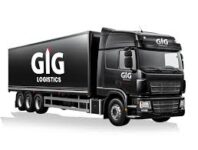
Last Updated: June 2026
Ask any Lagos-based fashion vendor who ships orders to Abuja weekly, and they will tell you the same thing about GIG Logistics: it is not the fastest, it is not the cheapest, and when something goes wrong, customer support will test your patience. Then they will tell you they still use it for every inter-state shipment. That contradiction is the most honest review of GIGL you will read — and it is the only one that explains why, more than a decade after incorporation, GIG Logistics remains the backbone of inter-state parcel movement for millions of Nigerian businesses.
This gig logistics review is not going to tell you GIGL is perfect. It is not. What it will tell you is precisely where the platform works, precisely where it fails, what those failures typically cost you, and which category of Nigerian shipper should keep using it versus who should look elsewhere. The existing reviews on this subject — including the one this article replaces — get the verdict broadly right while getting nearly everything in between wrong. The devil, here, is entirely in the detail.
In June 2026, GIGL operates over 150 Experience Centres across Nigeria, ships to more than 230 international destinations, and has launched GoFaster — an express interstate service now available across 15 major cities including Lagos, Abuja, Port Harcourt, Kano, and Ibadan — with a promised 24–48 hour delivery window that changes the speed calculus the platform was previously penalized for.
Quick Verdict: GIG Logistics Review 2026
Legitimacy: Fully legitimate — registered Nigerian company incorporated in 2012, operating as a subsidiary of GIG Group (founded by Chidi Ajaere), with a physical presence across Nigeria and licensed operations in Ghana, the UK, USA, Canada, and China.
Safety: Safe for standard and commercial shipments; elevated risk for fragile or high-value items due to documented handling inconsistencies and a slow damage resolution process.
Best for: Small and medium business owners shipping commercial goods inter-state; e-commerce sellers fulfilling nationwide orders; Nigerians receiving packages from the UK, USA, or China via GIGL’s international procurement and consolidation service; individuals sending non-urgent parcels beyond the reach of app-based couriers.
Biggest risk: Delivery timeline slippage on standard (non-GoFaster) routes, combined with a customer support structure that struggles to resolve time-sensitive complaints — particularly for international shipments where response protocols are slower than the delivery itself.
Brands.ng Rating: 7.2/10 — Nigeria’s most geographically complete courier network, built for breadth and structural reliability over speed, with a growing express service that is beginning to close the speed gap competitors have exploited.
What You Need to Know First
- Founded: 2012 (incorporated); GIG Group was founded earlier, with logistics as a spin-off of the transport business
- Parent company: GIG Group, founded by Chidi Ajaere; GIGL is a wholly owned subsidiary
- Headquarters: Lagos, Nigeria (Head Office: 1 Wole Ariyo Street, Lekki Phase 1)
- Operational in: Nigeria (150+ Experience Centres), Ghana (Accra, Tamale, Takoradi), UK (London), USA (Houston, Texas), Canada (Toronto), China
- Regulated by: Registered under Nigerian Corporate Affairs Commission (CAC); no single sector-specific regulator — logistics in Nigeria operates under general commerce regulation
- Core services: Domestic inter-state courier (standard and GoFaster express); same-day delivery in select cities; international shipping (import and export); e-commerce logistics; freight and haulage; procurement and shop-from-abroad services via GIGGo App; fleet management for corporate clients
- Estimated user base: Not publicly disclosed; industry estimates suggest millions of transactions monthly across individual and business customers
- App: GIGGo App — available on Android (Google Play) and iOS (App Store); enables pickup requests, tracking, bill payments, and shop-and-ship from the USA, UK, and China
- Customer support contacts: Nigeria: +234 813 985 1120; Ghana: +233 592 009 946; UK: +44 7487 622536; USA (Houston): +1 281 741 1784; Canada (Toronto): +1 289 212 2225; Email: info@giglogistics.com
- Current pricing (domestic): Lagos to Abuja — light document from ₦3,800 (terminal pickup) or ₦4,500 (home delivery); 10kg regular item from ₦14,500. Lagos to Ibadan — 1kg from ₦5,000; 5kg from ₦9,500. Home delivery adds ₦700 on top of terminal rates. Pricing varies by weight, distance, and item classification (regular vs special)
- Current pricing (international): Export from Nigeria — from ₦7,500/kg to UK, USA, and Canada. Import from UK to Nigeria — £30 for 0.5–5kg; £51 for 5.1–10kg; £5.10/kg above 10kg. Import from USA — from $4.49/lb (minimum 11.2 lbs). Nigeria to Ghana — from $13.90/kg
- GoFaster express service: 24–48 hour interstate delivery across 15 cities: Lagos, Abuja, Port Harcourt, Kano, Benin, Ilorin, Ibadan, Uyo, Calabar, Owerri, Enugu, Kaduna, Jos, Yola, Sokoto
- Recent development (2026): GoFaster service expansion to 15 cities; last-mile delivery extended to cover over 18 states; GIGGo App updated with shop-and-ship features from USA, UK, and China; export services from Nigeria to 230+ international destinations via GoFaster (express) and GoLite (economy) tiers
What GIG Logistics Actually Is
Strip away the marketing language and GIGL is a hub-and-spoke logistics network — the same architectural model that FedEx and DHL built their global operations on, applied to Nigeria’s specific geographic and infrastructure reality.
The business architecture works in layers. GIGL Experience Centres across Nigeria function as intake and collection points. Packages move from local centres to regional sorting hubs, then to destination hubs, then to the final Experience Centre or to the recipient’s doorstep via last-mile delivery agents. This hub-and-spoke model is what gives GIGL its nationwide reach — it is structurally impossible for an on-demand dispatch app to replicate without the capital investment in physical infrastructure GIGL has already made.
The business model generates revenue from three streams. Domestic courier fees are the primary income — charged by weight, distance, and delivery type (terminal pickup versus home delivery). International shipping fees are the fastest-growing stream, with the procurement and shop-from-abroad service adding a margin on top of freight charges. Corporate and e-commerce contracts — where businesses outsource logistics management to GIGL — represent the high-margin enterprise segment.
The operational reality in Nigeria is that GIGL’s physical infrastructure is simultaneously its greatest competitive advantage and the source of its most criticized failures. Because packages must physically move through sorting hubs before reaching their destination, delivery timelines depend on hub processing capacity, vehicle scheduling, and last-mile agent availability — all of which compress under volume pressure (festive seasons, public holiday clusters, end-of-month commercial peaks). The tracking system reflects this dependency: it is not live GPS tracking of individual packages but status updates at each hub checkpoint, which is why packages frequently appear to not move in the system even when physically in transit.
Why GIGL became the dominant inter-state courier is a straightforward market gap answer. In 2012 and for years afterward, the alternative to GIGL for Lagos-to-Abuja parcel shipping was an informal bus or transport company, a friend travelling that route, or a significantly more expensive DHL. GIGL provided a structured, accountable, physically present alternative at pricing that small businesses could absorb. No app-based courier in Nigeria has yet built the geographic reach to serve the Owerri-to-Kaduna shipper or the Abeokuta-to-Port Harcourt e-commerce seller. Until one does, GIGL occupies the territory by default and by design.
What GIGL is not: it is not a same-day delivery solution for the majority of Nigerian users. The GoFaster service (covered in detail below) is the exception, not the platform’s general operating model. It is also not a specialized handler of fragile, high-value, or temperature-sensitive goods — it is a general courier, and using it for items requiring careful handling introduces risks the platform’s standard operations do not eliminate.
Why Nigerians Use GIG Logistics
The online seller fulfilling nationwide orders. Fashion designers, electronics resellers, food product vendors, and social commerce businesses operating from Lagos, Abuja, or Port Harcourt ship to customers in Ondo, Makurdi, and Katsina — cities that most on-demand delivery apps do not reach. GIGL’s 150+ Experience Centre network means the seller can drop off a package in Surulere and have it collected by the buyer in Nnewi. No other courier service in Nigeria offers this geographic breadth at comparable pricing.
The diaspora Nigerian shipping gifts and goods home. Nigerians in Houston, London, and Toronto consistently use GIGL’s shop-and-ship service to send goods home without the documentation complexity of DHL or the per-kilogram premium of international express couriers. At £30 for up to 5kg from the UK to Nigeria (with delivery in 3–5 business days), GIGL positions itself as a cheaper and less bureaucratic option than direct DHL shipping for personal and semi-commercial shipments.
The SME that needs payment-on-delivery. One of GIGL’s most commercially significant but least-discussed features is payment-on-delivery for e-commerce shipments. For Nigerian online sellers — who face high rates of cash-on-delivery customer abandonment — GIGL’s payment collection and remittance service removes a significant cash flow risk. The seller ships; GIGL collects payment from the recipient; funds are remitted to the seller. This feature is structural to how many Nigerian e-commerce businesses operate.
The business owner shipping documents inter-state. Legal firms, government contractors, and financial services businesses send time-sensitive documents from Ibadan to Lagos, Enugu to Abuja, and Kano to Port Harcourt regularly. GIGL’s document rate (Lagos to Abuja from ₦3,800 for terminal pickup) is competitive, and the hub-based tracking provides an accountability trail that informal transport options cannot.
The importer consolidating overseas purchases. A Nigerian buyer who orders from Amazon, a UK electronics retailer, and a Chinese marketplace simultaneously can ship all three to GIGL’s USA warehouse address, have the packages consolidated into one shipment, and receive a single consignment at one combined freight charge — materially cheaper than shipping three separate packages via different carriers.
The Honest Breakdown
Domestic Standard Delivery
What it does: Moves packages between any two GIGL-served locations in Nigeria via the hub-and-spoke network, with terminal pickup or home delivery at the destination.
What it means in practice: For major commercial routes (Lagos-Abuja, Lagos-Port Harcourt, Lagos-Enugu), standard delivery realistically takes 2–4 business days, not the “2-5 business days” published on the website. On secondary routes — Owerri to Kaduna, Kano to Abeokuta — realistic timelines extend to 4–6 days. Home delivery adds ₦700 to the base rate and requires a recipient to be available to receive the package; missed deliveries require follow-up coordination that can add a day.
What to watch out for: The quoted delivery window is a best-case estimate, not a contractual commitment. Packages processed on Fridays frequently do not move through hubs until Monday, effectively adding two days to the timeline. Users who book standard delivery expecting the lower end of the range during peak periods (December, end of Ramadan, public holiday clusters) should either upgrade to GoFaster or build buffer time into their delivery promise to customers.
GoFaster Express Interstate
What it does: GIGL’s express service guarantees 24–48 hour interstate delivery across 15 major Nigerian cities: Lagos, Abuja, Port Harcourt, Kano, Benin, Ilorin, Ibadan, Uyo, Calabar, Owerri, Enugu, Kaduna, Jos, Yola, and Sokoto.
What it means in practice: This is the product that changes GIGL’s competitive positioning most significantly. A package dropped at a Lagos GIGL Experience Centre before noon on a weekday should reach an Abuja recipient the following day under GoFaster. For e-commerce sellers whose customers expect 24-hour fulfillment — a growing expectation, especially among buyers who have experienced Jumia or Konga’s major city delivery speeds — GoFaster is the GIGL product that makes a service-level promise comparable to app-based couriers, with the added advantage of GIGL’s physical network for collection.
What to watch out for: GoFaster is only available in the 15 listed cities. A seller in Asaba or a buyer in Umuahia is outside the GoFaster coverage zone and falls back to standard delivery timelines. Always verify the destination city before promising GoFaster speed to a customer. GoFaster pricing is higher than standard delivery — confirm the current rate at the Experience Centre or via the GIGGo App rate calculator before quoting customers.
GIGGo App
What it does: A mobile app enabling pickup requests, delivery tracking, shop-and-ship from USA/UK/China, bill payments, and rate calculation without visiting a physical branch.
What it means in practice: The app meaningfully reduces the friction of using GIGL for frequent shippers. Businesses that ship daily no longer need to physically visit an Experience Centre for every consignment — they can schedule pickups and manage multiple shipments from one dashboard. The bill payment feature (airtime, data, cable TV) is a secondary offering that has no bearing on the core logistics use case but adds utility for some users.
What to watch out for: Tracking updates on the GIGGo App reflect hub checkpoint scans, not real-time GPS location. A package that shows “in transit” has left the origin Experience Centre but may be sitting in a sorting hub awaiting vehicle dispatch. Users expecting continuous location visibility like a ride-hailing app will be frustrated. The tracking system works — it tells you where your package has been, not where it currently is.
International Shipping (Import)
What it does: Allows Nigerians to receive goods from the USA, UK, China, and Canada at GIGL’s overseas address, which are then consolidated and shipped to Nigeria — removing the need for a Nigerian import address when shopping on foreign platforms.
What it means in practice: This solves a real and persistent problem. Many US and UK online retailers do not ship to Nigeria directly, or charge prohibitive international shipping rates. GIGL’s US address in Houston functions as the buyer’s delivery point; once packages arrive at GIGL’s Houston facility, they ship to Nigeria at GIGL’s commercial freight rate ($4.49/lb from USA, minimum 11.2 lbs; £30 for 0.5–5kg from UK). USA to Nigeria delivery takes 7–10 business days; UK to Nigeria takes 3–5 business days.
What to watch out for: The minimum weight on US imports (11.2 lbs or $50) means light packages from the USA are not economical as standalone shipments. Consolidation — combining multiple US orders into one consignment — is the service that makes small purchases viable. Customs duties on imported goods are the buyer’s responsibility; GIGL assists with documentation but does not absorb import duties, which vary by item category and value.
Nigeria to Ghana Delivery
What it does: Direct cross-border parcel service from Nigeria to Ghana and from Ghana to Nigeria, with GIGL Experience Centres in Accra, Tamale, and Takoradi. Delivery within 3 business days from Nigeria to Ghana.
What it means in practice: This is one of the only organized, trackable, branded courier services connecting Nigeria and Ghana with physical pickup and drop-off points on both sides. For businesses trading across the Nigeria-Ghana corridor — an active commercial route for textiles, electronics, and food products — GIGL removes the reliance on informal transport arrangements.
What to watch out for: Pricing from Ghana to Nigeria starts at $13.90/kg — higher than domestic Nigerian rates and materially more expensive per kilogram than international road freight for bulk goods. For small commercial shipments or personal packages, GIGL’s Ghana service is structured and reliable. For high-volume goods trade, commercial freight alternatives warrant comparison.
What GIG Logistics Does Not Tell You
The tracking system is a checkpoint log, not a live trace — and that gap matters more than you think
GIGL’s tracking system updates when a package is scanned at a hub checkpoint: arrival at origin branch, departure from origin hub, arrival at destination hub, out for delivery. Between those checkpoints, nothing updates. A package can sit at a sorting hub for 18 hours awaiting vehicle dispatch and the tracking system will show the last scan as its current status. The real-world consequence is that packages frequently appear “stuck” for 24+ hours with no tracking movement — while physically in transit. The pattern that emerges from public reviews is consistent: users who track obsessively during this window call support, hear that the package is “in transit,” and receive no further information until the next checkpoint scan. The structural reason is architectural — GIGL does not equip individual packages with GPS tags, only with barcode scans at fixed scan points. This is not fraud and the package is almost always fine. But it is a design limitation that creates anxiety for shippers who need real-time visibility.
Customer support breaks down specifically on high-value and international complaints
For standard domestic delivery complaints — a package delayed by one day, a tracking update missing — GIGL’s support team typically resolves the issue by directing the caller to the destination Experience Centre, which can physically locate the package. The failure mode occurs when the complaint involves an international shipment, a damaged high-value item, or a missing package. A pattern observable across Trustpilot reviews (as recently as 2025 and January 2026) and Nairaland threads is that international complaints specifically — where a package arrived damaged after a $2,000+ shipping bill, or where a parcel was marked delivered but not received — fall into a support loop where the Nigeria team refers to the overseas office and the overseas office refers back to Nigeria. Resolution timelines on these cases run from days to weeks, with email as the primary escalation channel. The structural reason is that GIGL’s overseas operations are smaller relative to the domestic network, and dispute resolution protocols between international and domestic teams are not publicly documented.
The ₦700 home delivery charge is not the only hidden cost on domestic shipments
The base rate structure for GIGL domestic shipping quotes a terminal pickup price, with ₦700 added for home delivery. What the published price list does not prominently state is that items classified as “special” — which includes fragile goods, electronics, and items requiring special handling — attract a surcharge above the regular rate. If a sender ships an item as a regular shipment that GIGL subsequently classifies as special upon inspection at the branch, the price difference is charged at the point of acceptance. Users who calculate costs based on published regular rates without physically confirming classification at the branch may find the final charge is higher than estimated. The correct approach is to visit an Experience Centre, present the item for classification, and get a confirmed rate before committing.
The GoFaster 24–48 hour window resets if the package misses the dispatch cut-off
GoFaster’s 24–48 hour promise is conditioned on the package being processed before the day’s dispatch cut-off at the origin Experience Centre. Each branch has a specific cut-off time (typically early-to-mid afternoon, though this varies by location). A package dropped at 4pm at a branch with a 2pm GoFaster cut-off will not be dispatched until the following morning’s run — effectively adding a day to the timeline without the service promise changing on paper. Before relying on GoFaster for a time-critical shipment, confirm the cut-off time at your specific branch, not from the website.
International package insurance is not automatic — and the claims process is underused because most users do not know it exists
GIGL offers shipment insurance on international packages, noted in their UK-to-Nigeria pricing documentation as “excluding insurance” — meaning insurance is an opt-in add-on, not a default inclusion. On domestic shipments, GIGL’s liability for lost or damaged packages is limited without declared value insurance. Most users — particularly those shipping commercial goods — do not declare item value or purchase insurance at the point of shipping, then discover during a damage claim that GIGL’s standard liability covers only a fraction of the item’s replacement cost. The structural reason is a common industry practice of liability limitation on general courier services; the user implication is that any package worth more than the cost of basic insurance should have that insurance explicitly added at the booking stage.
User Sentiment Analysis
What users consistently praise: GIGL’s geographic reach is the most frequently cited positive across Google Play reviews, Google Maps ratings at individual Experience Centres, and Nairaland logistics discussions. The specific language pattern is “they deliver where others don’t” — reflecting that GIGL serves commercial and domestic routes that app-based couriers structurally cannot cover. Payment-on-delivery as a business feature for e-commerce sellers is praised specifically by fashion vendors and online retailers. Physical Experience Centres — the ability to walk in and speak to a person — are consistently cited as a trust signal compared to app-only alternatives.
What users consistently criticize: Three complaints cluster with notable consistency: delivery timeline slippage beyond the quoted window, customer support that routes complaints without resolving them, and rough handling of packages containing non-robust items. The Trustpilot pattern (most recently confirmed January 2026) shows international shipment disputes generating the most severe complaints, with specific descriptions of staff rudeness during escalations and failure to resolve damage claims on high-value packages. The Nairaland pattern shows a longer history of domestic delay complaints, particularly on secondary (non-GoFaster-covered) routes.
When problems most often occur: December is consistently the highest-risk month for delivery delays — the combination of festive season volume, Nigeria’s logistics infrastructure operating at or near capacity, and concurrent demand on NIBSS and retail payment systems creates system-wide slowdown that GIGL’s hub network reflects. Packages dropped in the first week of December that normally take two days on standard delivery frequently take four to five days. Secondary routes (cities outside major commercial hubs) experience higher delay frequency throughout the year, not only at peak periods, because hub dispatch frequency is proportional to route volume.
Sentiment trend: Broadly stable on domestic service, with incremental improvement as GoFaster coverage expands. International service sentiment is the vulnerable area — the gap between the quality of GIGL’s domestic operation and its international customer support infrastructure is generating a growing share of negative feedback from diaspora users who have higher service expectations and higher-value shipments.
Legitimacy and Safety
Is GIG Logistics legitimate?
Yes, unambiguously. GIG Logistics is a registered Nigerian company, CAC-incorporated since 2012, operating as a GIG Group subsidiary under founder Chidi Ajaere. It has physical offices in Nigeria, Ghana, the UK, USA, Canada, and China. It has operated continuously for over 13 years without a verified fraud or insolvency event. The Nairaland threads titled “GIG Logistics Overseas Shipping Scam” that appear in searches predate 2022 and describe individual disputes, not systemic fraud — they should be read as complaint records, not evidence of an illegitimate operation.
Is GIG Logistics safe to use?
Safe for standard parcels and commercial documents, with meaningful caveats. Standard consumer goods, clothing, documents, and packaged products arrive in acceptable condition the vast majority of the time. The elevated risk is specific: fragile items (electronics, glassware, ceramics, precision instruments) that are not professionally packed with adequate cushioning are at meaningful risk of handling damage on longer routes where packages transfer between multiple vehicles and sorting hubs. This is not unique to GIGL — it reflects the physical realities of high-volume courier operations anywhere. The distinction is that GIGL’s standard handling is not calibrated for fragile items, and without insurance, the recourse for a damaged item is limited.
What is the real risk?
The operational risk most users actually encounter is not damage or fraud — it is the downstream commercial cost of a delivery that arrives later than promised. For an e-commerce seller who told a customer “your order arrives in two days,” a four-day standard delivery creates a customer service problem that cannot be solved retroactively. The risk is reputational and relational, not financial in most cases. The financial risk is concentrated in the specific scenario of an uninsured high-value item damaged in transit and a dispute resolution process that does not move quickly.
What users misunderstand about safety: Many GIGL users conflate the physical safety of their package (arriving undamaged) with the service reliability of the delivery (arriving on schedule). These are different risk categories. GIGL’s physical safety record for standard items is generally adequate. Its delivery reliability record on secondary routes and during peak periods is the genuine vulnerability — and it is the one that affects the largest number of users most frequently.
Competitor Comparison
| Feature | GIG Logistics | Kwik Delivery | DHL Nigeria | Sendbox |
|---|---|---|---|---|
| Geographic coverage | 150+ Experience Centres across Nigeria + international | Lagos, Abuja, Port Harcourt, Ibadan (major cities only) | Nationwide + global | Nationwide via partner network |
| Express option | GoFaster: 24–48 hrs (15 cities) | Same-day within covered cities | Next-day (premium) to next-3-days | 1–3 days via partner carriers |
| Standard delivery | 2–5 business days | Same-day or next-day within city | 2–5 days domestic | 2–5 days |
| International shipping | Yes — USA, UK, Canada, China, Ghana, 230+ destinations | No | Yes — global DHL network | Limited |
| Pricing (Lagos-Abuja, 1kg doc) | From ₦3,800 (terminal) | N/A — city courier only | Significantly higher | Comparable to GIGL |
| Physical offices | 150+ nationwide | App-based (no physical offices) | DHL service points nationwide | No physical offices |
| App-based booking | Yes (GIGGo App) | Yes (primary interface) | Yes | Yes |
| Payment on delivery | Yes | Yes | No | Yes |
| Fragile item handling | Standard (risk with fragile items) | Better for city-to-city fragile | Better (specialised packaging) | Varies by partner |
| Customer support | Phone + email; variable resolution | In-app + phone; faster for city issues | Structured escalation; better on high-value | Email/chat primary |
| E-commerce integration | Yes (via GIGGo) | Yes | Limited | Yes (core feature) |
| Ideal user | Nationwide and cross-border shipper | Same-city urgent delivery | International shipper; premium domestic | E-commerce seller |
Who should choose GIGL over Kwik Delivery: Any seller or shipper whose delivery need crosses state lines. Kwik Delivery is built for speed within cities it serves; the moment a customer is in a state outside Kwik’s operational footprint, Kwik cannot complete the delivery. GIGL’s value proposition is explicitly geographic — it is the carrier you use when the recipient is in Sokoto, Asaba, or Umuahia, not when they are in Lekki.
Who would be better served by DHL Nigeria: Businesses shipping high-value items internationally, or individuals sending items where damage or loss would be financially significant and where the structured DHL claims process provides meaningful protection. DHL’s per-kilogram rates are materially higher than GIGL for international shipments, but the tracking granularity, handling standards, and dispute resolution infrastructure are also materially better. For a ₦500,000+ value shipment going overseas, the DHL premium is a form of insurance in itself.
Where GIGL has no meaningful competition: Physical access at scale. No other courier service in Nigeria has 150+ walk-in locations spread across both major cities and secondary towns. This means a market trader in Aba, a civil servant in Minna, or a boutique owner in Onitsha can physically drop a package at a GIGL branch and trust it will move through a structured system — something that on-demand delivery apps with Lagos/Abuja-centric operations structurally cannot offer. That geographic depth took more than a decade to build and cannot be replicated quickly.
Who Should Use It / Who Should Avoid It
Use GIG Logistics if you are:
An online seller fulfilling orders across Nigeria, especially to customers in secondary cities and states that app-based couriers do not cover — GIGL’s 150+ Experience Centre network is the only organized courier infrastructure that reaches them.
A diaspora Nigerian shipping goods from Houston, London, or Toronto to family or customers in Nigeria, where GIGL’s consolidated freight rate undercuts most direct international courier options for packages under 20kg.
An SME owner who needs payment-on-delivery managed by the courier — GIGL collects cash from recipients and remits to the seller, which removes cash flow risk on unfulfilled deliveries.
Someone sending non-fragile commercial goods inter-state who needs a physically present, accountable courier rather than an informal transport arrangement.
A business shipping regularly between Nigeria and Ghana along the West African commercial corridor, where GIGL’s Experience Centres in both countries provide structured cross-border logistics.
An importer who shops from US or UK retailers that do not ship directly to Nigeria — GIGL’s overseas addresses accept the shipment and forward to Nigeria at freight rates competitive for 5kg+ parcels.
Avoid GIG Logistics if you:
Need same-day or next-day delivery to a city not on the GoFaster list — the standard GIGL network cannot guarantee these timelines and the hub-based system does not accommodate urgency well on secondary routes.
Are shipping fragile electronics, glassware, precision instruments, or any item that requires careful handling — without professional packing materials and declared-value insurance, the risk of handling damage on multi-hub routes is real.
Need granular real-time tracking — the checkpoint-based system shows where your package has been, not where it is, and provides no visibility between hub scans.
Are relying on GIGL’s customer support to rapidly resolve a high-stakes international dispute — the documented pattern shows international complaint resolution is slow relative to the urgency most such complaints involve.
Realistic Expectations
What usually goes right: For the majority of users on standard commercial routes between major cities, packages move through the GIGL network without incident, arrive within the quoted window’s realistic range (not always the best case, rarely the worst case), and are picked up at the destination Experience Centre without complications. The GoFaster service on its 15 covered city routes is performing more consistently on the 24–48 hour window than the standard service does on its stated 2–5 day range. International procurement (shop-and-ship) typically works as described — the purchase lands at the overseas GIGL address, consolidation is handled by GIGL staff, and the consolidated package arrives in Nigeria within the stated international transit window.
What usually goes wrong and when: Standard delivery timeline slippage occurs most frequently on: (1) secondary routes between cities outside major commercial hubs; (2) packages booked Thursday-Friday, which frequently sit at sorting hubs over the weekend before moving Monday; (3) December shipments across all routes, where network capacity is under maximum stress. Damage complaints cluster around packages containing electronics, fragile consumer goods, or items with inadequate packaging — GIGL’s standard handling is calibrated for robust commercial parcels, not items requiring gentle treatment.
What most users underestimate: The dispatch cut-off effect on GoFaster. Shippers who drop a package at 3pm expecting GoFaster’s 24-hour window discover the package was not included in that day’s GoFaster dispatch because it arrived after the cut-off — effectively shifting the 24-hour clock to the following morning. This is the single most common source of GoFaster disappointment, and it is entirely avoidable by confirming the cut-off time before arrival at the branch.
How GIGL handles disputes: The primary escalation path is phone (the country-specific customer service number) followed by email. For domestic delivery delays, branch-level staff at the destination Experience Centre can physically locate a package that the tracking system shows as “in transit” with no recent update. For damage claims, GIGL requires the original packaging, the waybill, and photographic evidence of damage. Resolution timelines for domestic damage claims are typically 5–10 business days; international damage claims take longer — patterns from public reviews suggest 2–4 weeks is not unusual for disputed international shipments. For unresolved complaints on domestic service, the Federal Competition and Consumer Protection Commission (FCCPC) is the relevant regulatory escalation point.
Frequently asked questions on GIG Logistics
How do I contact GIG Logistics?
The primary customer service number for Nigeria is +234 813 985 1120. For other countries: Ghana (+233 592 009 946), UK (+44 7487 622536), USA/Houston (+1 281 741 1784), Canada/Toronto (+1 289 212 2225). Email contact is info@giglogistics.com. In-person assistance is available at any of GIGL’s 150+ Experience Centres across Nigeria — a full list with addresses is at giglogistics.com/locations. The GIGGo App also includes a support channel for booking and shipment inquiries.
Can GIG Logistics deliver to Ghana?
Yes. GIG Logistics operates direct Nigeria-to-Ghana courier service with Experience Centres in Accra, Tamale, and Takoradi. Delivery from Nigeria to Ghana takes approximately 3 business days. The current rate from Ghana to Nigeria starts at $13.90/kg; Nigeria-to-Ghana pricing is confirmed at any GIGL Experience Centre or via the GIGGo App. Recipients in Ghana can choose between terminal pickup at an Accra, Tamale, or Takoradi Experience Centre, or doorstep delivery at an additional charge.
How much is delivery from Nigeria to Ghana?
GIG Logistics currently prices Nigeria-to-Ghana delivery per kilogram, with rates confirmed at the time of shipment. Pricing from Ghana to Nigeria starts at $13.90/kg, with delivery in 3–5 business days. Nigeria-to-Ghana pricing should be confirmed directly at a GIGL Experience Centre or via the GIGGo App rate calculator, as rates are subject to periodic adjustment and vary by item weight and classification. For comparison, GIGL’s international rates from Nigeria to the UK, USA, and Canada start from ₦7,500/kg.
How do I track my parcel from GIG Logistics?
To track a GIGL shipment, visit giglogistics.com and enter your tracking ID or alphacode in the “Input tracking ID/Alphacode” search bar on the homepage. Alternatively, open the GIGGo App, navigate to the tracking section, and enter the same code. Tracking updates are hub-checkpoint based — they reflect the last scan at a sorting or delivery hub rather than live GPS location. If tracking shows no update for more than 24 hours on a standard domestic shipment, call the destination Experience Centre directly with your waybill number, as branch staff can physically check hub records that may not yet be reflected in the online tracking system.
What is GIG Logistics’ GIGGo App used for?
The GIGGo App is GIGL’s mobile platform for requesting pickups, booking deliveries, tracking shipments, and managing international shop-and-ship orders from the USA, UK, and China. It also includes bill payment features (airtime, data, cable TV) and a rate calculator for estimating delivery costs before visiting a branch. The app is available on Android (Google Play) and iOS (App Store). For high-frequency shippers and e-commerce businesses, it eliminates the need to visit an Experience Centre for every consignment.
What is GoFaster and is it worth it?
GoFaster is GIGL’s express interstate delivery service offering 24–48 hour delivery across 15 major Nigerian cities: Lagos, Abuja, Port Harcourt, Kano, Benin, Ilorin, Ibadan, Uyo, Calabar, Owerri, Enugu, Kaduna, Jos, Yola, and Sokoto. It is worth it specifically for e-commerce sellers who have committed to next-day delivery promises for customers in GoFaster-covered cities, and for anyone shipping time-sensitive items where standard delivery’s 2–5 day window creates unacceptable uncertainty. It is not worth the price premium for non-urgent shipments or for routes between cities not on the GoFaster list — for those, standard delivery is the appropriate service tier.
GIG Logistics: The Brands.Ng Verdict
GIG Logistics built its business on a structural reality that most of its critics ignore: Nigeria is a country of 200+ million people spread across a geography where road infrastructure, not air or rail freight, moves commercial goods — and the only way to serve that geography at scale is to build physical presence in it, city by city, over years.
That is what GIGL did. And it is why, in 2026, no competitor has displaced it as the default inter-state courier for Nigerian businesses shipping to customers outside the major city app-delivery corridors.
Its most significant weakness is the gap between its physical network quality and its customer support quality. The network is genuinely impressive. The support infrastructure that handles the minority of shipments that go wrong has not scaled proportionally — and in a service business, how you handle failures determines trust more than how you handle successes.
GoFaster is the product development that changes the competitive calculus most significantly. Before it existed, the “GIGL is too slow” criticism was largely accurate for businesses needing 24-hour interstate delivery. Across 15 cities and expanding, that criticism is no longer structurally valid — it depends entirely on which route you are shipping.
Use GIGL without hesitation if you are an online seller, a frequent inter-state shipper, or a diaspora Nigerian sending goods home. Upgrade to GoFaster when the delivery timeline matters to a customer commitment. Insure any shipment whose loss or damage would be financially significant. And never use GIGL’s standard service as a same-day solution — that is not what the product is, and expecting it to be will only disappoint.
In a logistics environment where most of the alternatives fail in different and less predictable ways, GIGL’s failures — delayed timelines, inconsistent support — are at least consistent enough to plan around.
Editorial Note: This review reflects publicly available information and user-reported experiences as of June 2026. Brands.ng does not receive payment for editorial coverage. GIG Logistics was given the opportunity to respond to findings prior to publication. No response received at time of publishing.




Your content on GIG Logistics is very apt. I have used them several times, and I have never regretted using them. Aside the occasional delays and charges, they are reliable. Thank you for the review. I love your platform. Keep helping us with these insightful reviews.